
Lihat juga


 16.01.2026 06:44 PM
Pada pasangan GBP/USD, penurunan juga berlanjut dan berbalik menguntungkan dolar AS. Harus diakui bahwa penurunan pound tidak terlihat sedramatis penurunan euro. Namun, pola bullish terbaru diabaikan: pada 6 Januari, likuiditas diambil dari ayunan bullish terakhir, setelah itu ketidakseimbangan bearish terbentuk pada tanggal 13 dan hampir segera direspon. Dengan demikian, sementara penurunan euro hanya dapat diperkirakan berdasarkan pengambilan likuiditas, penurunan pound dapat diidentifikasi melalui pengambilan likuiditas dan pola bearish.
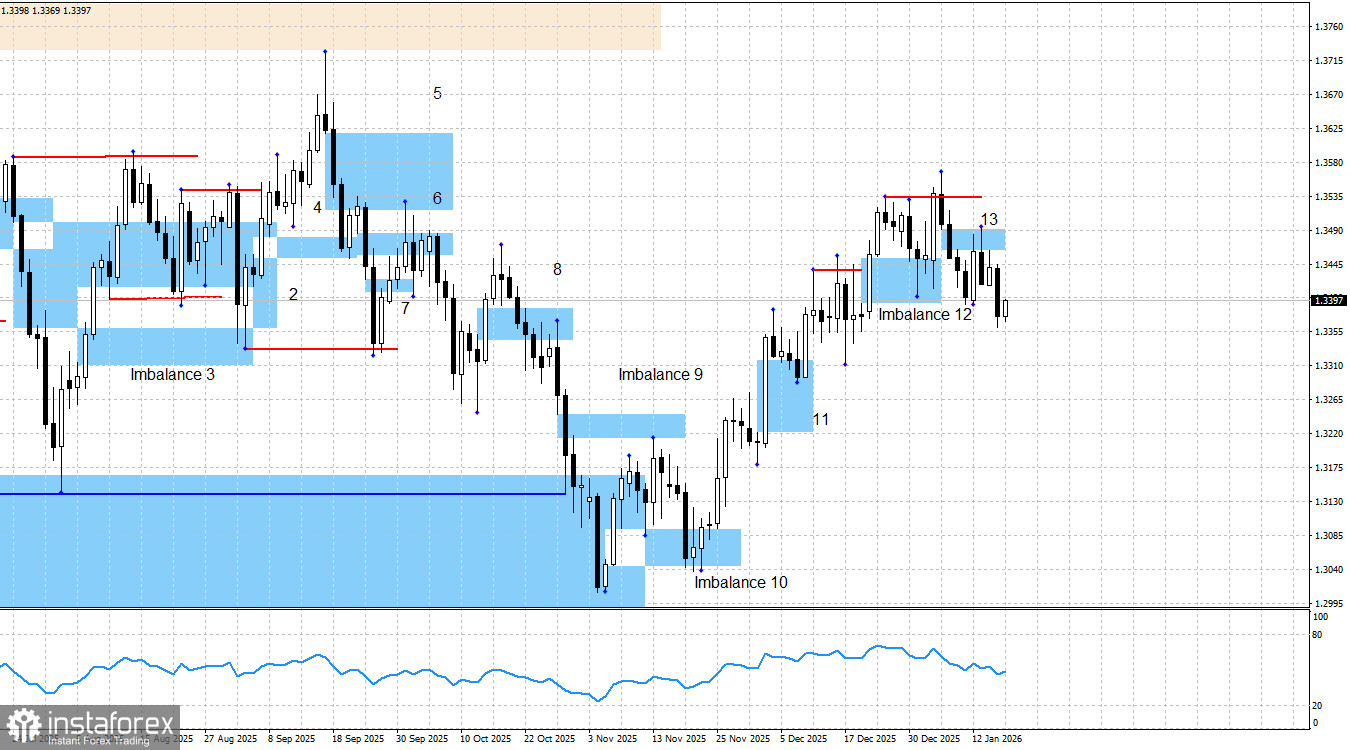
Karena tren naik pada euro masih bertahan, saya percaya bahwa tren naik pada pound juga masih ada. Saya tidak dapat membayangkan bahwa tren naik euro akan muncul bersamaan dengan tren turun pada pound Inggris. Jika saya tidak keliru, nilai pound akan terus meningkat seiring berjalannya waktu. Namun, saat ini belum ada pola bullish yang dapat dianggap valid. Oleh sebab itu, lebih baik menunggu adanya pembentukan pola bullish baru sebelum memikirkan posisi long yang baru.
Apakah trading dengan pola bearish itu layak? Tentu saja, itu bisa dilakukan—namun perlu diingat bahwa penurunan saat ini pada pasangan ini tergolong sebagai penarikan korektif.
Gambaran grafik saat ini menunjukkan bahwa tren naik pada pound mungkin telah berakhir, sementara tren naik euro tetap ada. Dengan begitu, di masa depan, saya masih berharap pasangan ini akan menguat, tapi diperlukan pola bullish baru agar bisa memanfaatkan pergerakan ini.
Pada hari Kamis, para trader menerima kabar bahwa ekonomi Inggris tumbuh 0,3% dari bulan ke bulan pada bulan November, melampaui ekspektasi pasar yang hanya 0,2%. Produksi industri meningkat 1,1% sepanjang bulan November dibandingkan prediksi yang hanya 0,1%. Menurut saya, kedua laporan ini seharusnya memberikan kesempatan bagi bulls untuk bergerak kemarin, namun sekali lagi hal itu tidak terjadi. Euro juga mengabaikan data PDB dari Jerman serta angka produksi industri dari zona euro. Pada hari Jumat, Jerman mengeluarkan laporan inflasi akhir untuk bulan Desember yang cocok dengan prediksi awal—perlambatan menjadi 1,8% secara tahunan. Dengan melambatnya inflasi, kemungkinan pelonggaran lebih lanjut dari kebijakan moneter ECB sedikit meningkat. Namun, euro menguat hari ini—dan pound ikut serta.
Di Amerika Serikat, latar belakang berita secara keseluruhan masih menunjukkan bahwa, dalam jangka panjang, tidak ada harapan lain selain penurunan nilai dolar. Situasi di AS masih cukup sulit. Penutupan pemerintah telah berlangsung selama satu setengah bulan, dan Demokrat serta Republik hanya sepakat untuk pendanaan sampai akhir Januari, yang tinggal tiga minggu lagi. Data pasar kerja di AS terus mengecewakan. Tiga pertemuan FOMC terakhir berakhir dengan keputusan yang dovish, dan data terbaru menunjukkan bahwa jeda dalam pelonggaran moneter akan berlangsung singkat. Agresi militer oleh Trump, ancaman terhadap Denmark, Meksiko, Kuba, dan Kolombia, serta dimulainya proses pidana terhadap Jerome Powell, semuanya menggambarkan situasi saat ini di Amerika Serikat. Menurut saya, bulls memiliki semua yang mereka perlukan untuk melancarkan serangan baru dan kembali ke level tertinggi tahun lalu.
Tren bearish akan membutuhkan berita positif yang kuat dan berkelanjutan untuk dolar AS—sesuatu yang sulit diharapkan di bawah Donald Trump. Selain itu, presiden AS sendiri tidak membutuhkan dolar yang kuat, karena itu akan membuat neraca perdagangan tetap defisit. Oleh karena itu, saya masih tidak percaya pada tren bearish untuk pound, meskipun penurunan yang cukup tajam pada bulan September dan Oktober. Terlalu banyak faktor risiko yang terus membebani dolar. Apa yang akan memungkinkan bears untuk mendorong pound lebih jauh ke bawah jika tren bearish terbentuk sekarang? Jika pola bearish baru muncul, potensi penurunan pound dapat dipertimbangkan kembali, tetapi saat ini, tidak ada.
Kalender Berita untuk AS dan Inggris:
Pada 19 Januari, kalender ekonomi tidak mengandung peristiwa penting. Dampak latar belakang berita pada sentimen pasar pada hari Senin akan tidak ada.
Prakiraan GBP/USD dan Saran Trading:
Untuk pound, gambaran tetap jelas. Kemajuan bullish telah terhenti, dan bears telah melancarkan serangan, tetapi berapa lama mereka dapat mempertahankan tekanan di bawah latar belakang berita saat ini tidak jelas. Saya percaya itu tidak akan lama.
Kelanjutan tren bullish dapat diharapkan hanya dari pola bullish baru atau setelah likuiditas diambil dari ayunan bearish. Ayunan terdekat saat ini adalah posisi terendah dari 9 Desember dan 17 Desember. Sebagai target untuk potensi pertumbuhan, saya terus mempertimbangkan level 1.3725, meskipun pound mungkin naik jauh lebih tinggi pada tahun 2026. Hal utama adalah agar aktivitas trading akhirnya dilanjutkan setelah liburan Tahun Baru. Jika pola bearish terbentuk, trading short juga mungkin, tetapi dalam tren bullish, saya pribadi lebih suka membeli daripada menjual.


