
Lihat juga


 09.10.2026 04:19 AM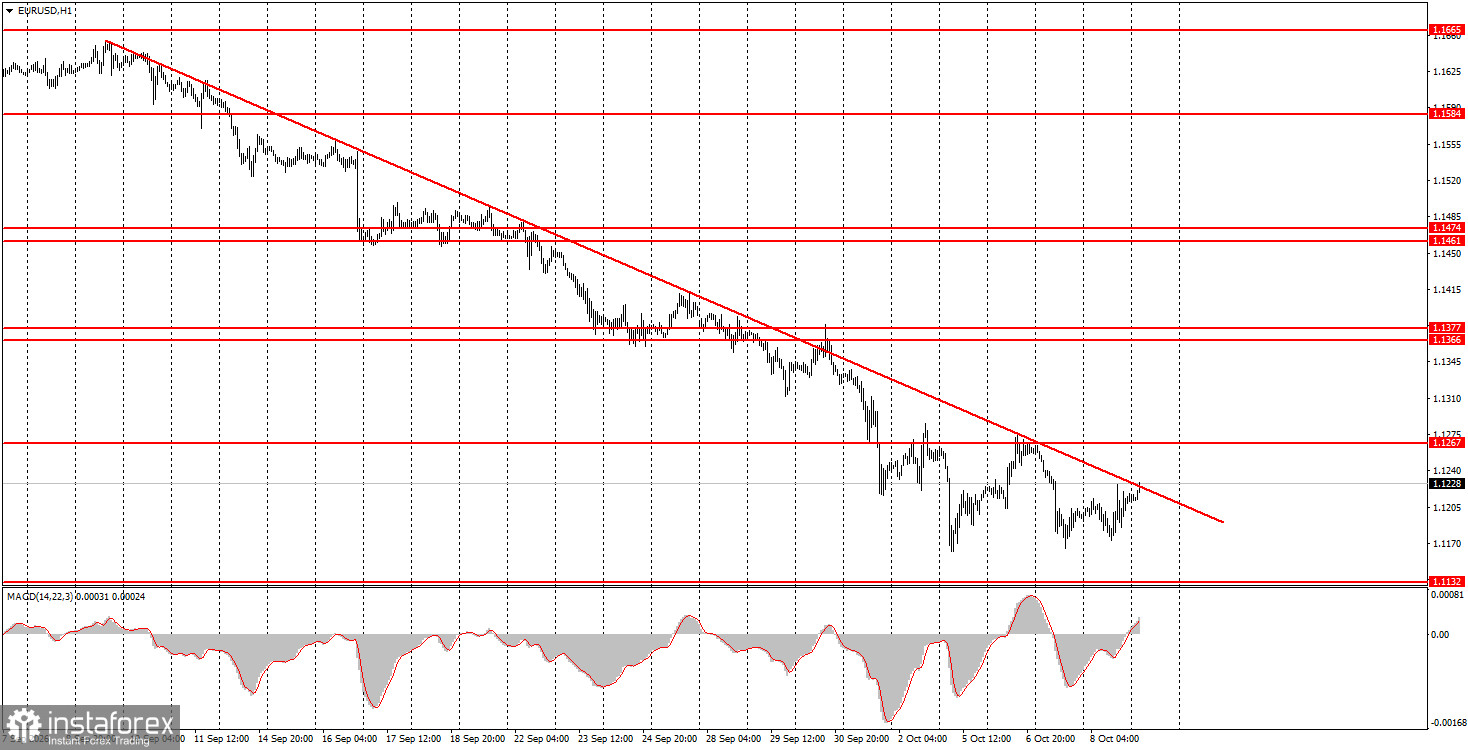
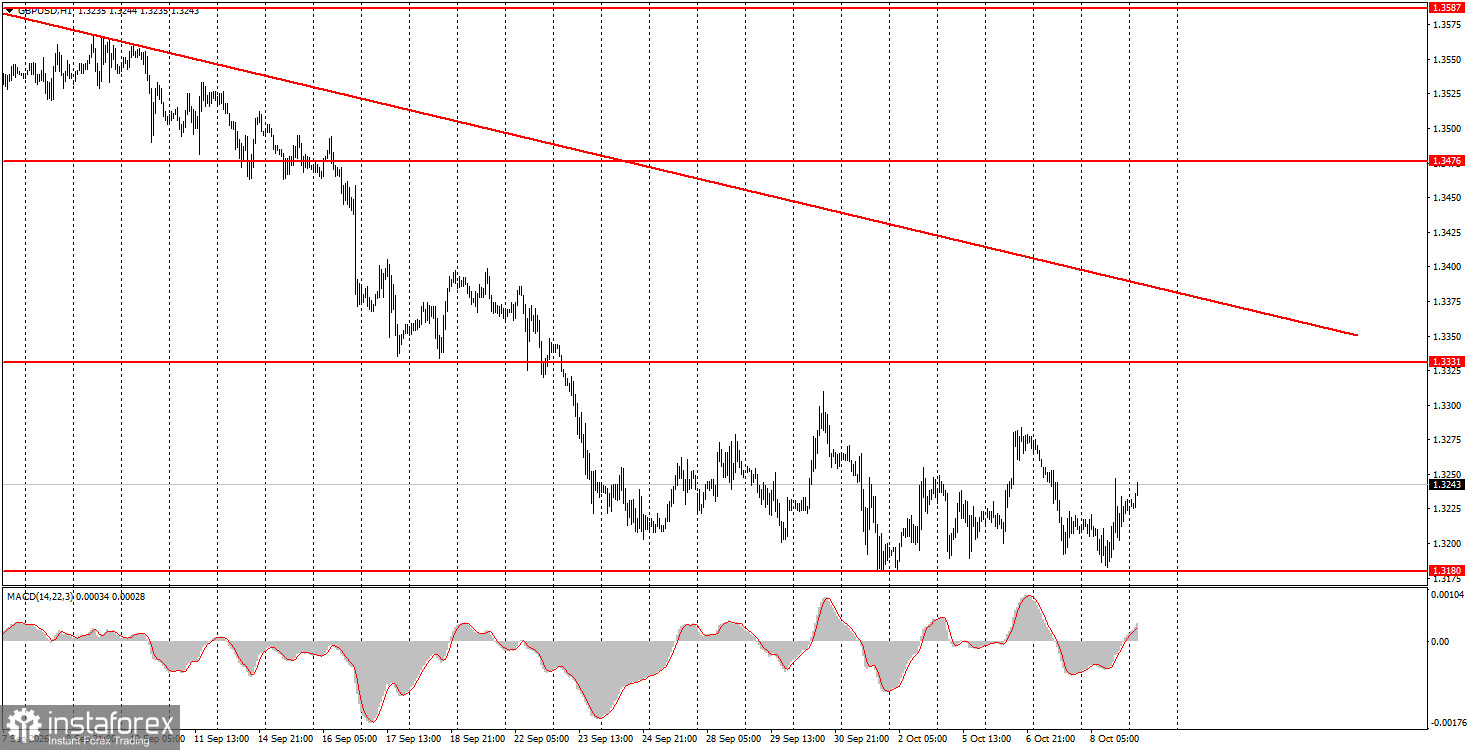
Very few macro releases are scheduled for Friday. Only the University of Michigan consumer-sentiment index will be published in the United States. This index can move markets when it deviates from expectations, but the market is unlikely to pay much attention right now. Over the past month, we have seen illogical, frankly speculative moves, and the dollar has risen most days. Local reasons for euro or pound strength are unlikely today, though on a broader view some rebound in European currencies would be reasonable: the dollar looks overbought and unjustifiably expensive.
Among Friday's fundamental events are speeches by European Central Bank executive board member Isabel Schnabel and Federal Reserve FOMC member Susan Collins. Yesterday ECB chief economist Philip Lane said further tightening is necessary but stressed the importance of balancing risks. So the ECB will likely continue to raise rates in response to high inflation — but this factor currently lacks market impact. As for the Fed, markets have already priced in an October hike and now expect further tightening in December.
The geopolitical backdrop remains worrying. The US and Iran are not holding official talks now, though Donald Trump keeps saying a deal could be signed after the US midterms. Trump also repeatedly claims the Russia–Ukraine conflict could end very soon — a refrain he has used for nearly two years — so the market is skeptical. Recent headlines show Yemen launched operations against the Houthis, and the Houthis continue to strike Saudi energy infrastructure and tankers. Thus tensions in the Middle East are heating up, contrary to the US president's public comments.
On the last trading day of the week, currency pairs can easily renew declines, since the move no longer depends on fundamentals, geopolitics, or macro data. Trade the euro from the 1.1198–1.1218 area, and the pound from the 1.3259–1.3267 area. Volatility today may be low.
Price levels (areas) of support and resistance serve as targets for opening buy or sell trades or as sources of signals.
Red lines indicate channels or trend lines that show the current trend and the preferred trading direction.
The MACD indicator (14,22,3) — the histogram and signal line — is an auxiliary indicator that can also provide signals.
Important speeches and reports (listed in the news calendar) can significantly influence currency pair movements. Therefore, during their release, traders should approach trading with utmost caution, or exit the market to avoid sudden reversals against the preceding move.
Beginner forex traders should remember that not every trade can be profitable. Developing a clear strategy and practicing money management are key to long-term success in trading.


