
Lihat juga


 30.10.2026 12:07 PM
On Thursday, the EUR/USD pair reversed in favor of the European currency and rose to the 127.2% retracement level at 1.1220. Today, a rebound from this level would favor the US dollar and a resumption of the decline toward the 1.1081–1.1086 support level. A close above 1.1220 would allow the euro to extend its advance toward the next retracement level of 100.0% at 1.1325. Following yesterday's sharp upward move by the bulls, many traders may have concluded that the bearish trend had ended. However, so far, the only evidence supporting this view is the liquidity sweep below the 1.1114 low.
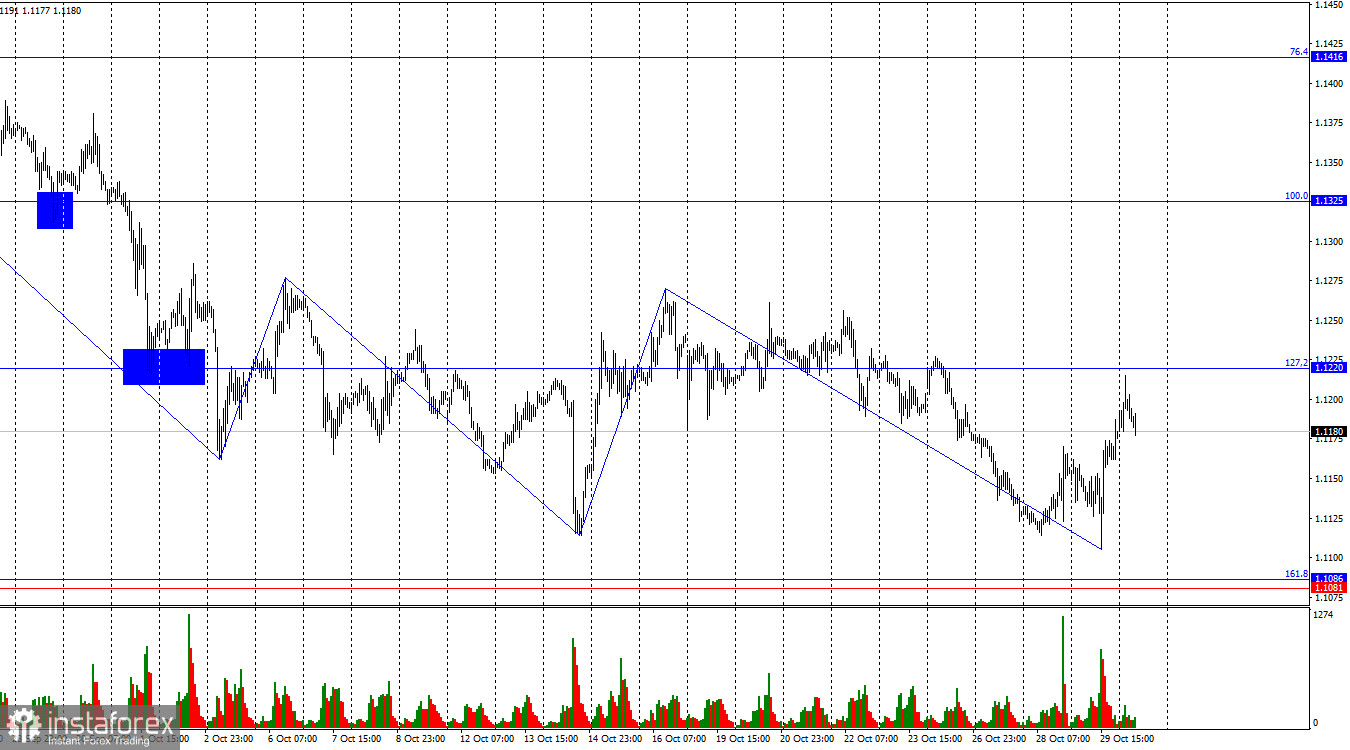
The wave structure on the hourly chart remains bearish. The latest completed downward wave broke below the previous low, while the new upward wave has not yet broken above the previous high. Following the September FOMC meeting, traders expect at least one more monetary policy tightening before the end of the year and another one next year. This factor continues to provide the strongest support for the US currency, while other factors remain insignificant for now. The bears have the upper hand, which is also helping the dollar maintain its strength.
The news background on Thursday was mixed. The ECB indirectly confirmed its readiness to continue tightening monetary policy at least in December, which was as much as traders had expected. It is still too early to discuss what may happen next year. Thus, the ECB's monetary policy stance remains broadly similar to that of the Fed. However, the ECB has already raised interest rates twice, while the Fed has done so only once. Therefore, there are no clear grounds for expecting further declines in the European currency. Nevertheless, the bulls' weakness is currently the key factor for both the euro and the dollar. The euro's advance will depend primarily on traders themselves. A shift in market sentiment can be identified through a break in the wave structure or a close above important levels and zones.
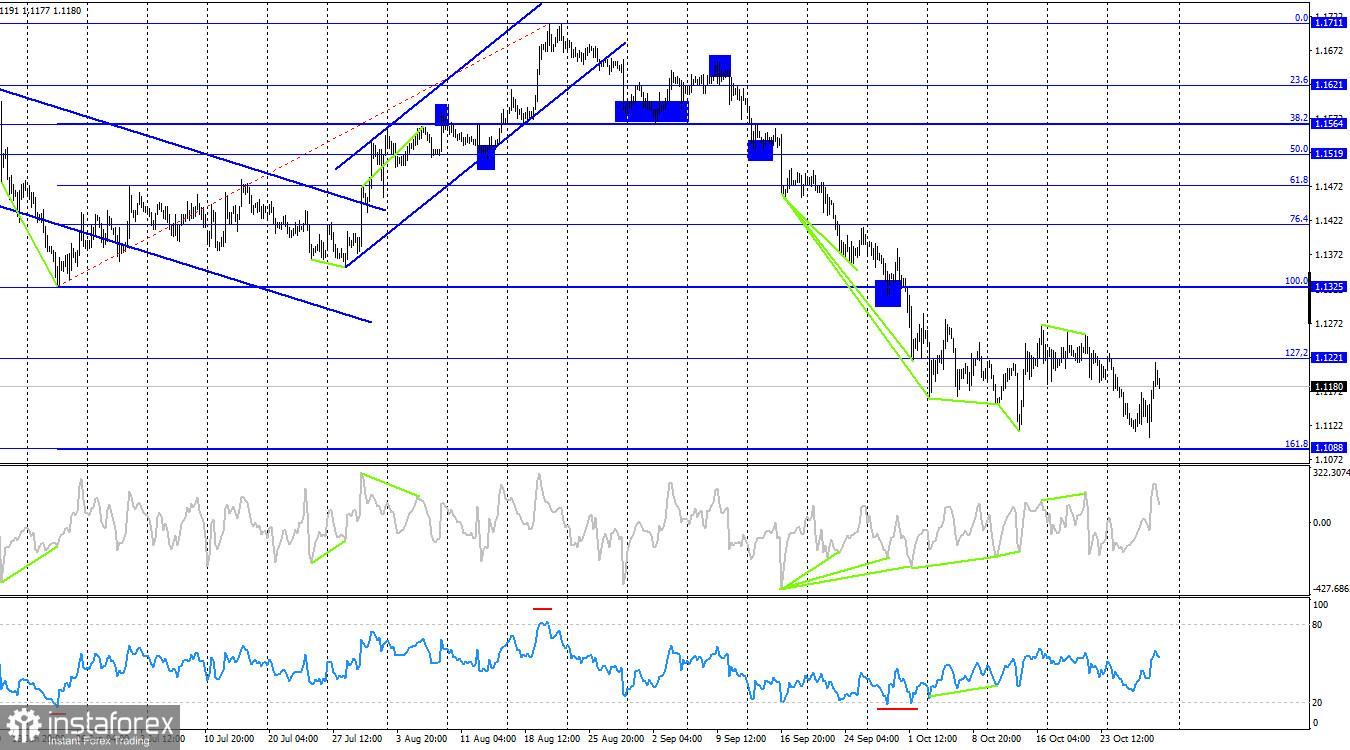
On the 4-hour chart, the pair reversed in favor of the European currency and returned to the 127.2% retracement level at 1.1221. A rebound from this level would favor the dollar and a resumption of the decline toward the 161.8% retracement level at 1.1088, keeping the bears in the game. A close above 1.1221 would increase the likelihood of further gains toward the next Fibonacci level of 100.0% at 1.1325. A bearish divergence is developing on the CCI indicator.
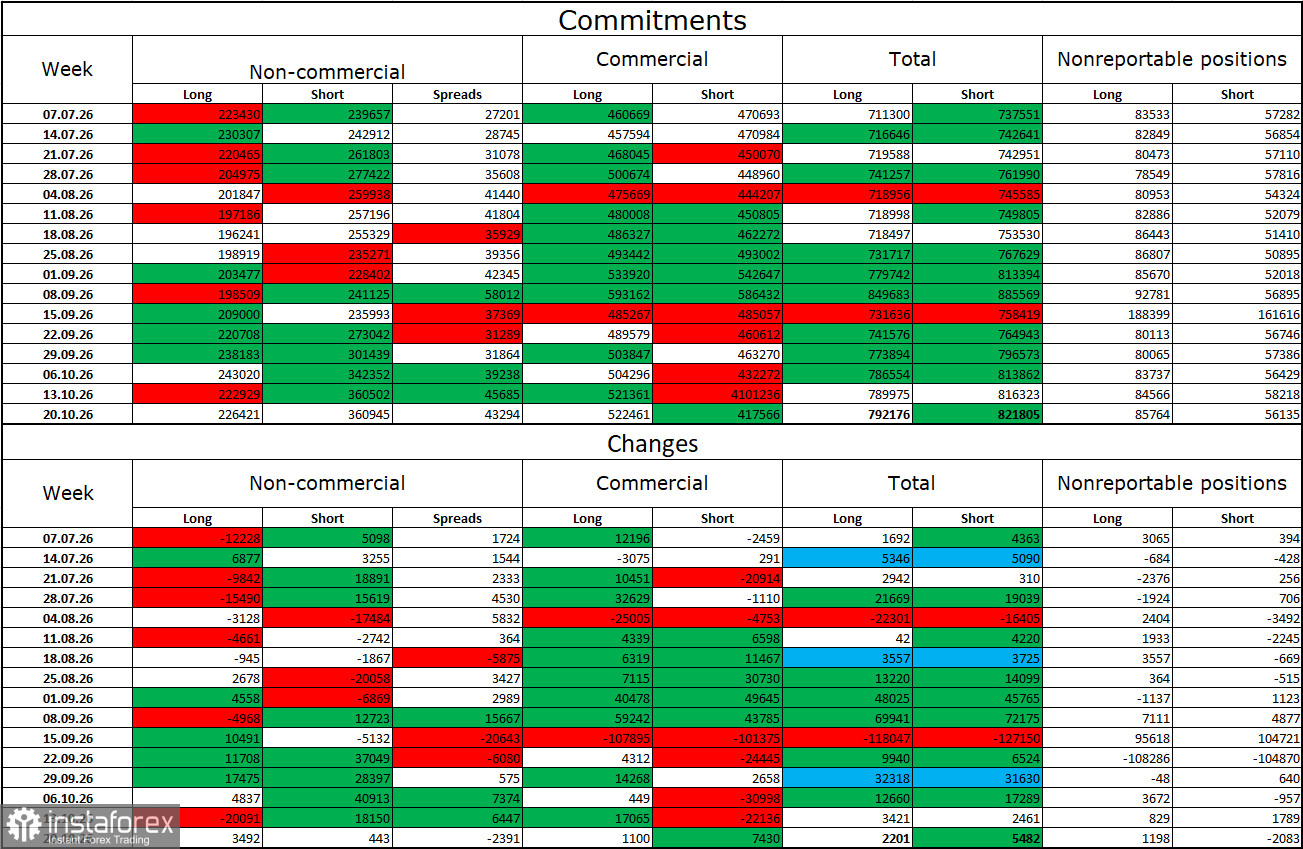
During the latest reporting week, professional traders opened 3,492 Long positions and 443 Short positions. The total number of Long positions held by speculators currently stands at 226,000, while the number of Short positions amounts to 361,000. The bears remain in control, and the European currency continues to be sold more often than it is bought. This is explained by the complicated geopolitical situation in the Middle East and Kevin Warsh's determination to bring inflation down. The market still believes that inflation will be reduced to 2% by any available means.
Overall, major market players continue to show considerable interest in the euro over the long term. Events of various kinds around the world, which have been particularly numerous in recent years, undoubtedly affect investor sentiment and put pressure on risk-sensitive currencies. Moreover, 2026 could set a record for the number of events that could not have been predicted in advance. Traders are therefore left with no choice but to adapt to the changing reality as it unfolds.
On October 30, the economic calendar contains five entries, with the GDP reports standing out. The impact of the economic news on market sentiment on Friday may be moderate.
Long positions may be considered today if the pair closes above 1.1220 on the hourly chart, with a target of 1.1325. Short positions may be considered following a rebound from 1.1220, with the 1.1081–1.1086 support level as the target.
The Fibonacci retracement levels are drawn from 1.1325 to 1.1712 on both the hourly and 4-hour charts.


