
Lihat juga


 06.11.2026 07:55 AM
The US midterm elections are behind us and produced the results the world had largely expected. I think nearly everyone on the planet understood, to some degree, that a Republican defeat would cool Donald Trump's momentum. In essence, neither experts nor ordinary people doubted that Republicans would lose at least one chamber. Historically this is how it has gone: midterms usually flip control of at least one house of Congress. Yet the outcomes of Trump's policies in the first two years of a second presidential term proved so glaring that American voters no longer want the "golden age" promised by their leader. They prefer to live quietly, peacefully, and calmly under Democratic rule rather than pay twice as much for fuel and tariffs on all imported goods under Trump.
It should also be understood that Americans are not currently the world's most welcome nation. For example, Canada was for many years America's main ally and was regarded as a full friend on the geopolitical map. That changed when Trump arrived, and he plainly did not care about historic relationships. Trump imposed tariffs on half the countries in the world; some nations managed, with difficulty, to strike trade deals with the conflicted leader. But this year showed that having an agreement does not automatically prevent fresh grievances in the future. The European Union and Canada have already experienced this firsthand.
So how should Canadians or Europeans feel about Americans if their president does everything to complicate their lives? Recall that last year many Europeans and Canadians even boycotted American goods in stores, and in some countries U.S. products were marked with special stickers so consumers would know not to buy them.
Two years of "pariah status" were enough. At the midterms Americans openly and honestly judged Trump's policies. Now two fundamentally Russian-style questions stand before the president's administration and the entire Republican Party: "Who is to blame?" and "What should be done?" Who is to blame—that is, roughly speaking, clear. What to do about it—in principle—is also clear. Donald Trump will, with about 95% probability, finish his presidential term and then, in any case, leave office. Republicans will have to elect a new leader and may spend years trying to regain American voters' trust. Reports are already emerging that many Republican congressmen are beginning to distance themselves from Trump and are even ready to cooperate with Democrats in both chambers.
However, what to do about Iran remains unclear. Democrats have already said they will demand Trump end the pointless war, while Trump replied that the war will end when he wants it to. Republicans understand Trump will leave in two years and they will have to carry on. The more mess Trump makes now, the worse it will be for Republicans later. Even U.S. Vice President J.D. Vance yesterday called on Trump to end the war with Iran. Therefore, we believe that in the near term opposition to Trump will come not only from Democrats but also from some Republicans, and the White House leader will now fight not only with Iran but with Congress as well.
Trading recommendations for EUR/USD:
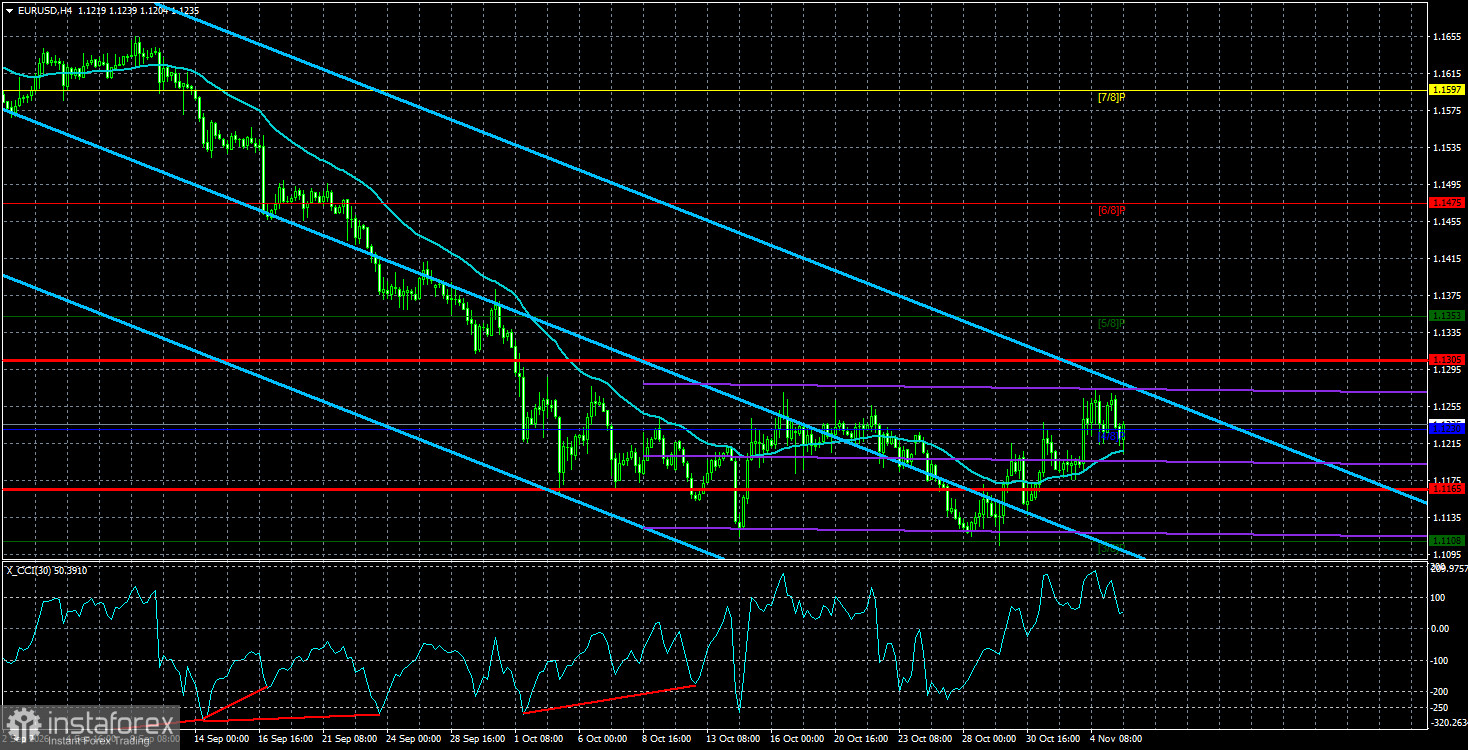
The EUR/USD pair remains in a downtrend that lacks sufficient fundamental, macroeconomic, and geopolitical support to continue a bullish reversal. The global fundamental backdrop for the dollar remains negative, but in 2026 geopolitics first and then a hawkish Fed provided strong support for the U.S. currency. When the price is below the moving average, consider shorts with targets at 1.1165 and 1.1108. Above the moving average, longs are relevant with targets at 1.1305 and 1.1353.
Trading recommendations for GBP/USD:
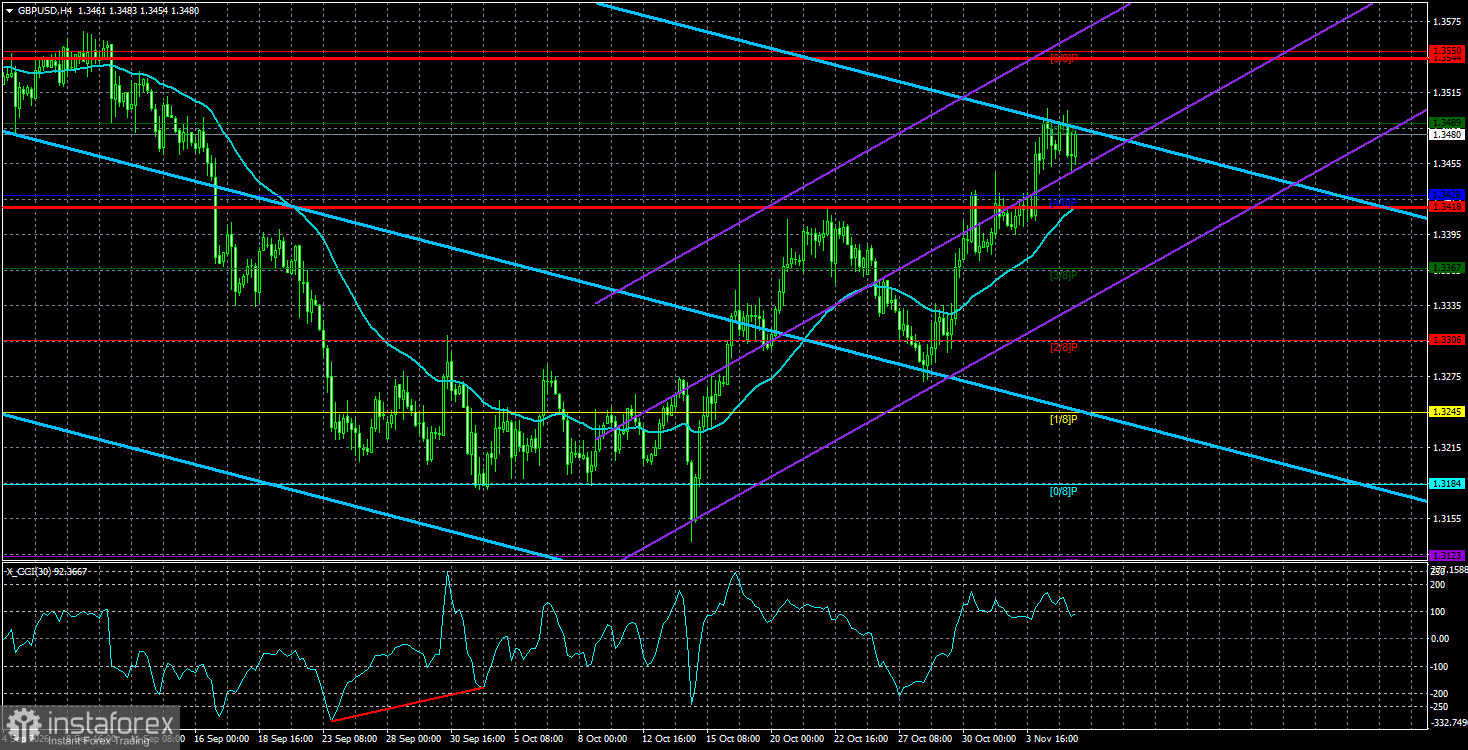
The GBP/USD pair continues its upward tendency, which may be part of the 2022 global trend. Donald Trump's policies will continue to pressure the U.S. economy, so we do not expect long-term dollar strength. 2026 has so far been positive for the dollar because geopolitics and inflation forced capital into safe havens and pushed the Fed back to tightening. However, on the weekly timeframe, the pair remains in a flat between 1.3150 and 1.3780 within a four-year uptrend, which supports a medium-term bullish outlook for the pound. Consider long positions above the moving average with targets at 1.3544 and 1.3550. If the price is below the moving average, trade the downside with targets at 1.3367 and 1.3306.
Notes on illustrations:
Linear regression channels help identify the current trend. If both point the same way, the trend is strong;
The smoothed moving average (setting 20.0) defines the short-term trend and the direction to trade;
Murray levels are target points for moves and corrections;
Volatility bands (red lines) show the likely intraday price corridor based on current volatility metrics;
The CCI indicator entering oversold (below -250) or overbought (above +250) territory signals an approaching trend reversal.


