
Lihat juga


 17.11.2026 07:39 PM
The wave structure of GBP/USD continues to indicate the development of a horizontal trend segment. The corrective A-B-C-D-E structure is presumably complete. If this is indeed the case, a new upward trend segment has begun to develop. However, the pound's latest decline, and particularly the decline in EUR/USD, makes it necessary to consider alternative wave counts. It should be noted that no convincing alternatives to the current wave count are apparent. There are also no compelling reasons to expect the current trend segment to develop into a full-fledged downward trend, with the prospect of further declines in 2027. Nevertheless, demand for the US dollar continues to increase, which could compromise the integrity of the current wave count.
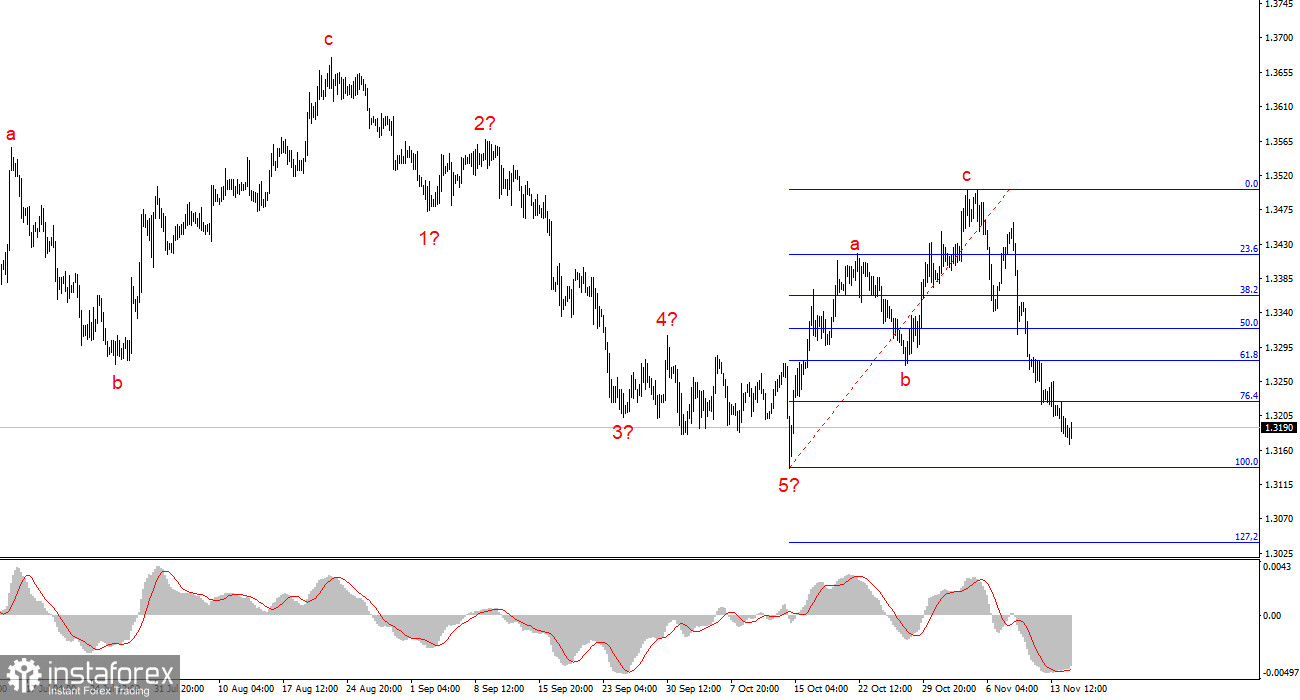
On the lower timeframe (upper chart), a three-wave structure has formed, indicating a corrective movement. Consequently, the pair has moved on to developing a new impulsive wave sequence, and the downward momentum suggests that this is indeed the case. Accordingly, a new complete five-wave structure can now be expected, with targets below the previous low of 1.3136.
The GBP/USD pair rose by 10 points on Tuesday and could gain another 10 points by the end of the day. Does this indicate the beginning of a recovery, or is it too early to say? The British pound remains near the lows of waves A, C, and E, and it is already encouraging that the price has so far failed to break below these lows. Meanwhile, the economic news from the UK has been positive, although the pound itself has not benefited. The unemployment rate fell from 4.7% to 4.6% in September, while the number of unemployment benefit claims in October reached 33,200, only slightly above market expectations. Accordingly, the positive UK labor market data could have increased demand for the pound today, but no such reaction occurred. Market participants continue to ignore economic data unless it supports the US dollar.
It is worth recalling that the Bank of England delivered its first monetary policy tightening this month, after which the pound plunged by 300 points. This was an entirely predictable market reaction. Perhaps the market had already priced in the BoE's policy tightening in advance. However, why has it not continued to price in further tightening, given that the Bank of England has raised interest rates exactly as many times as the Federal Reserve? Does the market expect further tightening from the Fed but not from the Bank of England? At present, the pound's only source of support appears to be the possibility that the 1.3156 level will withstand selling pressure.
There seems to be little point in discussing tomorrow morning's UK inflation report. Why bother if there is a 90% probability that the market will ignore it as well? Moreover, if inflation comes in below expectations, the market will have another reason to sell GBP/USD. This appears to be the only likely scenario at present. The view remains that the corrective A-B-C-D-E trend segment is approaching completion, although this is currently difficult to believe.
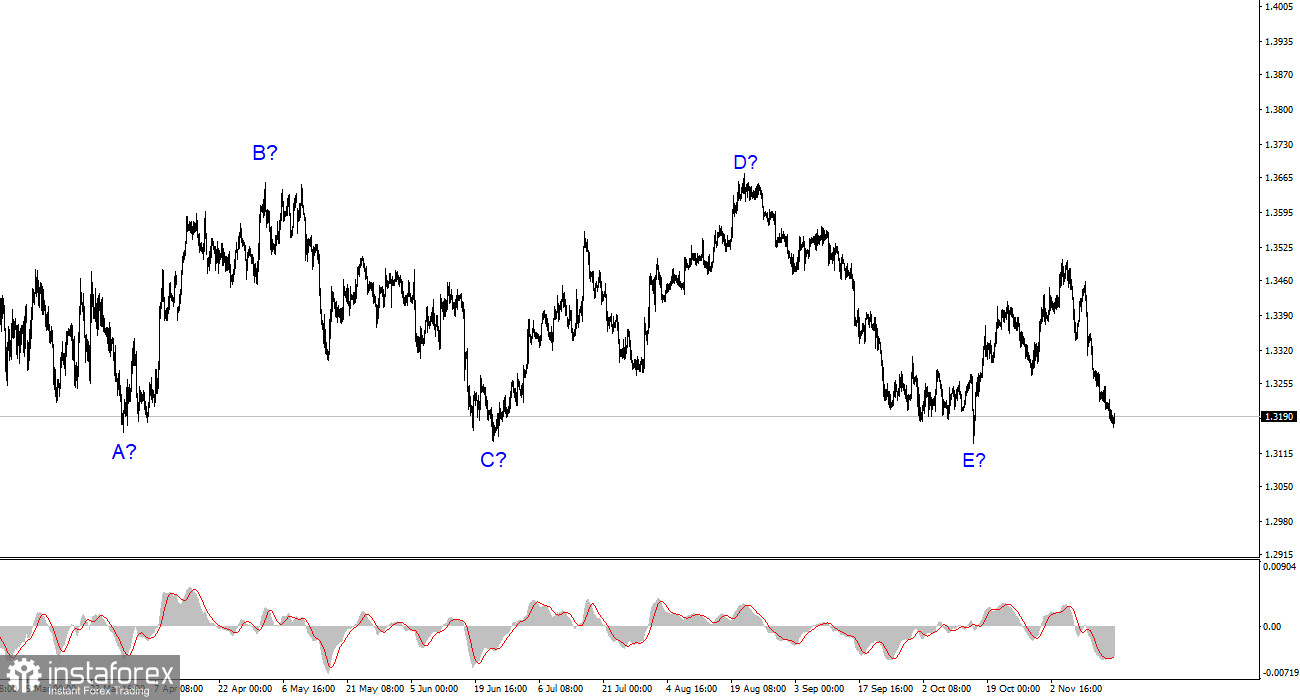
The wave structure of GBP/USD has become quite clear. The higher-timeframe chart now shows a corrective A-B-C-D-E structure, which, logically, should already be complete. However, the lower timeframe indicates that the downward wave sequence remains unfinished. Consequently, the pound's decline could continue toward the 1.3138 and 1.3039 levels, corresponding to the 100.0% and 127.2% Fibonacci levels, respectively. The further the pound declines, the more attractive long-term buying opportunities become.
The higher-timeframe wave count is clear. The corrective A-B-C-D-E trend segment has either been completed or is likely to be completed in the near future. Naturally, any trend segment can develop into a more complex and extended structure, but the most likely scenario is being considered here. At present, there are no clear reasons to expect another substantial decline in the pound.


