
Lihat juga


 24.11.2026 06:49 AM
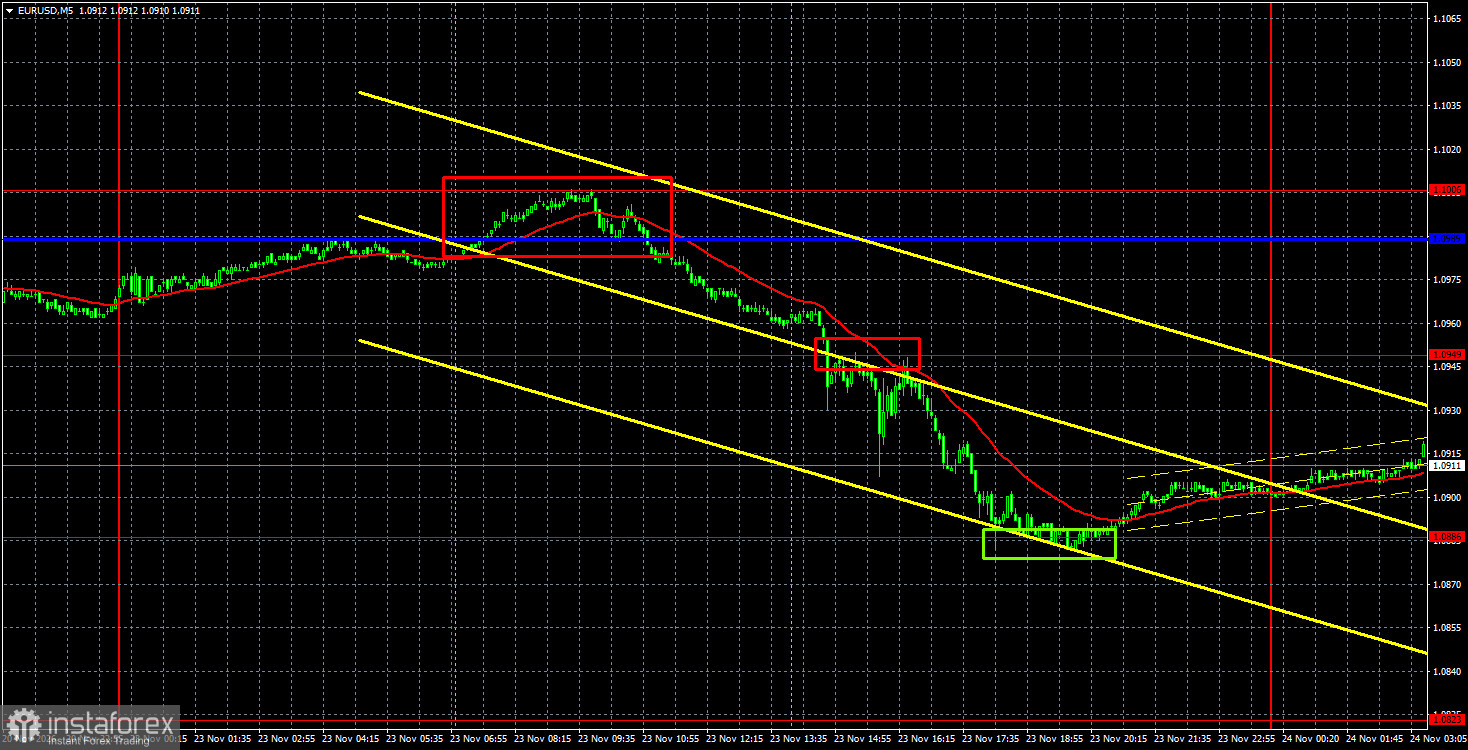
On Monday, the EUR/USD pair resumed its collapse after several days of pause and range trading. This is exactly what we warned about earlier. Over the past three months, the euro has behaved this way: crash, flat, crash, flat. Macro and fundamental factors have had no impact on the pair's moves. Monday was another demonstration of that. The eurozone and Germany published business-activity PMIs for services and manufacturing, and most indices rose month-on-month and beat forecasts. In other words, the euro had every reason to strengthen yesterday — at least a little. Instead, we saw another 100-pip drop. Experts promptly "explained" this paradox: current macro data matter only insofar as they affect future central-bank actions. The market has already priced the European Central Bank's December tightening, they say, so the PMIs were irrelevant. One must ask: has the market not also priced the Federal Reserve's December move? And when exactly did the market price the ECB's December hike, if the euro has been falling for three months?
Technically, EUR/USD continues an almost free fall, with occasional pauses and range stretches. The decline is so strong and relentless that even drawing a trendline is difficult — clear price extremes are missing. Price slides progressively lower each day.
On the 5-minute TF, three trading signals formed on Monday. During the European session, price bounced from the 1.0989–1.1006 area, allowing short positions. Subsequently, price fell to 1.0886, where a buy signal formed. Shorts produced at least 80 pips of profit; the long positions are currently in profit.
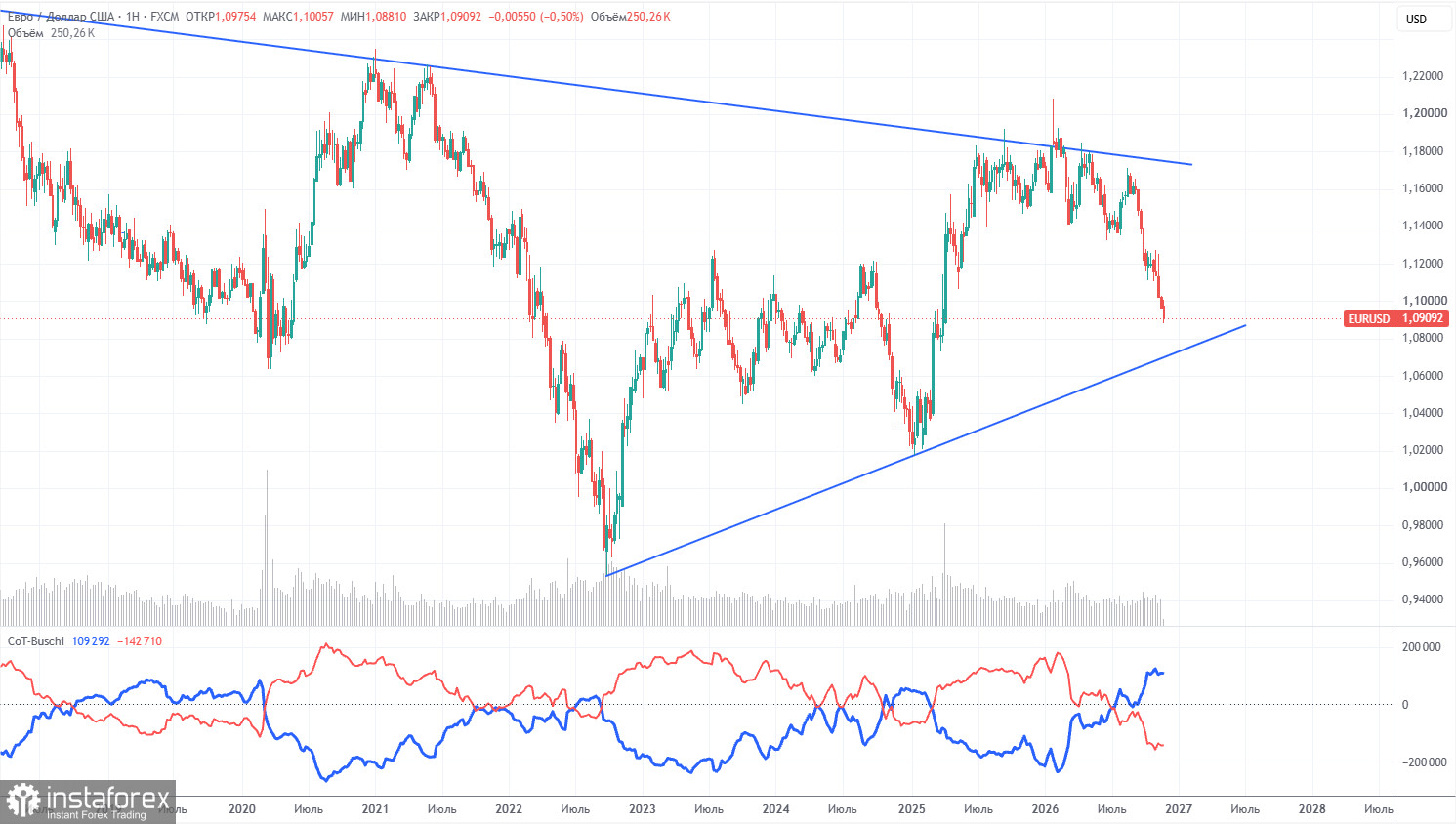
The latest COT report is dated November 17. On the weekly chart, the non-commercial traders' net position remains bearish and has been trimmed sharply in 2026 amid geopolitical events and Fed tightening. Traders have been disposing of euros in favor of the US dollar over the past nine months. Political developments in Washington are unlikely to change the dollar's long-term case.
We still see no fundamental factors supporting further dollar weakness. The Middle East war made the dollar temporarily very attractive, and the Fed's monetary stance surprised the dollar for a second time this year. In the long term, the euro could fall to $1.08 (the trendline), but the multi-year uptrend would remain relevant. Recently, the market has been counting only factors positive for the dollar and ignoring everything else.
The red and blue COT indicator lines point to a bears' advantage. During the last reporting week, non-commercial longs rose by 2,600 while shorts increased by 8,900, so the group's net position fell by another 6,300 contracts.
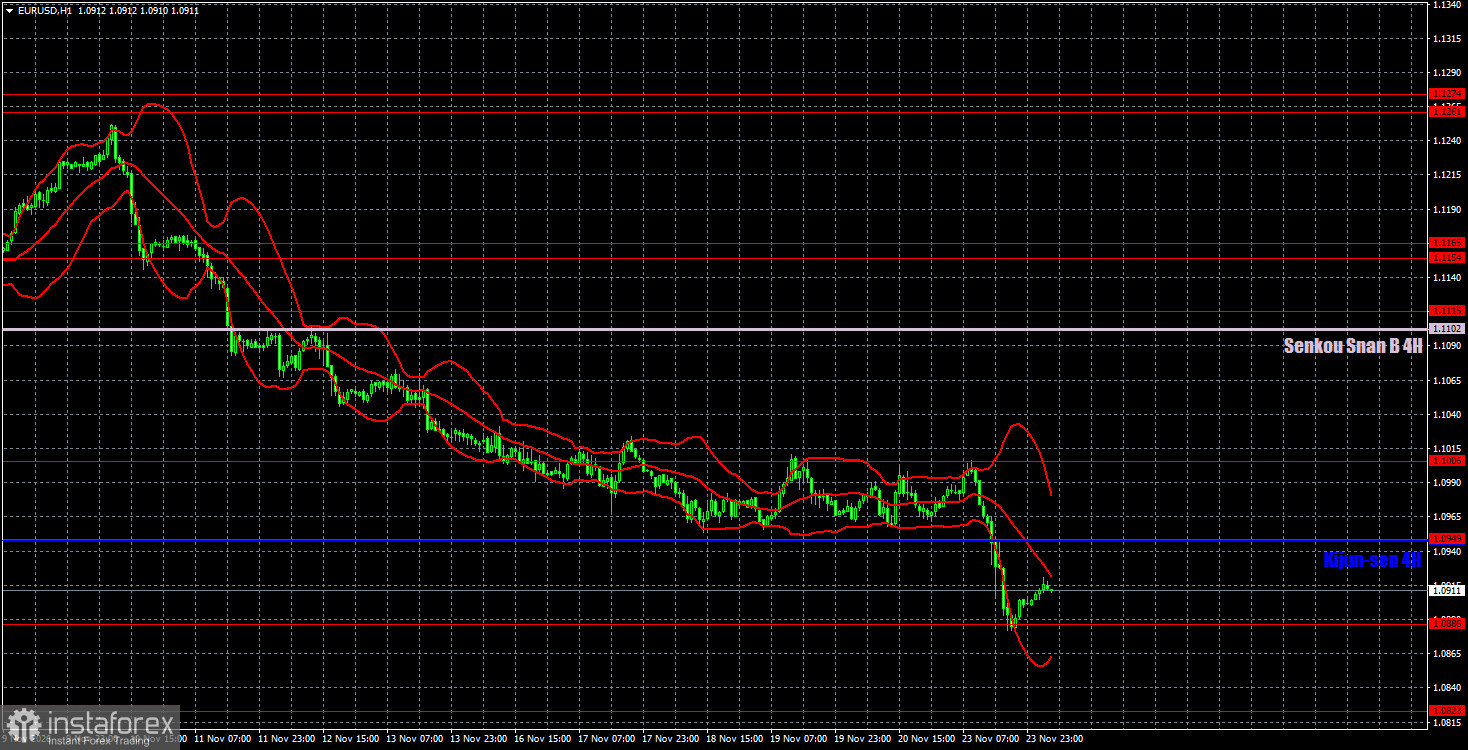
On the hourly timeframe, the EUR/USD pair continues its three-month downtrend without a single significant correction. Over the past three months, the market has shown no willingness to buy the euro, regardless of fundamental, macroeconomic, or geopolitical factors. The euro is in free fall and, at best, trading sideways.
For November 24 we highlight the following levels for trading — 1.0757, 1.0823, 1.0886, 1.0949, 1.1006, 1.1115, 1.1154–1.1165, 1.1261–1.1274, 1.1362–1.1368, 1.1461–1.1473, as well as the Ichimoku Senkou Span B line (1.1102) and Kijun-sen (1.0949). The Ichimoku lines may shift during the day, so account for this when determining trading signals. Remember to move your Stop Loss to breakeven if the price has moved 15 pips in the favorable direction. This will protect against potential losses if the signal proves false.
On Tuesday, there are no major scheduled releases in the eurozone, Germany, or the U.S., but that does not mean volatility will be low today. It is not just about volatility but about the persistence of the euro's decline. The absence of major events today does not imply the euro will stop falling.
Traders may consider short positions near 1.0823 if price consolidates below 1.0886. A rebound from 1.0886 supports targets of 1.0949 and 1.1006 for long positions.


