
Lihat juga


 25.11.2026 11:03 AM
On Tuesday, the EUR/USD pair reversed in favor of the European currency and consolidated above the 1.0938–1.0954 resistance level. Consequently, the upward movement may resume today toward the next resistance level at 1.1081–1.1086. Consolidation below the 1.0938–1.0954 level would favor the US dollar and a resumption of the decline toward the 1.0781–1.0797 support level.
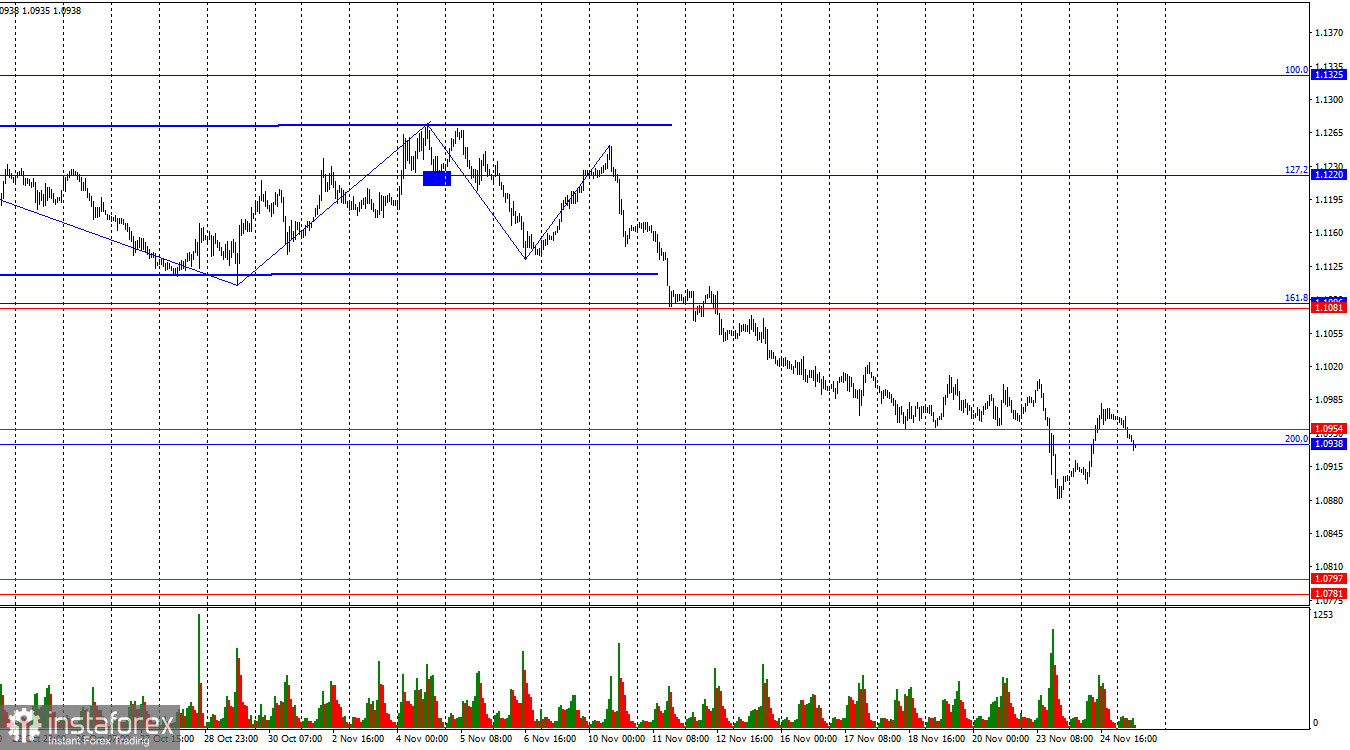
The wave structure on the hourly chart remains bearish. The latest completed upward wave failed to break above the previous peak, while the latest downward wave broke below the previous low. Following the September FOMC meeting, traders expect at least one more monetary policy tightening before the end of the year and consider the possibility of two additional hikes next year. This factor continues to support the US dollar, while US economic data further increase the likelihood of the most hawkish scenario materializing.
There was virtually no significant news on Tuesday, but today traders will receive data that will help them assess the Fed's next policy moves. At present, there is little doubt that the FOMC will raise interest rates in December and at least once more early next year. However, the PCE index and GDP report will be released in the United States today. The stronger both reports are, the greater the likelihood that the Fed will implement more than two rounds of monetary tightening. It is worth recalling that the previous estimate of third-quarter GDP showed growth of 3.4%, giving the FOMC further grounds for maintaining its hawkish stance. This is also supportive of the US dollar in itself. The PCE index is the core Personal Consumption Expenditures Price Index, which the Fed uses to assess the pace of inflation. According to forecasts, the PCE index will stand at 3.8% year-over-year and 0.3% month-over-month in October. Any reading above market expectations would provide the dollar with additional support.
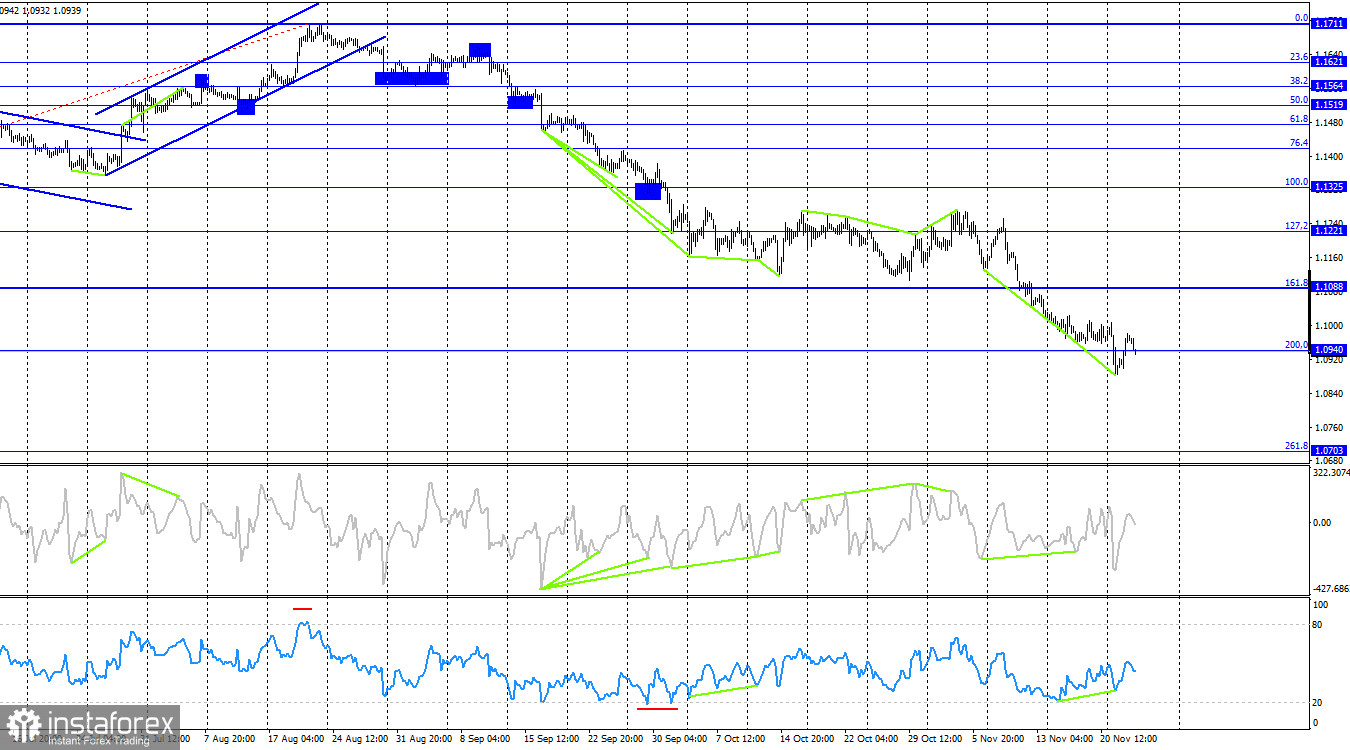
On the 4-hour chart, the pair reversed in favor of the euro after a bullish divergence formed on the RSI indicator. However, whether the pair's upward movement continues today will depend on the PCE index and GDP report. Consolidation below the 200.0% Fibonacci retracement level at 1.0940 would favor a resumption of the decline toward the 261.8% Fibonacci retracement level at 1.0703. Weak inflation and GDP reports would allow the pair to continue rising toward the 161.8% Fibonacci level at 1.1088.
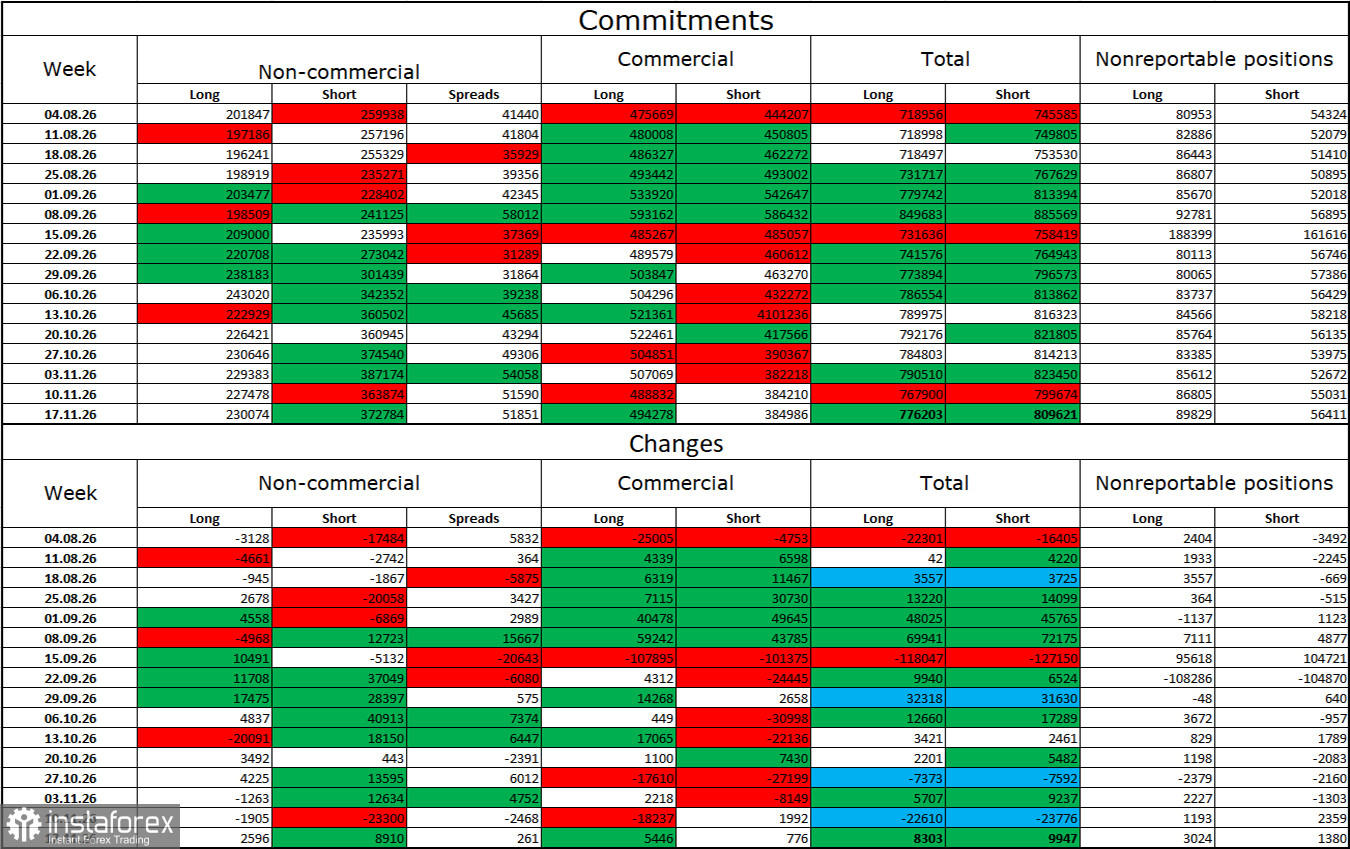
During the latest reporting week, professional traders opened 2,596 Long positions and 8,910 Short positions. The total number of Long positions held by speculators currently stands at 230,000, while the number of Short positions amounts to 373,000. Bears remain in control, and the European currency continues to be sold more frequently than it is bought. This is attributable to the challenging geopolitical situation in the Middle East and the Fed's willingness to continue tightening monetary policy. The market believes that the Fed will keep raising interest rates for as long as necessary.
Overall, over the long term (several years), market participants continue to show considerable interest in the euro. Naturally, various global events, which have been particularly frequent in recent years, affect investor sentiment and put pressure on risk-sensitive currencies. Moreover, 2026 could set a record for the number of events that could not have been anticipated in advance. Therefore, the European currency is awaiting a more favorable opportunity.
On November 25, the economic calendar contains six events, with the PCE index and GDP report being the most significant. Economic data may influence market sentiment during the second half of Wednesday's trading session.
Long positions may be considered if the pair rebounds from the 1.0938–1.0954 level on the hourly chart, with a target of 1.1081–1.1086. Short positions may be considered if the pair consolidates below the 1.0938–1.0954 level on the hourly chart, with a target of 1.0781–1.0797.
The Fibonacci retracement levels are drawn from 1.1325 to 1.1712 on both the hourly and 4-hour charts.


