
یہ بھی دیکھیں


 09.03.2026 10:46 AM
On the hourly chart, the GBP/USD pair rose by several dozen points on Friday, but the new week began with another decline and consolidation below the 1.3341–1.3352 level. Traders continue to ignore this zone, so I do not expect the pound to fall today simply because it was broken. The same applies to a possible consolidation of the pair above it. Bullish traders had an excellent opportunity to launch an attack on Friday, but geopolitics once again outweighed the desire to sell the dollar.
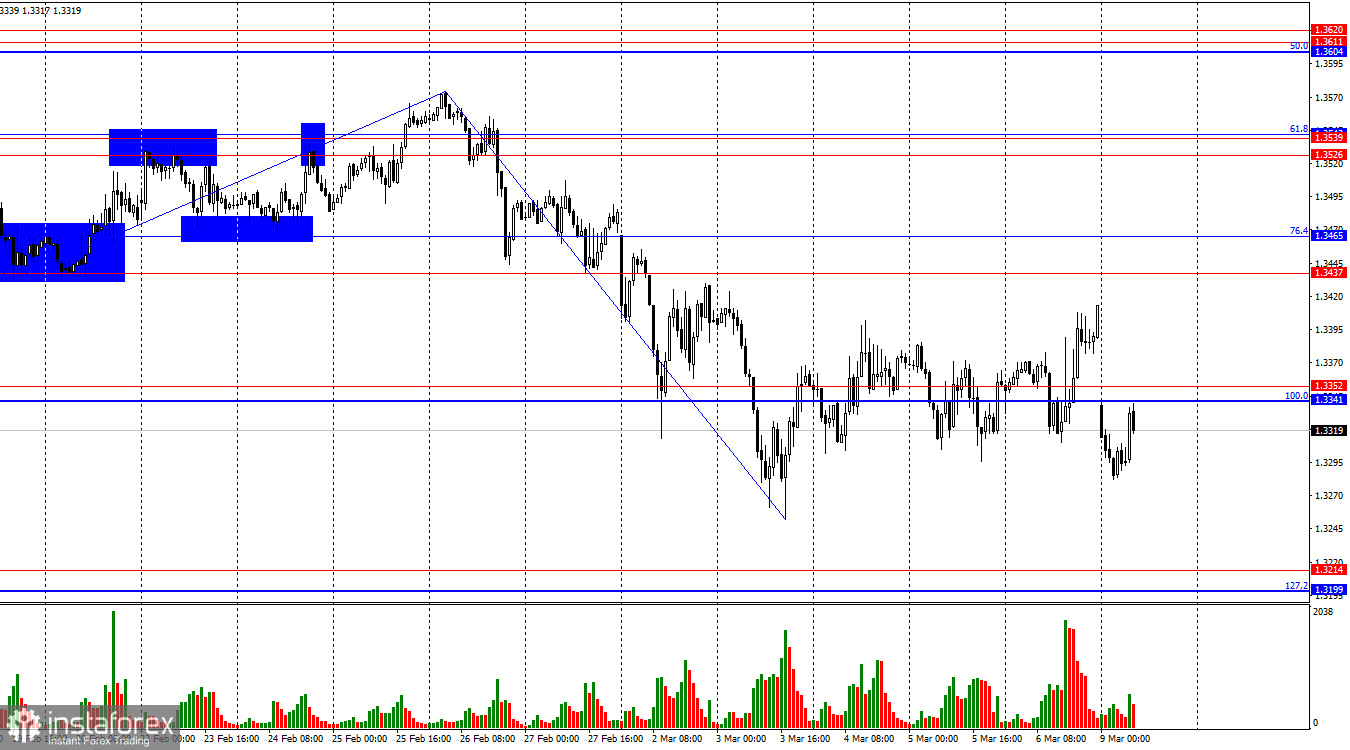
The wave situation remains bearish. The last completed upward wave did not break the previous peak, while the last downward wave broke the previous low. To change the trend to bullish, a consolidation above the last peak — 1.3573 — or two consecutive bullish waves is required, which is unlikely in the near future. The information background for the pound has been weak in recent months, while geopolitics gives the bears a complete advantage in the market.
The news background on Friday practically left traders with no choice. That seemed clear after the reports on U.S. retail sales, wages, the labor market, and unemployment were released. The unemployment rate rose to 4.4% in February, which traders did not expect to see. The Nonfarm Payrolls figure turned out not just weak but negative — not simply negative, but extremely negative. In the United States, the number of jobs fell by 92,000 in a single month, putting an end to discussions about a labor market recovery. Retail sales fell 0.2% month-on-month in January. Average hourly earnings increased by 3.8%, which was also above forecasts.
Thus, the dollar should have come under heavy pressure from traders, but even the absence of geopolitical news related to the war in Iran did not support the bulls. Traders considered the labor market data unimportant under the current circumstances, believing that the war in Iran would have a far greater impact on Federal Reserve monetary policy, the U.S. economy, and the global economy than another decline in the U.S. labor market. In my opinion, the market has already largely priced in the Iranian conflict, which opens prospects for the pound — at least for a corrective movement. However, Friday did not become a day of fair correction.
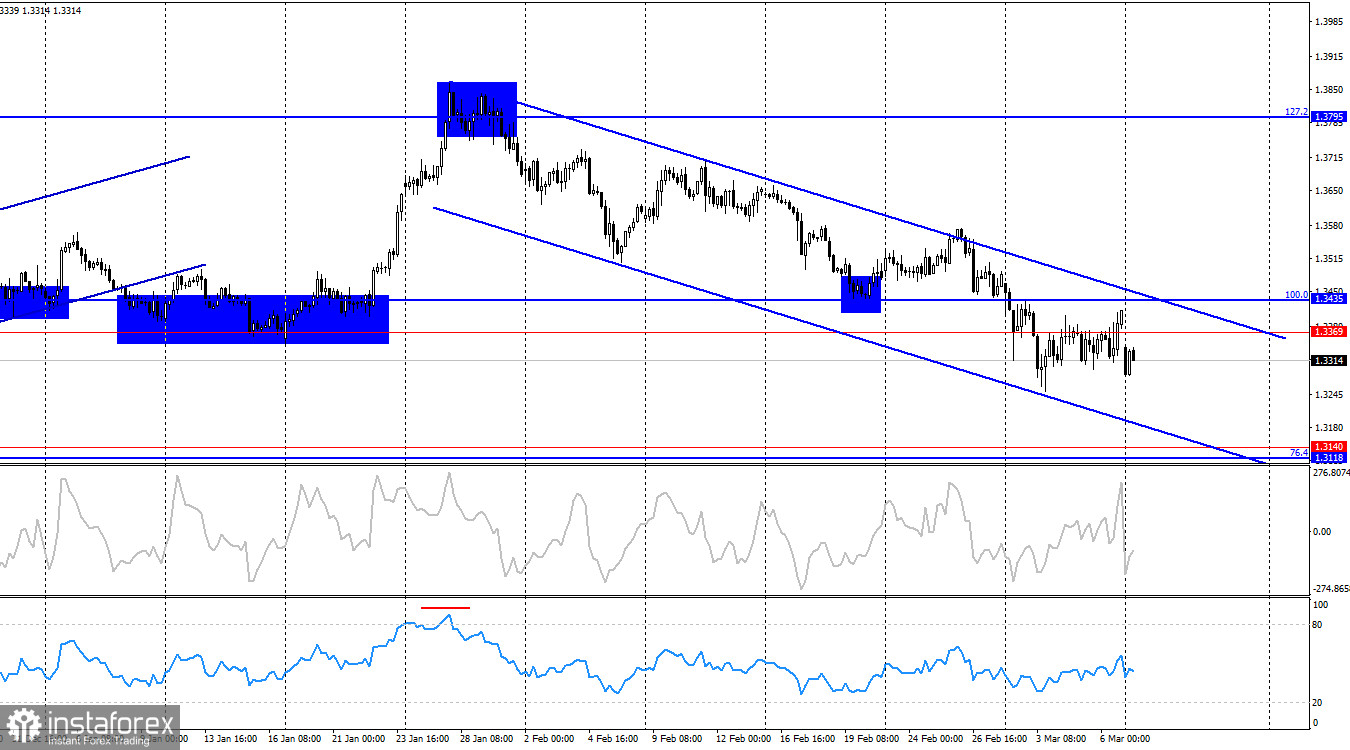
On the 4-hour chart, the pair rebounded from the upper boundary of the downward trend channel, reversed in favor of the U.S. dollar, and closed below the support level of 1.3369–1.3435. Thus, the decline may now continue toward the 1.3118–1.3140 level. A close above the downward channel would allow expectations for the completion of the bearish trend. No emerging divergences are currently observed on any indicators.
Commitments of Traders (COT) report
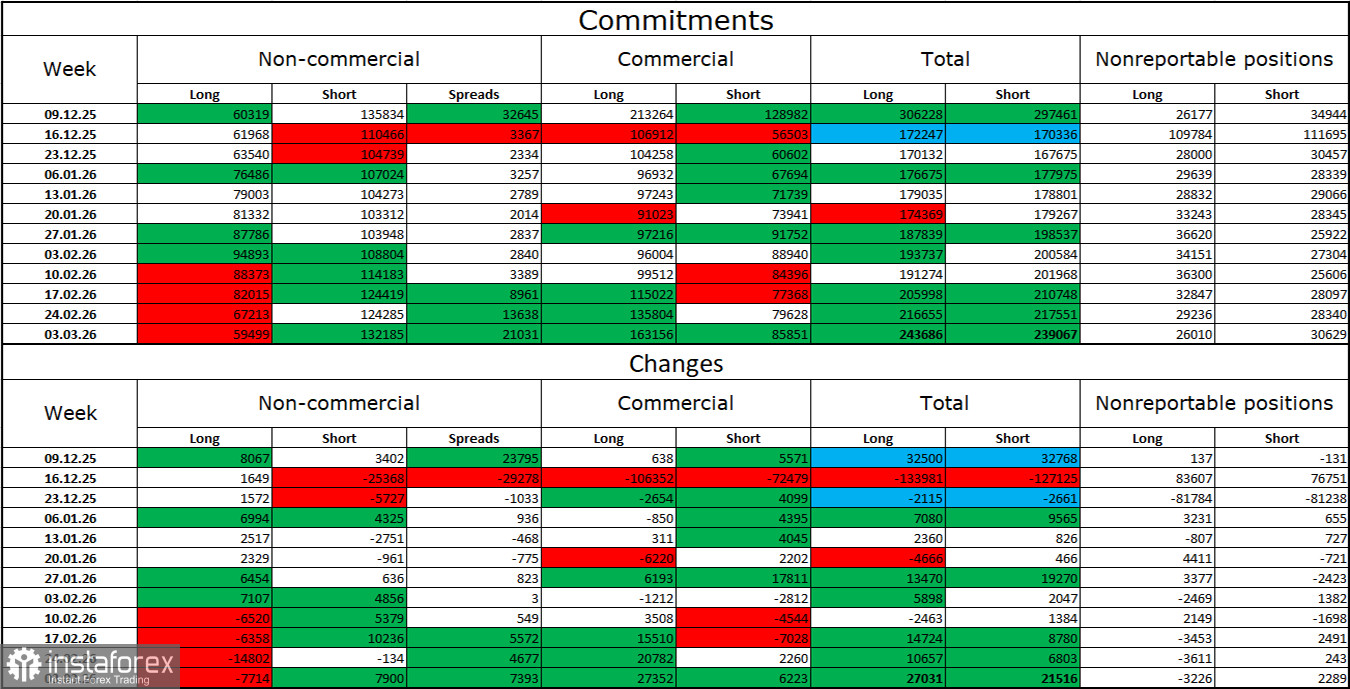
The sentiment of the Non-commercial trader category became more bearish during the last reporting week, which under the current circumstances no longer looks accidental. The number of long positions held by speculators decreased by 7,714, while the number of short positions increased by 7,900. The gap between long and short positions now effectively stands at 59,000 vs. 132,000. In recent months, bears have dominated more often, although the situation with contracts on the euro currency is the exact opposite. I still do not believe in a long-term bearish trend for the pound, but now everything will depend not on economic indicators or Trump's trade policy, but on the duration and scale of the war in the Middle East.
Over the past year, the pound looked like a safer currency compared to the dollar — more stable and with a clearer economic outlook. However, in recent months a correction began while the bullish trend was still intact, and then the conflict in the Middle East started escalating almost daily. Negotiations on an agreement between the U.S. and Iran failed, so now the dollar is rising due to geopolitics.
News calendar for the U.S. and the UK
On March 9, the economic calendar contains no notable events. The information background will therefore have no influence on market sentiment on Monday.
GBP/USD forecast and trading advice
Selling the pair may be possible today if the price consolidates on the hourly chart below the 1.3341–1.3352 level, with a target of 1.3199–1.3214. Buying could be considered if the pair closes above the 1.3341–1.3352 zone on the hourly chart, with a target of 1.3437–1.3465. However, since traders have been ignoring the 1.3341–1.3352 level in recent days, it may not be the worst decision to avoid trading based on it.
Fibonacci levels are built from 1.3341–1.3866 on the hourly chart and from 1.3431–1.2104 on the 4-hour chart.


