
یہ بھی دیکھیں


 09.07.2026 10:59 AM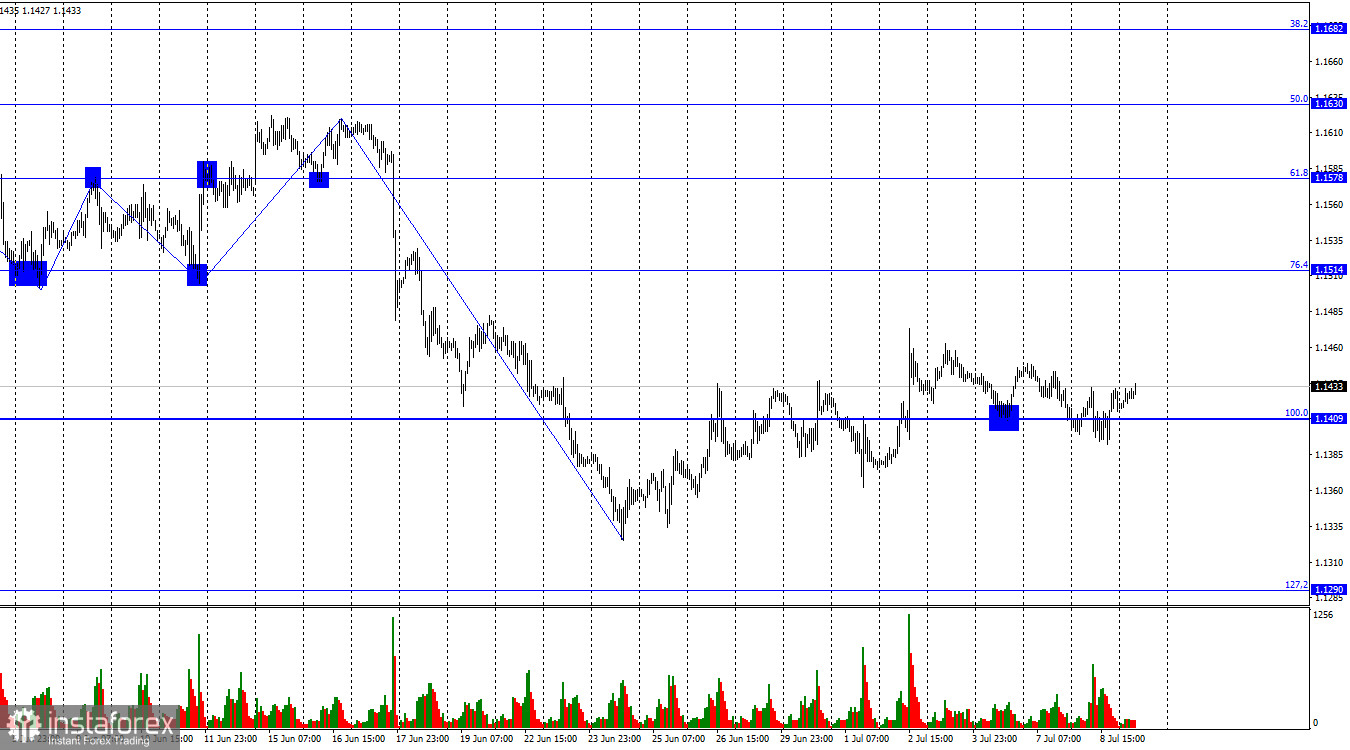
The wave structure on the hourly chart remains bearish. The latest completed downward wave broke below the previous low, while the latest upward wave has not yet exceeded the previous high and is still developing. The geopolitical backdrop has improved considerably in recent weeks, as hostilities in the Middle East have at least paused, and Iran and the United States have signed some form of agreement. However, it will only be possible to conclude that the bearish trend has ended after a break above the 1.1620 high or following the formation of two consecutive bullish waves.
The news backdrop was once again largely uneventful on Wednesday. The minutes of the latest FOMC meeting attracted little interest from traders, as all key information had already been absorbed immediately after the meeting. No economic reports were released during the day. Instead, market attention focused on the renewed deterioration in the geopolitical situation in the Middle East, which could have serious consequences for the global economy. Global oil prices had only recently stabilized, but over the past two days they have risen by $7–8 per barrel. If Donald Trump proceeds with blocking Iranian oil exports and, as a result, the Strait of Hormuz is blocked again, energy prices could rise further, fueling another wave of inflation and its associated economic consequences. Moreover, even if Iran and the United States avoid direct military conflict, they remain unable to reach agreement on Iran's nuclear program or on control of the Strait of Hormuz. Since the positions of both sides remain fundamentally incompatible, the world appears to be closer to a new conflict than to lasting peace.
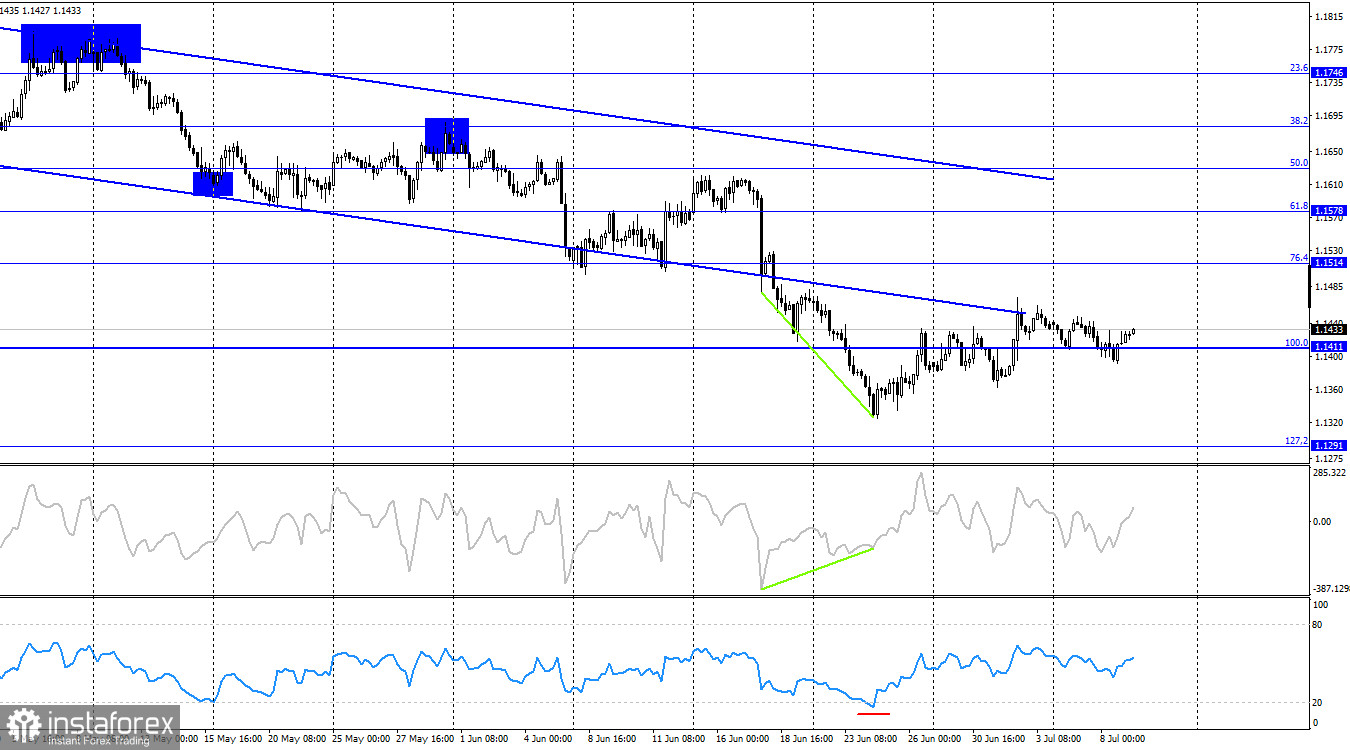
On the 4-hour chart, the pair has consolidated above the 100.0% Fibonacci retracement level at 1.1411, allowing traders to expect a further rise toward the 76.4% Fibonacci retracement level at 1.1514. A renewed consolidation below 1.1411 would signal the resumption of the decline toward the 127.2% Fibonacci retracement level at 1.1291. No emerging divergences are currently observed on any indicator. The downward trend channel remains valid.
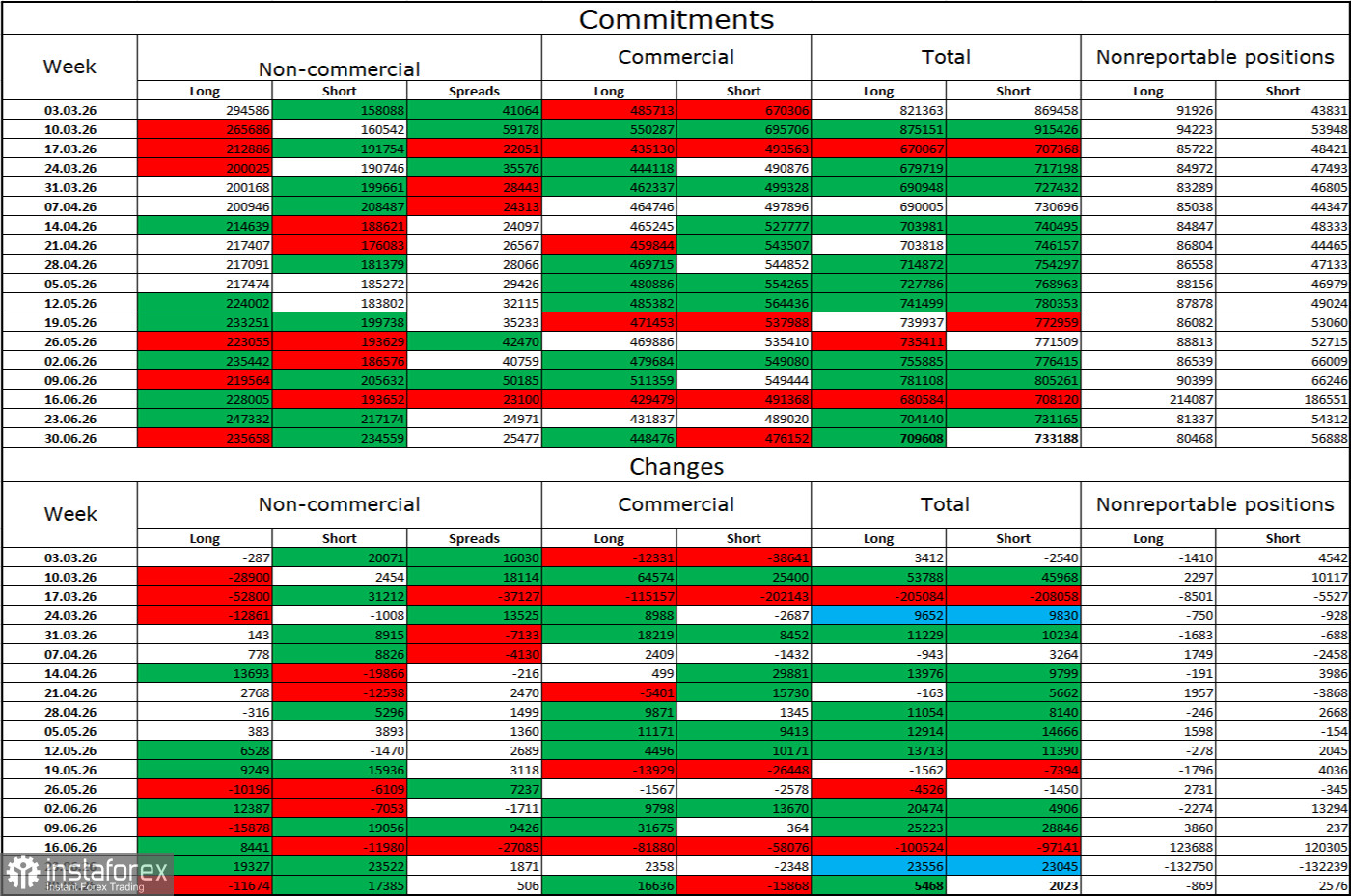
During the latest reporting week, professional traders closed 11,674 long positions and opened 17,385 short positions. Over the seven weeks spanning February and March, the bulls' overwhelming advantage disappeared due to the war involving Iran. Over the past fourteen weeks, however, positioning has become more balanced following the suspension of hostilities in the Middle East. Speculative traders currently hold approximately 235,000 long positions and 235,000 short positions.
Overall, from a long-term perspective, large institutional traders continue to view the euro favorably. Naturally, the numerous geopolitical and macroeconomic events that have shaped global markets in recent years continue to influence investor sentiment. In particular, the market remains focused on developments in the Middle East, where hostilities have been suspended and negotiations have begun that could eventually lead to lasting peace. At the same time, the market continues to largely ignore the improvement in the geopolitical environment, as well as several other factors that support the euro.
The economic calendar for July 9 contains three scheduled releases, none of which are considered major market-moving events. Therefore, the impact of economic data on market sentiment on Thursday is expected to remain very limited or absent.
Long positions became valid after the pair consolidated above 1.1409 on the hourly chart, with a target at 1.1514. Those positions may still be held today. Short positions may be considered if the pair consolidates below 1.1409 on the hourly chart, with a downward target at 1.1290. However, traders should keep in mind that current market movements remain exceptionally weak.
Fibonacci retracement grids are plotted from 1.1409–1.1850 on the hourly chart and from 1.1411–1.1850 on the 4-hour chart.


