
یہ بھی دیکھیں


 13.11.2026 10:40 AM
The yen still trades around 160 per dollar, and against that backdrop, a New York Fed report revealed how the U.S. Treasury helped it this summer. Yesterday the bank confirmed that on July 31 — the day of the coordinated intervention with Japan — it bought £79.4 billion in the market, paying for them with euros from U.S. Treasury reserves. In dollar terms, this is roughly $497 million. The Federal Reserve did not participate in the operation itself — the report stresses the Fed acted only as an agent of the Treasury.
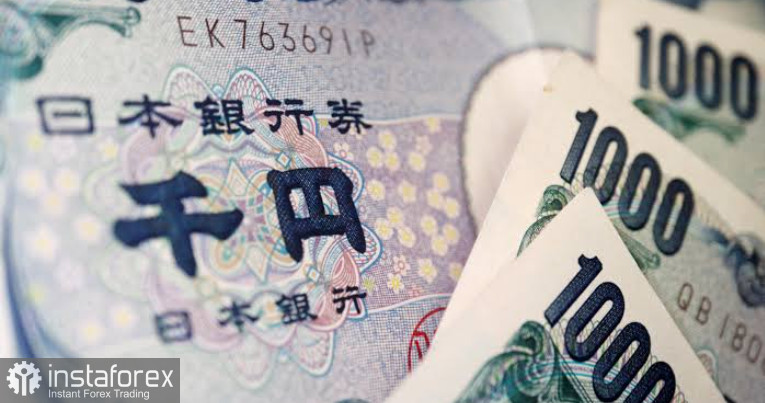
The money flow is simpler than it sounds. The U.S. Treasury has an Exchange Stabilization Fund, and part of its holdings are in foreign currencies, including euros. At the Treasury's instruction, the New York Fed sold those euros in the spot market (immediately at the prevailing rate) and received yen in exchange. That created additional demand for the Japanese currency. The dollar enters this chain as the unit of account — amounts are quoted in dollars — so £79.4 billion converts to about $497 million, corresponding to an exchange rate near £159.8 per dollar. The report says the operation's stated goal was to counter disorderly yen moves the Treasury had observed.
Why does selling euros for yen help versus the dollar? The EUR/USD, JPY/EUR and USD/JPY rates are linked like the sides of a triangle. When a large buyer acquires yen with euros, the market immediately recalculates the yen-dollar pair. So euro-to-yen support reverberates in USD/JPY even though the U.S. Treasury did not sell dollars in the transaction.
In scale, the U.S. contribution looks modest. Japan spent a record $97.5 billion on intervention through August 26, and $497 million is about 0.5% of that sum — roughly 200 times smaller than Japan's outlay. Bessent had previously called U.S. spending nominal, and the report confirms that. The significance of the U.S. action was symbolic: for the first time in nearly three decades Tokyo and Washington acted together in the FX market.
At the time, the yen fell to £163.9 per dollar — the weakest since the 1980s. Bessent explained U.S. participation by noting Japan's huge holdings of U.S. Treasuries, and that a mass sale of those securities to buy yen could add upward pressure on U.S. borrowing costs. The concern was real: January–August Japanese purchases of Treasuries totaled just $389 million, 99% less than a year earlier, and Tokyo reportedly sold some securities to support the yen. For Washington, a small intervention was a relatively cheap way to prevent a broader sell-off.
The picture has now reverted. Over two days, the yen fell from about 158 to nearly 160; on Thursday, USD/JPY touched 159.94, and this morning the yen recovered only a little to 159.63. Tokyo reacted immediately. "It's too early to forget what happened this summer," said Mimura, the top currency-policy official at Japan's Finance Ministry. He called recent moves too rapid but did not specify intervention levels. Since the summer, Bessent and Japan's Finance Minister Satsuki Katayama have repeated that they stand ready to intervene again.
The reason for yen weakness remains the same: the rate gap. The Fed's target range is 3.75–4.00%, and futures price 25-bp hikes in December, January and March. The BOJ's policy rate is 1.25%, and even the market's roughly 87% chance of a December hike does not close the gap — because after three Fed steps the spread would widen further. The stronger the U.S. data — and core CPI has beaten forecasts for the third month in a row — the greater the pressure on the yen and the higher the risk of fresh intervention.
One important difference from the summer: Tokyo and Washington recently confirmed that Japan can obtain dollar liquidity via the Fed's FIMA Repo facility without selling Treasuries. In my view, this weakens Washington's principal objection to Japan selling U.S. bonds and makes a new intervention technically easier. The U.S. is resisting other countries selling Treasuries because yields are already high. If Japan runs out of other options to stabilize its currency, it will likely have to dip into its holdings of U.S. bonds.
I believe that as long as the Fed keeps tightening and U.S. data beat forecasts, USD/JPY will remain around 160, and today's U.S. PPI could be another test of that level. I think USD/JPY is unlikely to stay above 160 without new intervention, and I would not rule out Tokyo returning to the market and Washington adding a symbolic contribution. But only a December BOJ rate hike is likely to reverse the yen sustainably.


