
یہ بھی دیکھیں


 18.11.2026 08:54 AM
In remarks in Argentina, Alberto Musalem backed a series of interest rate increases in the coming months. He estimates that the real rate, the nominal policy rate adjusted for inflation, should rise by roughly one percentage point by spring. "The economy will likely require several interest rate increases before the spring of 2027," St. Louis Fed President Alberto Musalem said.
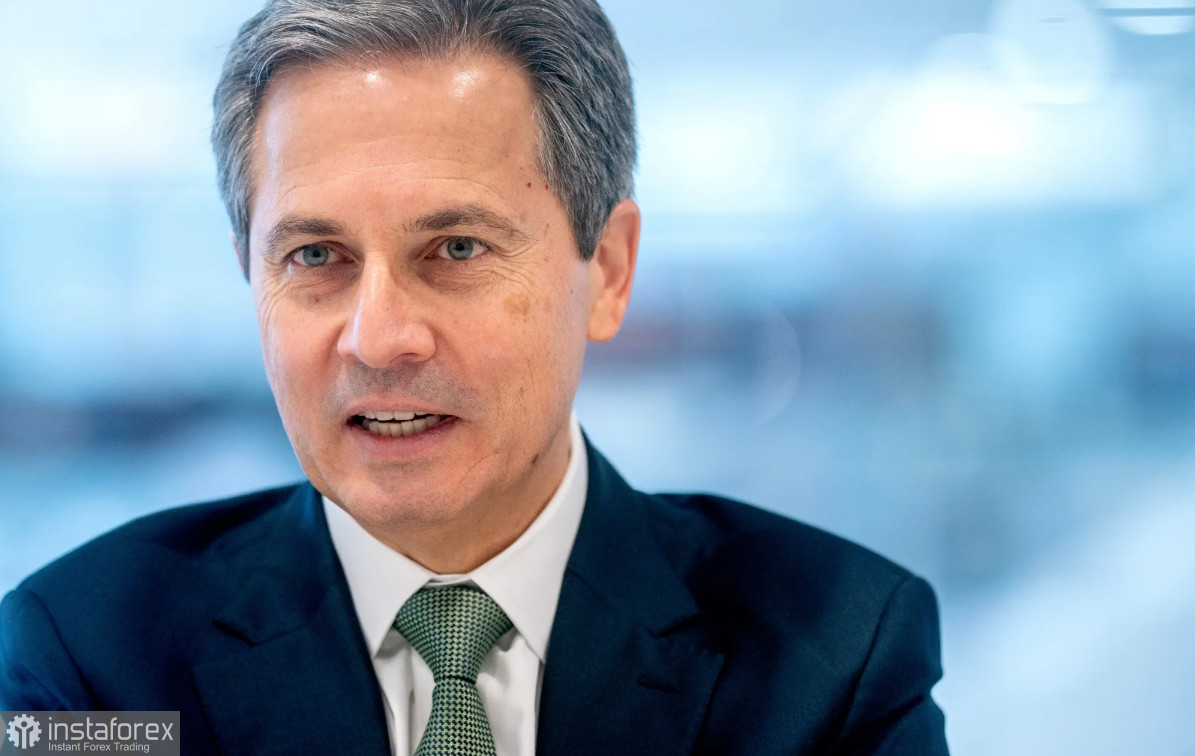
His main argument is straightforward. Under the most likely scenario, inflation will remain well above the 2% target for another 18 months unless the Fed continues to remove policy accommodation. The PCE price index for September already stands at 3.6% y/y. Slower inflation would lift the real rate mechanically, but Musalem made clear that he does not expect that to be sufficient — the Fed will have to do the heavy lifting with rate increases.
Note that his tone has become visibly firmer. On October 8, Musalem said rates should rise over the next six-to-nine months, though he did not support an October hike. The Fed then left the policy range at 3.75–4.00% on a 10–2 vote in which Hammack and Cook favored a raise. The timing he cites remains spring 2027, but instead of speaking generally about direction, he now speaks of several steps and gives a scale. Previously, he judged policy still too easy and tilted the inflation risk toward persistently high prices.
He is not alone. Hammack on Monday allowed for larger moves if inflation worsens; Waller on November 10 did not rule out a 50-bp hike in December; and Schmid on Sunday called price pressures very strong. The debate is over pace rather than direction. Futures are pricing in quarter-point hikes in December and January and another by April, which would put the fed-funds rate in the 4.50–4.75% range.
That is another support factor for the dollar. The US dollar index remains near its May 2025 highs, the 10-year Treasury yield sits around 5.13%, and while Warsh stayed muted on rates on Monday, his colleagues have filled the pause. The ECB's deposit rate remains 2.50%; many expect a rise only to 2.75% on December 17, so the Fed?ECB policy gap is roughly 1.25–1.50 percentage points. That keeps pressure on the euro and on gold.
Risks, however, remain. Musalem does not vote on the FOMC in the near term — his turn comes in 2028, and in 2027, he would vote only if the Atlanta Fed presidency remains vacant — so his comments are a point of guidance rather than a binding decision.
All told, a 25-bp hike on December 9 remains the base case, and the tightening cycle looks set to continue into spring. I view a 50-bp move as a live risk if inflation keeps surprising to the upside, and as long as Fed rhetoric stays hawkish, the dollar should retain support at least through the meeting.
EUR/USD
Buyers should take 1.1000. Only that would open a test of 1.1025. From there, a push to 1.1040 is possible, but doing so without large-player support will be difficult. On a pullback, I expect significant buying only near 1.0970. If that level lacks bids, it would be prudent to wait for a dip to a fresh low at 1.0940 or to open long positions at 1.0895.
GBP/USD
Pound buyers need to overcome the nearest resistance level of 1.3200. That would enable a move toward 1.3220, above which further gains would be challenging. The next upside target is around 1.3245. On a decline, bears will try to seize 1.3170. If they succeed, a break below that level would badly damage bullish positions and push GBP/USD to 1.3130, with the prospect of extending weakness to 1.3100.


