
یہ بھی دیکھیں


 23.11.2026 02:29 PM

The week opened with elevated uncertainty across global markets. A renewed cold spell in Europe is pushing gas prices up and intensifying fears over regional energy security, while Intel is under heavy pressure as evidence accumulates that the personal computer market is weakening.
At the same time, gold is trying to recover from a sharp decline, but its outlook depends heavily on upcoming inflation prints and Fed policy decisions. In the crypto market, miners are feeling growing pressure: a record hashrate combines with a lower Bitcoin price to compress mining yields.
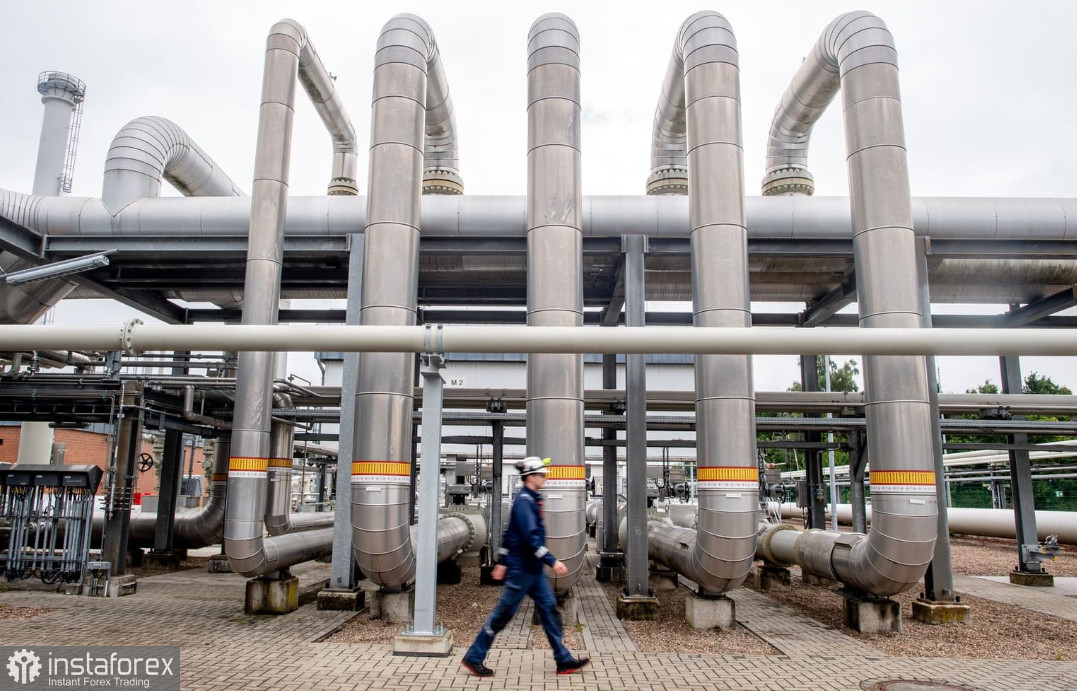
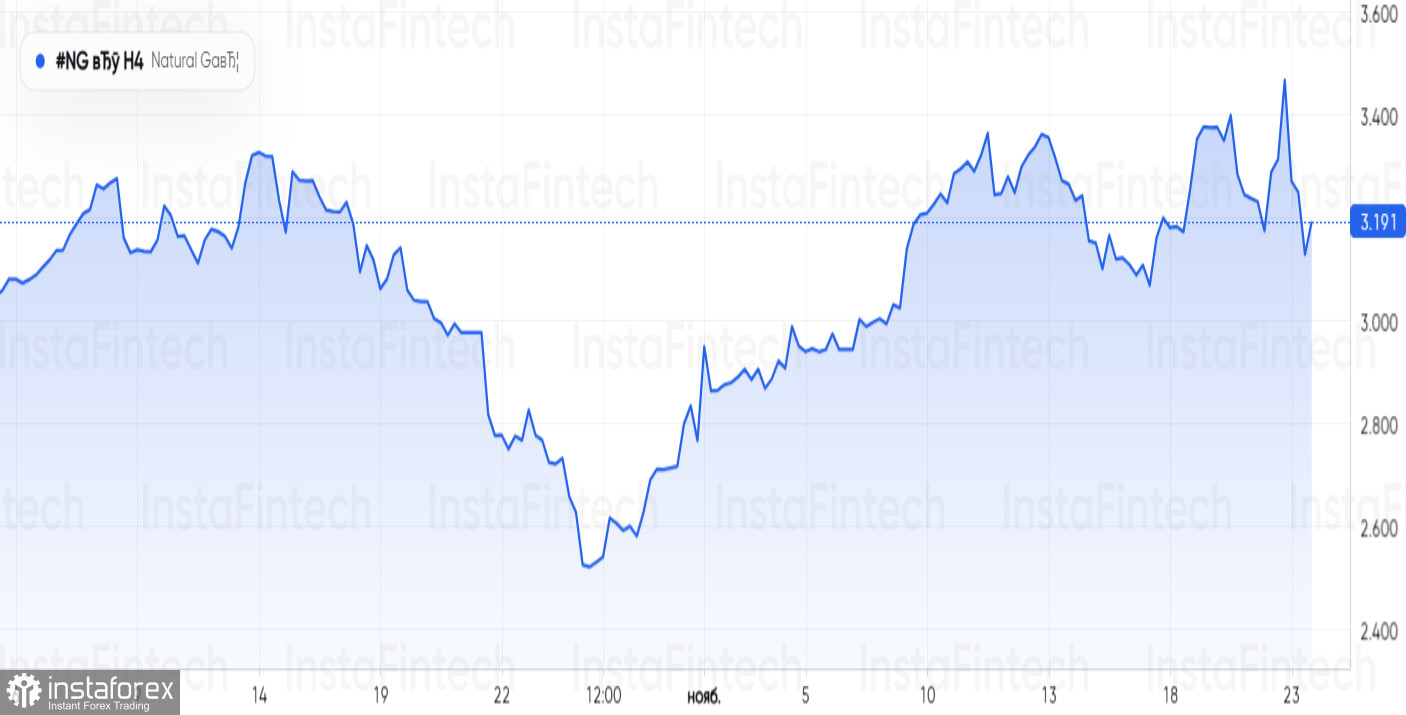
European natural gas prices surged on Monday, November 23, after weather models were revised colder. Forecasters now expect a longer and deeper chill — a direct implication for the market is higher heating demand and a heavier draw on already depleted storage.
According to Bloomberg, benchmark gas futures rose as much as 8.6% intraday, marking the biggest single-session move in more than a week and bringing the market close to a third straight daily gain. The nearest Dutch contract later eased somewhat but still closed roughly 4% higher, The Guardian reports.
The move underlines the vulnerability of Europe's energy complex ahead of the winter demand peak. Storage inventories are materially below typical levels, and the ability to rapidly replace lost flows is limited. Export disruptions tied to the US–Iran confrontation add to the upside risk.
Before the weekend, meteorologists expected the cold snap to be short-lived, with temperatures rebounding above seasonal norms. Updated models have changed that view: Energy Connects warns the chill in Northwest Europe could persist at least into early December.
Atmospheric G2 forecasts temperatures 3–5°C below the 30-year average this week, with deviations of 5–8°C below normal possible in early December. MetDesk also flags weaker winds in Germany, Denmark, and the Netherlands, which raises the risk further: lower wind output boosts gas demand for power generation.
According to Rabobank strategist Florence Schmitt, weather has increased demand in Europe somewhat, while Southeast Asia remains a steady bid in the spot market. Cold snaps in Japan, South Korea, and parts of China could increase competition for LNG cargoes.
All told, the gas market enters winter highly sensitive: cold weather, low inventories, supply disruption risks, and LNG competition will likely sustain high price volatility.
The instruments mentioned are available to trade on the InstaTrade platform. If you want to follow gas markets and act on trading opportunities, consider opening an InstaTrade account and downloading the mobile app.

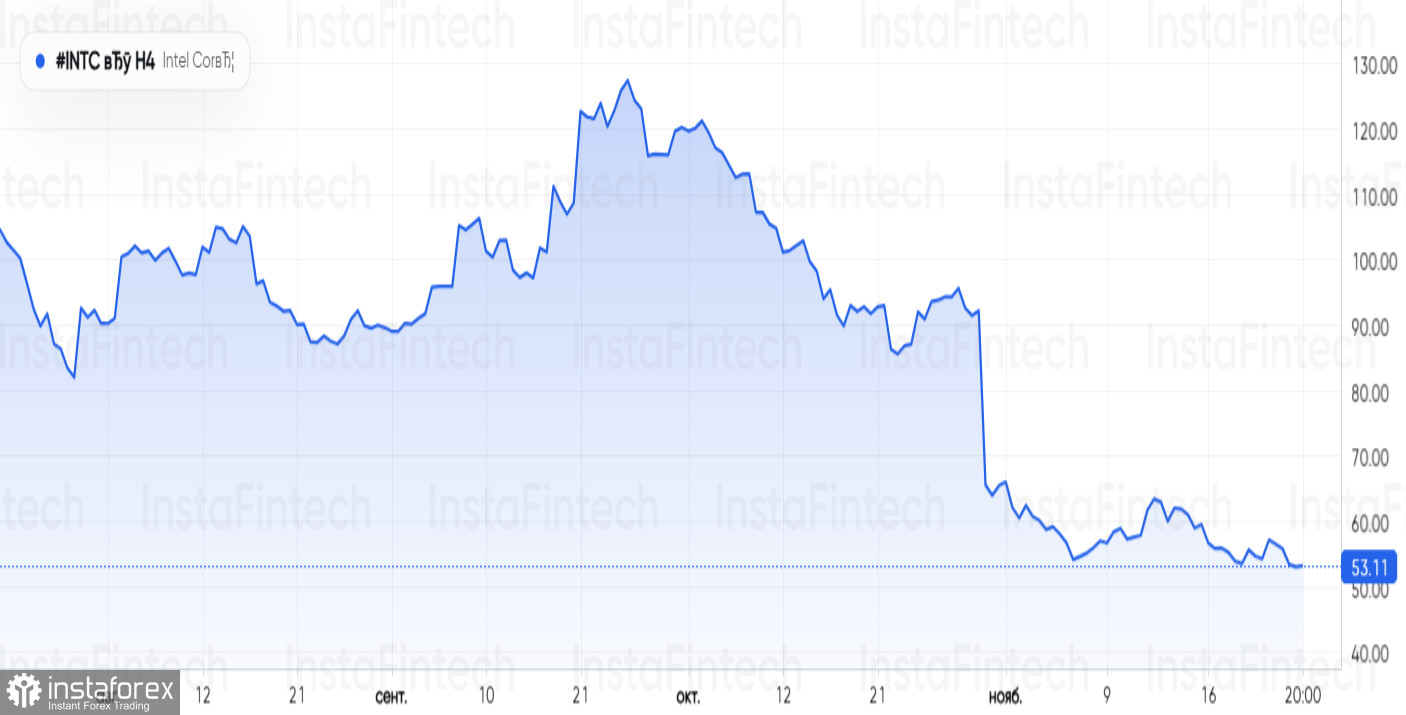
Intel is enduring one of the most painful stretches in its modern history. The chipmaker's shares are on track for their worst two-month decline since 1972, the company's early days in the semiconductor industry.
By the close on Friday, November 20, Intel stock had lost roughly 55% of its value since the end of September, according to International Business Times Australia. The reversal looks especially stark after a period of exceptional strength: just six months ago, the shares had posted a blistering run, roughly +160%.
A fresh test for the sector arrives Tuesday, November 24. HP Inc. and Dell Technologies will report after the close, and Best Buy will release results before the US opening bell. Those reports should give investors a clearer read on the depth of the PC demand slowdown.
As CNBC noted, Intel's very weak Q4 outlook was a red flag for the whole industry. The company cited falling PC demand, rising costs, and constrained memory availability — pressures that lift the cost not only of PCs but also of gaming consoles and smartphones.
The broad sell-off in Intel shares began after the company's October 29 quarterly release. Citing a shareholder lawsuit, The Kansas City Star reports the stock plunged nearly 29% on October 30 after Intel guided Q4 revenue to $15–16bn, about $1.5bn below Street expectations.
That said, the underlying quarter was not uniformly weak. IBTimes reports Intel's Q3 revenue rose by about 21% to $16.5bn. The data-center and AI segment showed particularly strong growth, with revenue up 78%. Yet investors were more worried about the outlook for Intel's traditional PC franchise.
CEO Ping-Fu Tan told analysts that in recent weeks, customers have reported signs of PC demand slowing, partly due to higher prices and limited memory availability. CFO David Zinsner warned that weakness could persist at least through the first half of next year.
Intel now expects PC-processor revenue to fall by more than 20% versus Q3. Trefis estimates global PC shipments could drop roughly 12% in 2026 and another ~10% in 2027.
Compounding the outlook, an incident that halted an Intel fab in Israel is expected to reduce Q4 revenue by about $300m.
Following the sharp share decline, Intel shareholders have prepared a class-action complaint alleging the company's management failed to fully disclose the magnitude of the PC demand slowdown and its impact on future financial results.
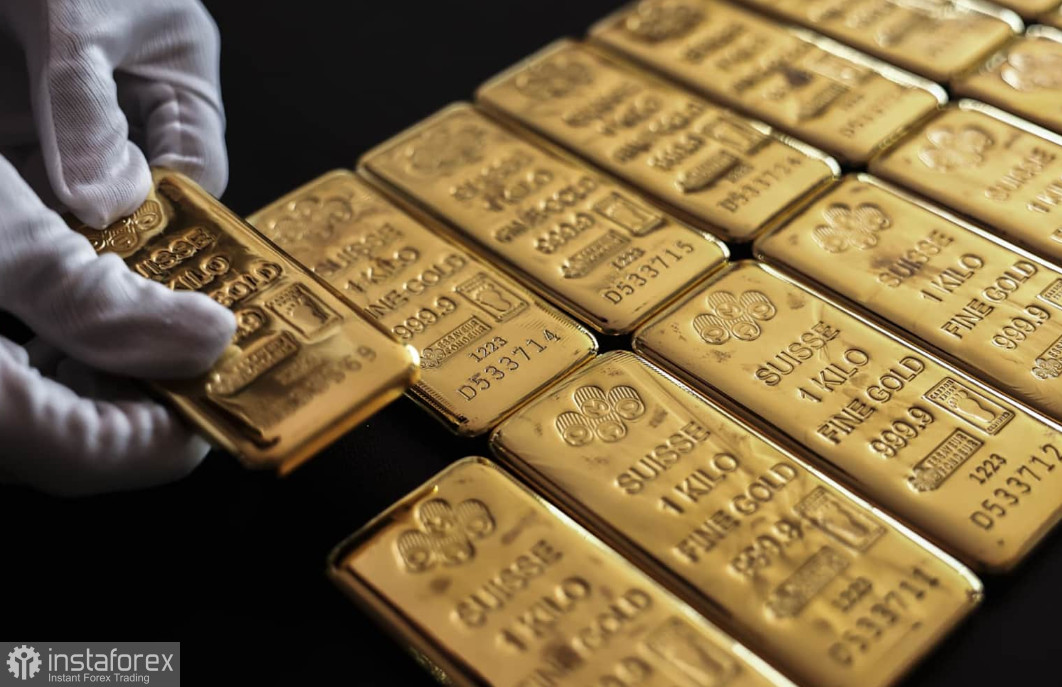
Gold opened the week with gains, partially recouping losses from a broad sell-off. During the Asian session on Monday, November 23, the precious metal rose by about 1.2%, Reuters reports. On Friday, spot gold dipped to its lowest level since September 2025, a 14-month low.
That rebound only partly offsets the damage from a very weak week. Over the prior five trading days, gold lost roughly 9%, marking the largest weekly drop since March. Investors are now focused on October's personal consumption expenditures (PCE) data due Wednesday. The Fed treats the PCE price index as its preferred inflation gauge, and the print is a key input for monetary policy decisions.
The dominant headwind for gold remains the market's expectation of another Fed rate hike. CME FedWatch pricing cited by Reuters shows traders put the odds of a December tightening at about 93%.
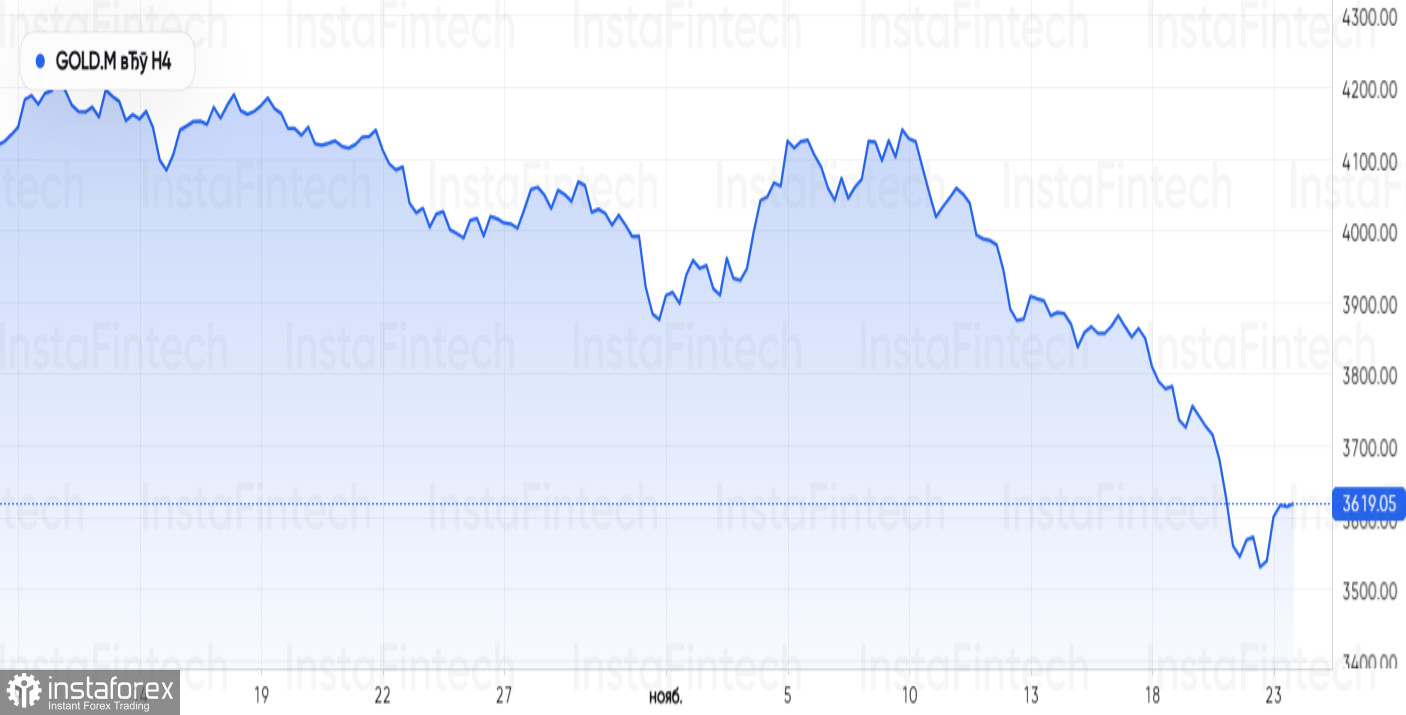
That's bearish for a non-yielding asset like gold. Higher rates raise the opportunity cost of holding bullion and make yield-bearing alternatives, Treasuries, and cash instruments relatively more attractive.
Fed Governor Lisa Cook reinforced the hawkish tone on Friday. She said the current policy rate is not yet sufficient to confidently fight inflation, which she described as "a matter of substantial concern."
"In a different environment, the committee could afford to be patient, but I continue to believe that in this economic climate we do not have that luxury," Cook said in prepared remarks for a central bank conference in Chile.
She argued the 25-bp rate increase the Fed delivered at the September 15–16 meeting did not do enough. The target range now sits at 3.75–4.00%, but Cook warned the October pause may have raised the risk that policy falls behind the evolving economy.
Fed officials also voiced concern about the AI investment boom. The Wall Street Journal reports Cook believes borrowing costs are not yet high enough to cool the surge in AI-related spending, which has contributed to inflationary pressure this year. The October FOMC minutes likewise show nearly all participants view further tightening as likely appropriate.
So near-term gold performance will hinge on fresh inflation data and Fed signals. If the PCE report again points to persistent price pressure, markets will have renewed reason to price more tightening — a development likely to put renewed downward pressure on gold.
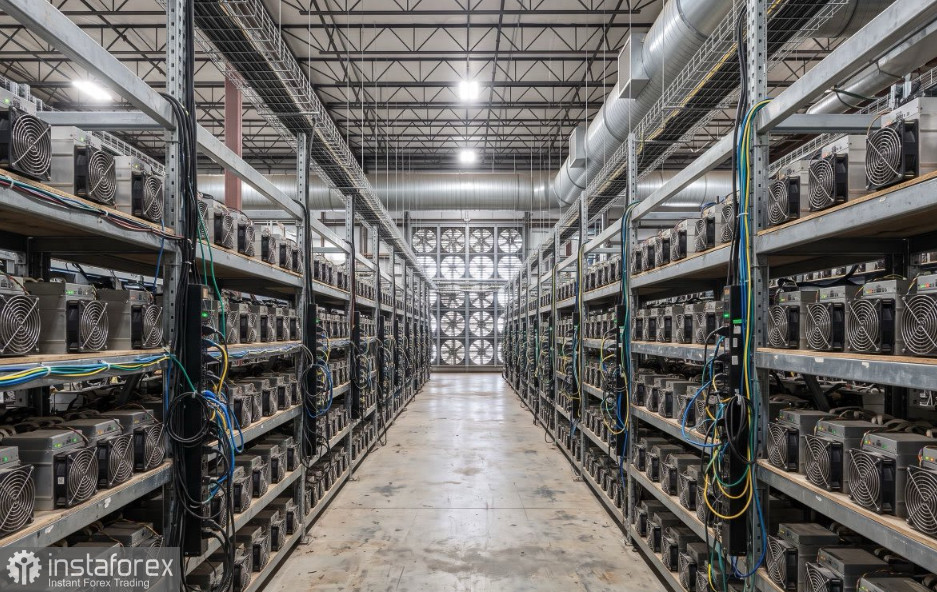
Bitcoin mining is at a difficult turning point: network computing power is setting new highs even as miner revenues approach multi-year lows. While hashrate comfortably sits above one zettahash per second, equipment profitability is falling, driven mainly by the drop in BTC and intensifying competition for block rewards.
Hashprice, the estimated daily revenue per unit of hashrate, fell to about $26.16 per PH/s per day on Saturday, November 21, according to Hashrate Index data cited by Cointribune. By comparison, the metric topped $40 several times in September and was about $30.45 as recently as November 16.
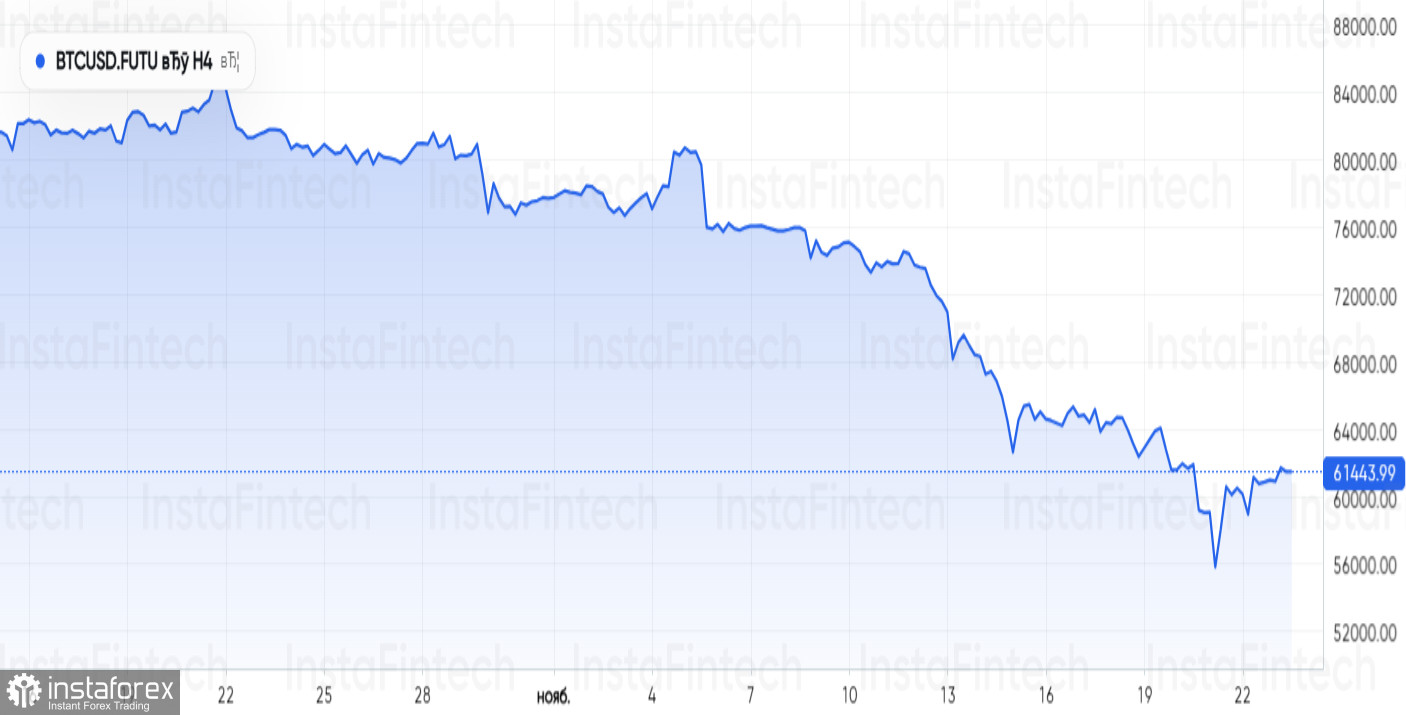
The broader crypto market adds to the pressure. Investing.com shows Bitcoin trading below $60,000 on Sunday, down more than 25% for the month. That creates a one-two punch for miners: the fiat value of mined coins is falling, while competition for each block reward is increasing.
At the same time, network hashrate continues to climb. After dipping to roughly 912 EH/s on November 14, hashrate rose to about 1.06483 ZH/s, marking an almost 17% gain in a few days, Cointribune notes. That implies new capacity is coming online or returning, raising difficulty and pushing costs higher for all miners.
Another headwind is that transaction fees are extremely low. Over the prior 24-hour period, fees accounted for only 0.64% of total block rewards, Investing.com reports. In practice, that means miners' revenue today is almost entirely price-driven; fees provide a negligible offset to the market decline.
Even modern ASICs are delivering modest margins. Cointribune estimates that at $0.10/kWh power cost, Bitmain's Antminer S23 Hydro 3U yields roughly $6.29 per day after electricity; Bitdeer's Sealminer A4 Ultra Hydro - about $4.92. Less efficient rigs may generate as little as $0.58 daily gross profit.
Those figures ignore capex, maintenance, cooling, site rental, and pool fees. Operators running older, energy-hungry machines are the most vulnerable: under current market conditions, mining BTC may become uneconomic for them.
JPMorgan's November 18 note underscores the stress. Analysts led by Nikolaos Panigirtzoglou estimate the average breakeven cost to mine one BTC at about $86,000. Crypto Briefing, citing TradingView, noted that breakeven was roughly $77–78k in June and rose to around $85k in September.
After BTC slid below $60,000 on November 20, the gap between market price and estimated mining cost exceeded $26,000, a material signal for the industry. JPMorgan cautions that breakeven is not a guaranteed support level for the asset; rather, it represents a "soft floor." Prolonged trading below production costs could force high-cost miners to sell reserves or pivot to alternative revenue streams, such as providing infrastructure for AI workloads.
The market can also restore balance without a sharp BTC rally. If unprofitable rigs are switched off, hashrate would fall, mining difficulty would adjust down, and surviving miners could see competition ease and margins recover gradually.
You can monitor Bitcoin dynamics and trade crypto instruments with InstaTrade. The products mentioned in this analysis are available on the platform — open an InstaTrade account and download the mobile app for timely market access.


