
یہ بھی دیکھیں


 24.11.2026 06:49 AM
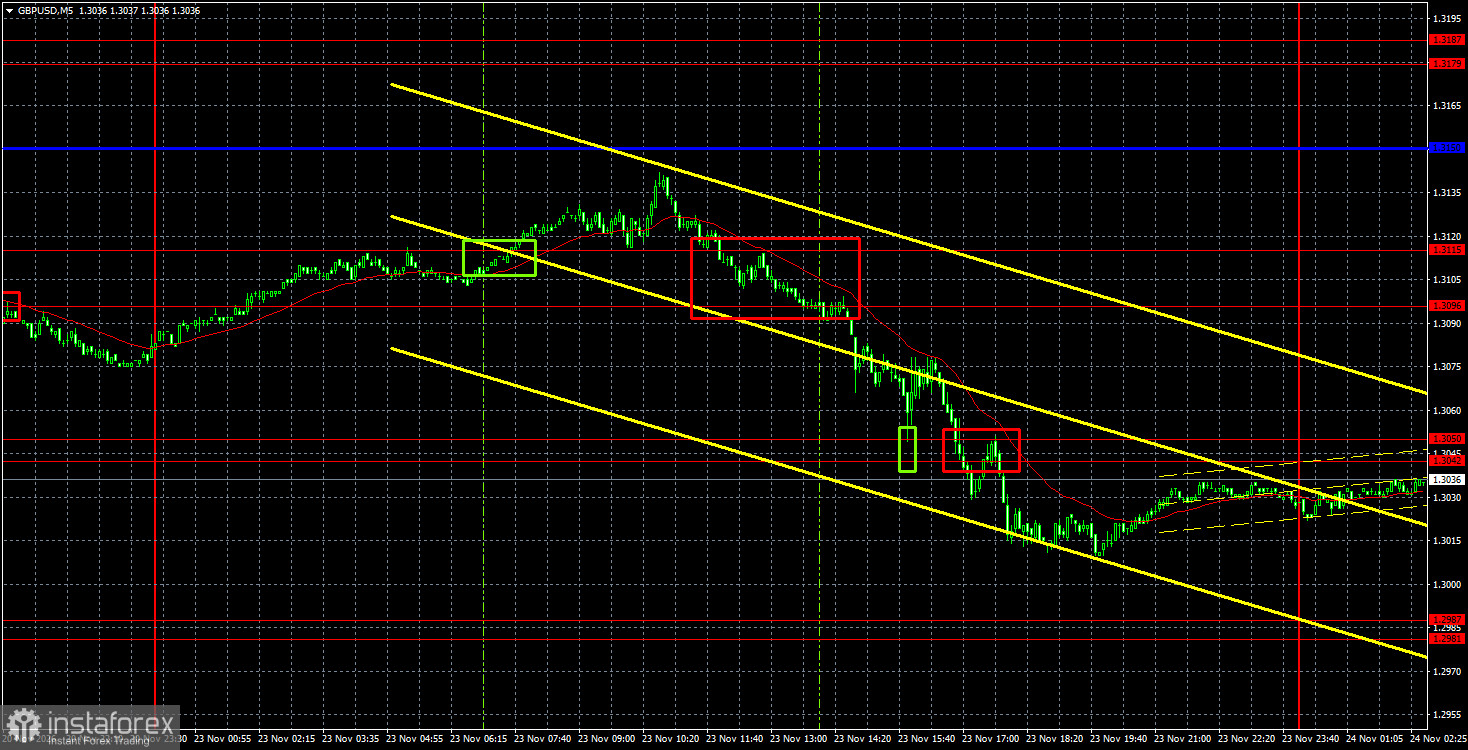
The GBP/USD pair continued to fall on Monday, even though no local factors justified another plunge in the pound. The market keeps "working through the Fed-hawkish narrative," although by now it is probably obvious to everyone that there is no real logic in the current moves — the market is focused on this one factor and ignores everything else. Thus, Bank of England tightening currently carries no weight. Strong UK releases cannot push the pound up even by 50 pips. And if, by some miracle, the pound does rise by those 50 pips, it typically loses 100 pips by the close. On Monday, the UK PMIs did not warrant a pound crash, and US PMIs did not warrant a dollar rally—yet GBP/USD moved in ways that do not match the nature of the published data or even their timing. In other words, the market briefly pulled back higher and then collapsed — not after a release but at an arbitrary time. The situation on FX markets therefore remains unchanged: the dollar rises almost every day without fundamental or macro support.
Technically, the pound continues to form a downward trend. Higher-timeframe technicals can still be read as supportive of recovery, but the pound is again falling too fast and too far relative to the news flow, which even breaks the technical picture on higher charts. The pound's fate depends on whether traders can defend the important 1.3000–1.3180 area. So far, everything points to the market ignoring that zone. The down move is virtually relentless, making it hard to draw a trendline.
On the 5-minute TF, several trade signals formed on Monday that deserve attention. The first was a false buy signal around 1.3115; that trade closed at breakeven after the pound moved up about 20 pips. Next came a sell signal in the 1.3096–1.3115 area that generated profit. A bounce from 1.3050 proved false, while a confirmed break below 1.3042–1.3050 gave traders several more dozen pips. As we see, all buy signals were false because the market refuses to buy the pound.
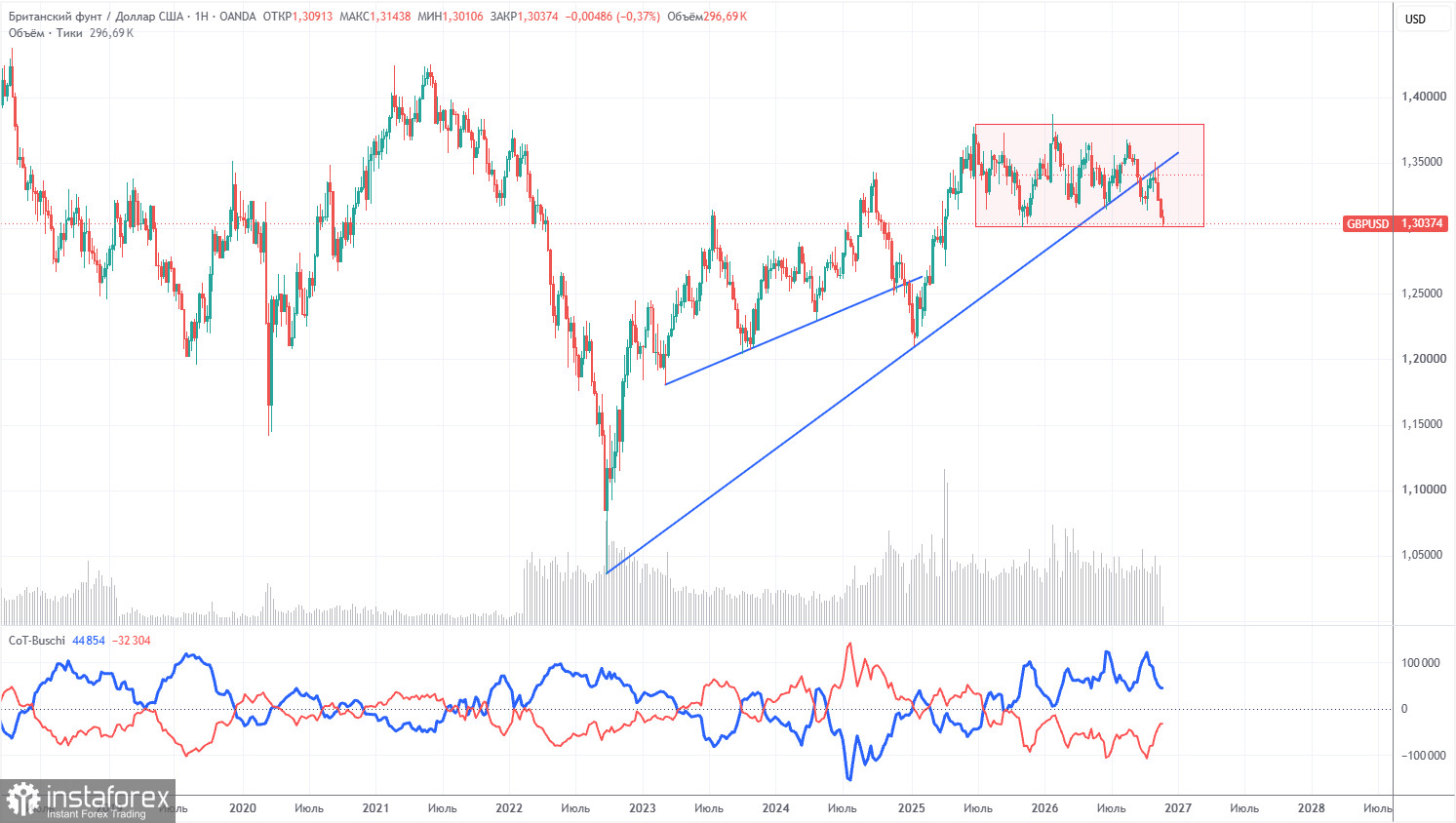
COT reports for the pound show that non-commercial traders have dominated the market with selling throughout 2026. The net position is negative despite a long-term uptrend remaining in place. Given events in the Middle East, it is not surprising that dollar demand has been high in 2026. The US-Iran war is formally on pause but could resume at any time. The Fed's shift toward tighter monetary policy also supports the dollar, and the rising trendline was breached — though that breach occurred within a flat, so we do not regard the uptrend as conclusively over. Price may attempt to break out of the sideways channel soon; if it does, that could signal the start of a sustained downtrend.
We also note a strong divergence between the red and blue COT indicator lines, which reflects a large divergence in positions between commercial and non-commercial traders. Such divergence often precedes a trend change. According to the latest COT (dated November 17), the "Non-commercial" group opened 9,000 BUY contracts and closed 1,900 SELL contracts; thus, non-commercial traders' net position increased by 10,900 contracts over the week—a development that has so far not affected the pound.
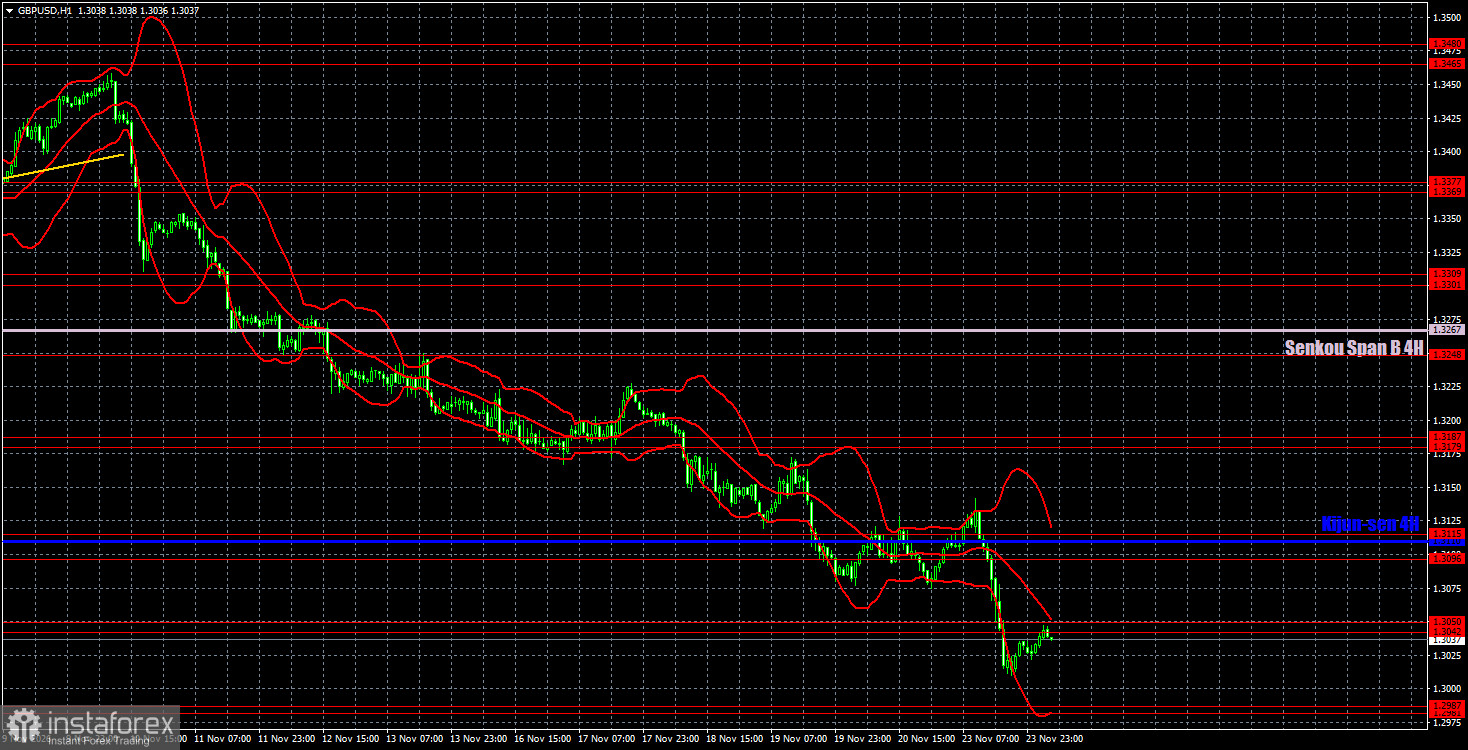
On the hourly timeframe, the GBP/USD pair continues a relentless downward move that could break the sideways channels on the daily and weekly timeframes. If that happens, nothing will prevent the pound from a medium-term decline. The only hope is that liquidity is removed from the October 14 low, but the market keeps selling and ignoring virtually all factors.
For November 24 we highlight the following important levels: 1.2863, 1.2981–1.2987, 1.3042–1.3050, 1.3096–1.3115, 1.3179–1.3187, 1.3248, 1.3301–1.3309, 1.3369–1.3377, 1.3465–1.3480. The Ichimoku Senkou Span B (1.3267) and Kijun-sen (1.3110) lines can also be sources of signals. It is recommended to move Stop Loss to breakeven after the price has moved 20 pips in the favorable direction. Ichimoku lines may shift during the day, which should be considered when defining trading signals.
No major UK or US releases are scheduled today, yet the pound can continue to fall without them. The market currently needs no justification to sell the pair every day.
Traders may target the 1.2981–1.2987 area for short positions if price is rejected from the 1.3042–1.3050 zone today. A confirmed close above 1.3042–1.3050 would open the way to 1.3096–1.3115 as targets for long positions.


