
Lihat juga


 27.10.2026 01:07 PM
*see also: InstaTrade trading indicators for USDX
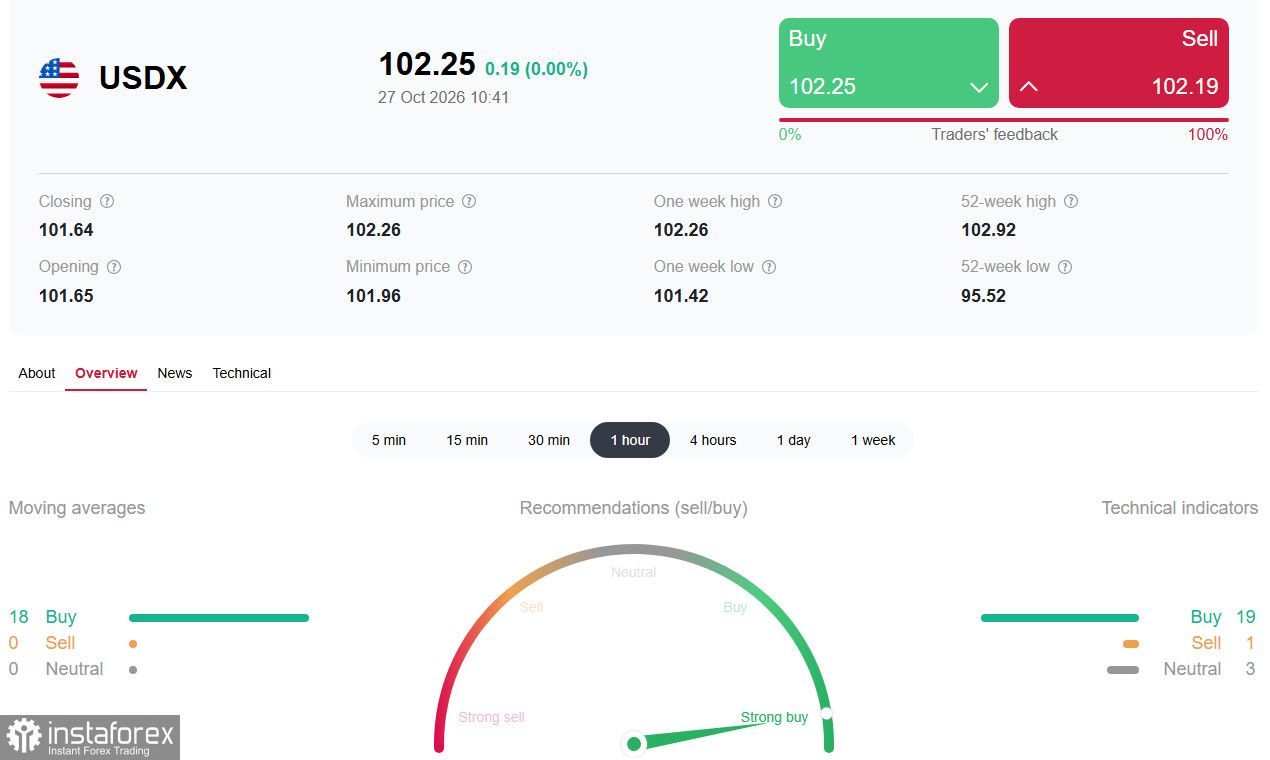
In the first half of the European session on Tuesday, the US dollar index (USDX) is trading around 102.22, extending a third consecutive session of recovery and reaching a near two-week high. The dollar is supported by three factors: a rebound in Treasury yields after a recent slide to three-week lows, solid odds of a December Fed rate hike, and geopolitical tensions in the Middle East that boost safe-haven demand. However, the market is paused ahead of Wednesday's FOMC decision, which limits buyers' aggressiveness.
USDX has bounced from last week's three-week low of 101.45 to 102.22, helped in part by a roughly 3-bp recovery in 2-year Treasury yields and the psychological break of 102.00.
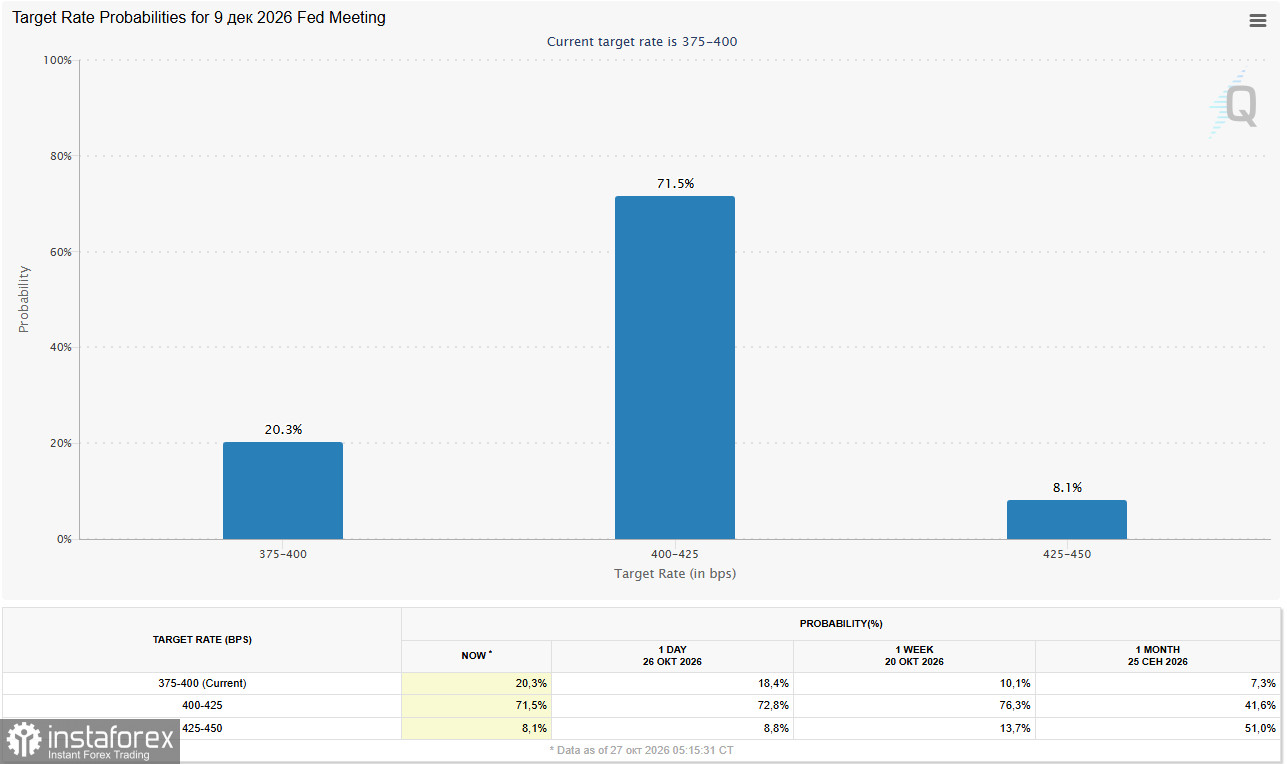
CME FedWatch prices in about an 89.5% chance of a pause at the October 27–28 meeting and an 80% chance of an interest rate hike in December.
Yields have recovered. After a sharp drop to three-week lows amid a flight to safety during the AI-led equity sell-off, the 10-year Treasury yield has stabilized near 4.98%, and the short end of the curve has even ticked up. That has restored some support to the dollar.
*for reference:
The short end of the curve reflects yields on short-term paper (typically up to one year); the long end shows yields on longer maturities (typically 10 years or more).
Curve shape — the relationship between yields at different tenors — helps assess market expectations and economic conditions. In normal times, the curve slopes upward because investors demand a premium for tying up capital in the long term.
Short and long ends react differently to events and policy: the short end is sensitive to the policy rate and near-term expectations, while the long end reflects long-run views on rates and inflation.
Main insight: if the short end rises while the long end does not, the market doubts the sustainability of growth. That can erode dollar support even when rates are formally high. The short-long spread often signals a trend reversal before the regulator explicitly changes policy.
Geopolitics remains relevant. US–Iran negotiations are stalled, and Houthi attacks on Saudi infrastructure continue. On Tuesday, Saudi air defenses intercepted four drones launched toward the country's south, supporting a risk premium and boosting demand for the dollar as a safe-haven asset.
French crisis weighs on the euro. French 10-year OAT yields remain near 2002 highs, and the spread to German Bunds sits at 2011 levels. EUR is trading near 1.1150, which indirectly supports USDX because the euro carries the largest weight in the index.
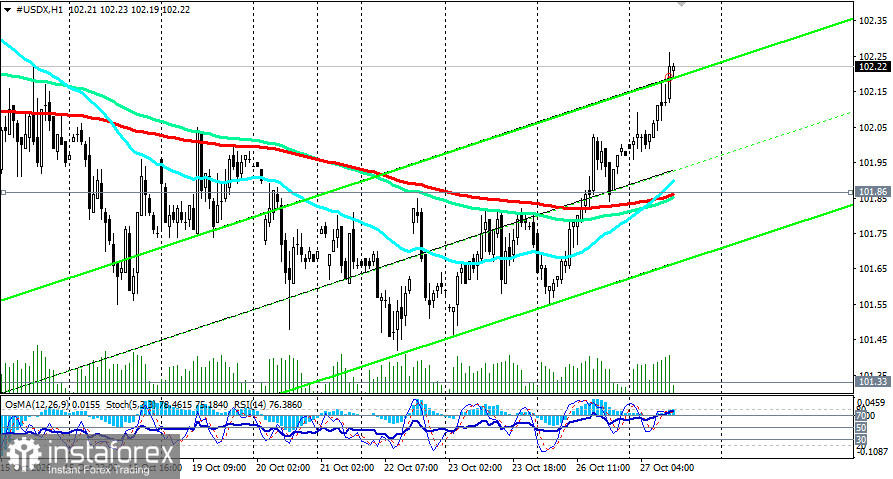
InstaTrade's composite technical analysis on the 1-hour chart signals "Strong Buy": 19 of 23 applied indicators recommend buying.
Short?term setup improved after the 102.00 break, but a confirmed reversal requires further upside.
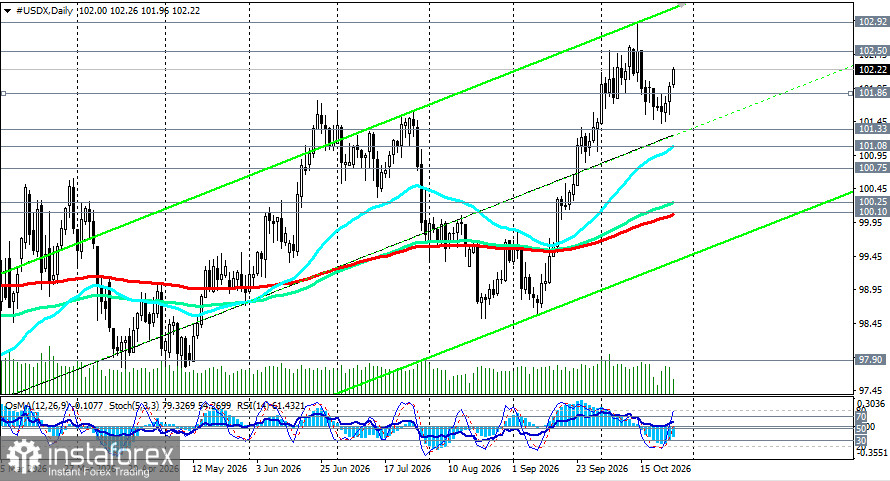
EMA 50, 144, and 200 (interpretation):
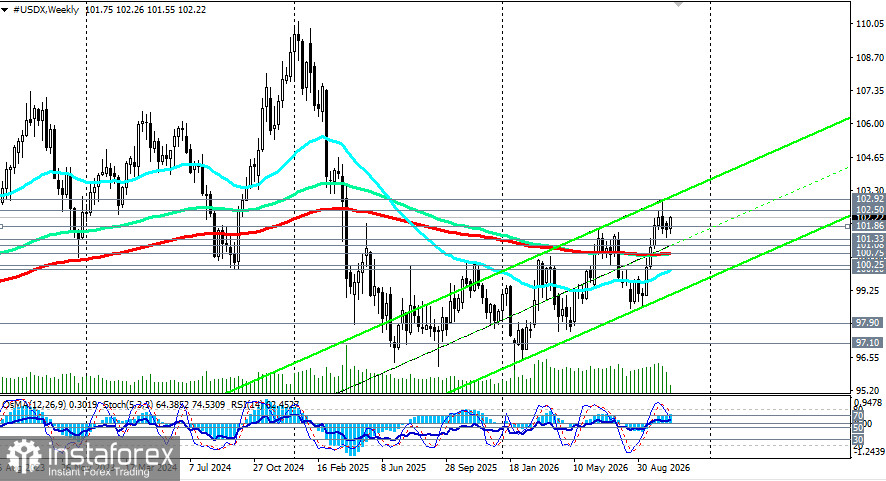
USDX has improved technically by breaking 102.00, but a hawkish Fed cue is needed to confirm a true trend reversal. Key levels: bulls aim for 102.30; bears look to 101.86 (H1 EMA200) and the critical zone 101.08 (D1 EMA50)–100.75 (W1 EMA200).
For short-term traders:
For medium-term investors:
Risk management:
This overview is based on public sources and media reports and reflects price dynamics influenced by many factors; risk management and position control are essential.


