
Lihat juga


 31.03.2026 01:46 PM
Just as markets once doubted a protracted Middle East conflict, they now strongly doubt a swift de-escalation. According to The Wall Street Journal, Donald Trump is considering exiting Iran even if the Strait of Hormuz remains closed. The United States would leave that problem to Europe, Saudi Arabia, and others. It matters more to them. Meanwhile, Tehran has struck another tanker, signaling it does not intend to end the war.
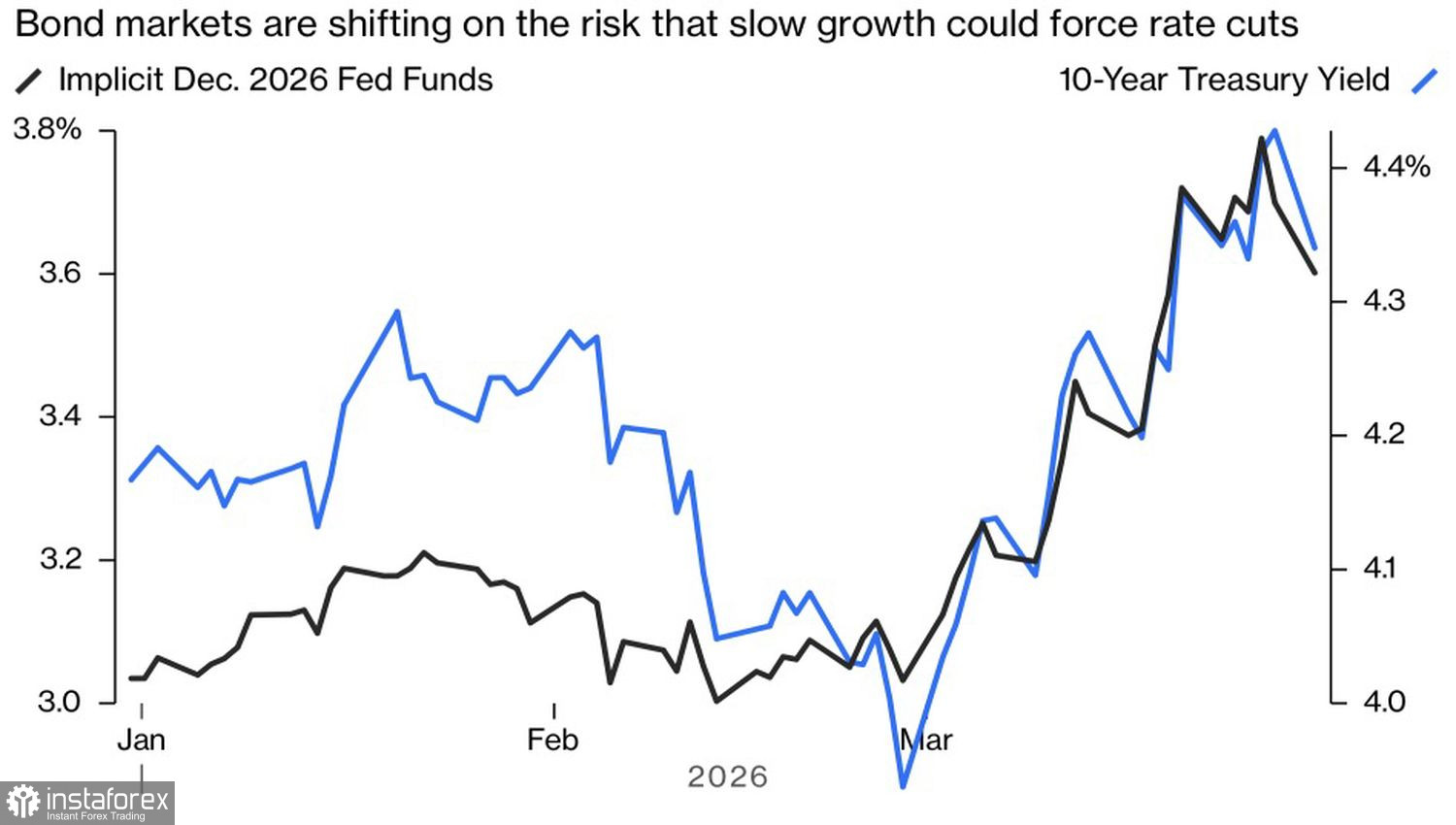
It is easy to understand the White House's stance. The Middle East conflict is disrupting supply chains not only for oil but for other raw materials, from aluminum to helium, a critical input for AI technologies. Inflation risks could quickly accelerate across the board, and the Fed's willingness to keep interest rates high risks slowing GDP growth, possibly tipping the economy into a recession. As a result, Treasury yields are moving lower alongside diminishing odds of monetary tightening.
Dynamics of Treasury yields and Fed rate-hike odds
According to Jerome Powell, the Fed cannot fully offset an energy shock because monetary tools transmit too slowly to the real economy. In the current environment, the best course is to sit on the sidelines and watch how events in the Middle East unfold. New York Fed President John Williams shares that view; he says that interest rates are at levels sufficient to deal with potential problems.
Unlike the Fed, the ECB prefers to hint at tightening. Governing Council member Madis Muller did not rule out a rate hike as early as April. His colleague Fabio Panetta said that the bank must prevent inflation from accelerating.
Dynamics of European inflation
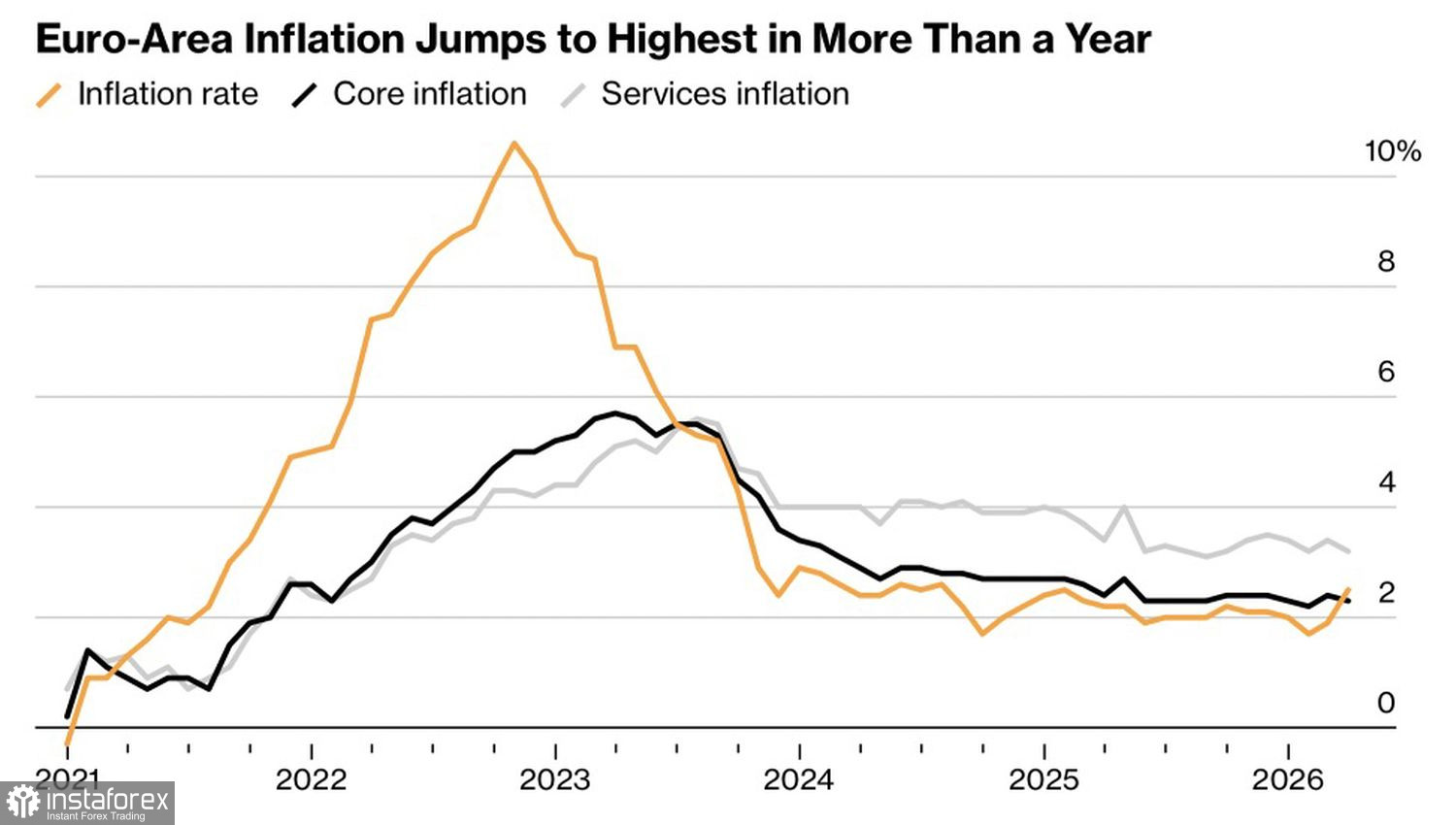
Indeed, consumer prices in the eurozone jumped from 1.9% to 2.5% in March on higher energy costs. That allows the futures market to price in two to three ECB tightening moves in 2026. Core inflation, however, slowed to 2.3%. Powell may be right: the best policy right now could be to do nothing.
In my view, the ECB will not tighten as aggressively as derivatives expect. The hawkish rhetoric from Governing Council members is aimed at preventing an uptick in inflation expectations. Markets understand this and are selling the euro.
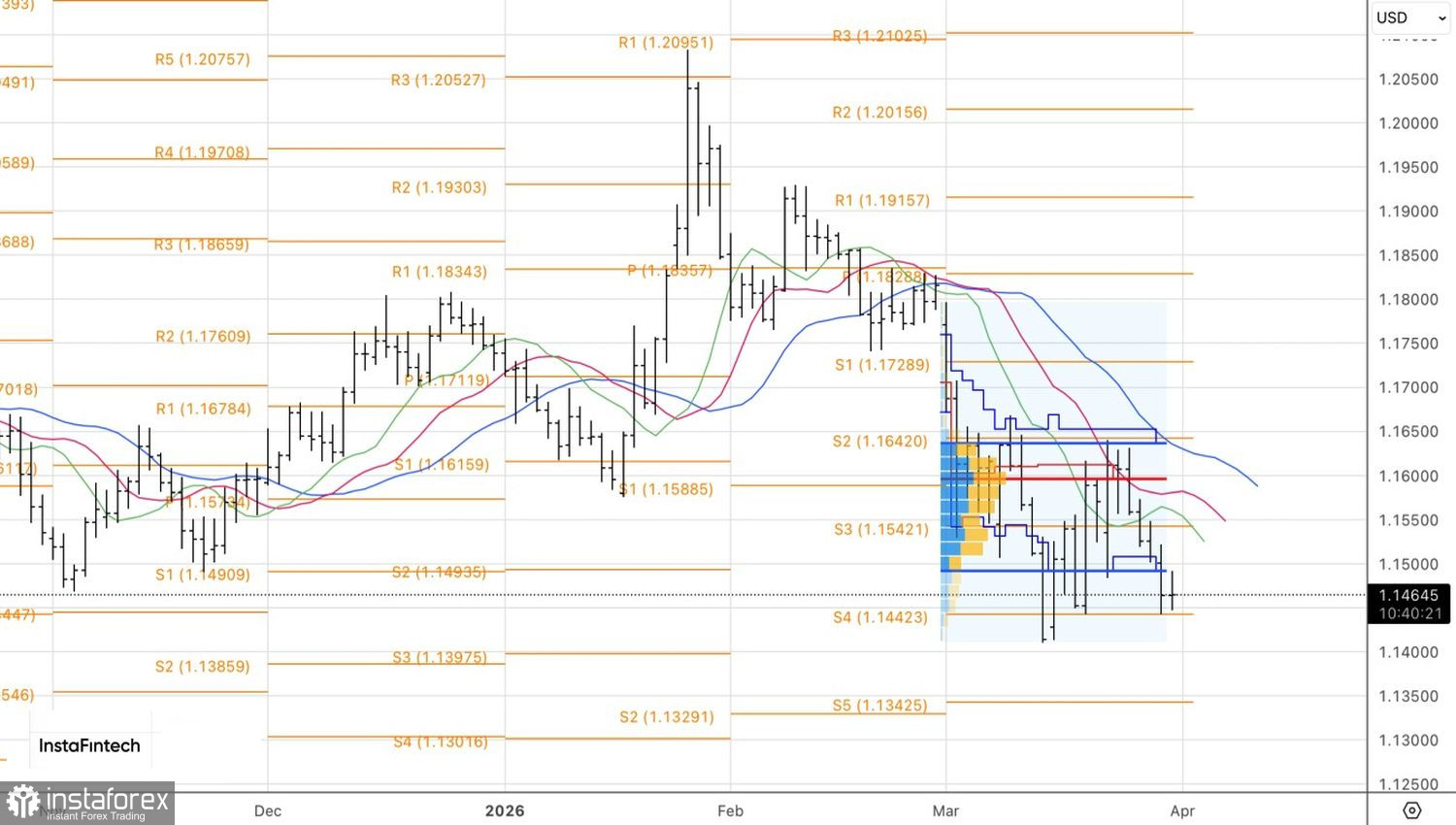
The further path of EUR/USD will depend on developments in the Middle East. Escalation would extend the major pair's downward move, while de-escalation would allow bulls to counterattack.
Technically, EUR/USD formed an inside bar on the daily chart, indicating indecision. To trade this pattern, it makes sense to place pending orders: buy from 1.1490; sell near 1.1445. A hold of the euro below the pivot level of 1.1440 is required to re-establish the downtrend.


