
Lihat juga


 01.07.2026 04:33 AM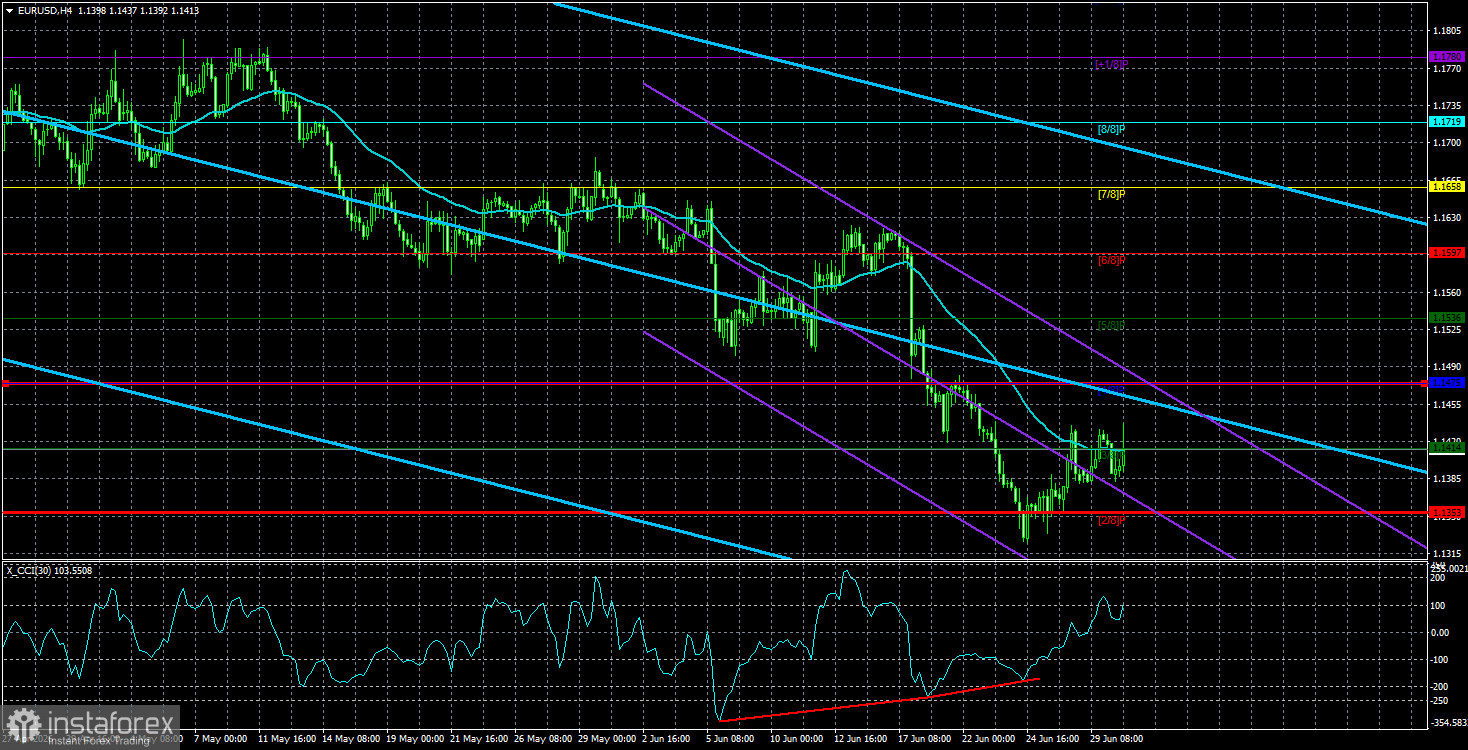
The EUR/USD currency pair opened Tuesday with another drop. This decline was brief this time, but the euro once again failed to move upward. It is worth noting that the downward trend has been ongoing for two months and is part of a global upward trend that has persisted for four years. Even with the maintenance of the global upward trend, the pair's two-month decline raises concerns. This is because the market is interpreting incoming information in a very one-sided way. For example, it did not find it necessary to respond to the deal between Iran and the US two weeks ago. It also ignored the European Central Bank's rate hikes. However, it reacted sharply to the breakdown in negotiations between Iran and the US last night. The potential future rate hike by the Federal Reserve is also being considered. Experts, noticing the rise of the US dollar, immediately concluded that the trend is now dollar-driven and that the whole world is once again eager to profit from the "deceased American presidents." In general, market sentiment shifts rapidly, and very few can explain why it changes.
But returning to geopolitics and "our sheep," Donald Trump stated on Monday that a new round of negotiations with Iran will take place on Tuesday in Qatar. Iran once again denied this information, but what Tehran meant remains unclear. On the one hand, Iran does not refuse contact with Washington; on the other hand, it wishes to negotiate only through intermediaries. Additionally, it points to violations of ceasefire terms and the memorandum by the American side, while also seeking to establish a fee for using the Strait of Hormuz. Information continues to come from various sources, often contradicting each other or, at the very least, not aligning. Therefore, sorting out what is happening in Iran now is simply impossible.
Overall, we are among those who do not see any progress in negotiations between the US and Iran and believe that long-term peace is unattainable. At best, Iran and the US will freeze the conflict and open the Strait of Hormuz, and from there, they can negotiate for ten years. By the way, that is how long the negotiations over the nuclear deal lasted, which Trump withdrew from with the stroke of a pen in 2018. We congratulate the American president on yet another "victory." Now it is the United States that has to make all possible concessions just to get Iran to the negotiating table and achieve even a partial nuclear deal. Congressional elections are approaching, Trump's ratings continue to fall, and the US president has begun threatening fuel companies with sanctions and war if they do not lower gasoline prices. According to the leader of the White House, a gallon of fuel should cost $2.50—less than before the war in Iran. We believe everyone understands what lies behind these threats. Trump urgently needs to win back voter favor, which is impossible with current gasoline prices, current inflation, and no agreement with Iran.
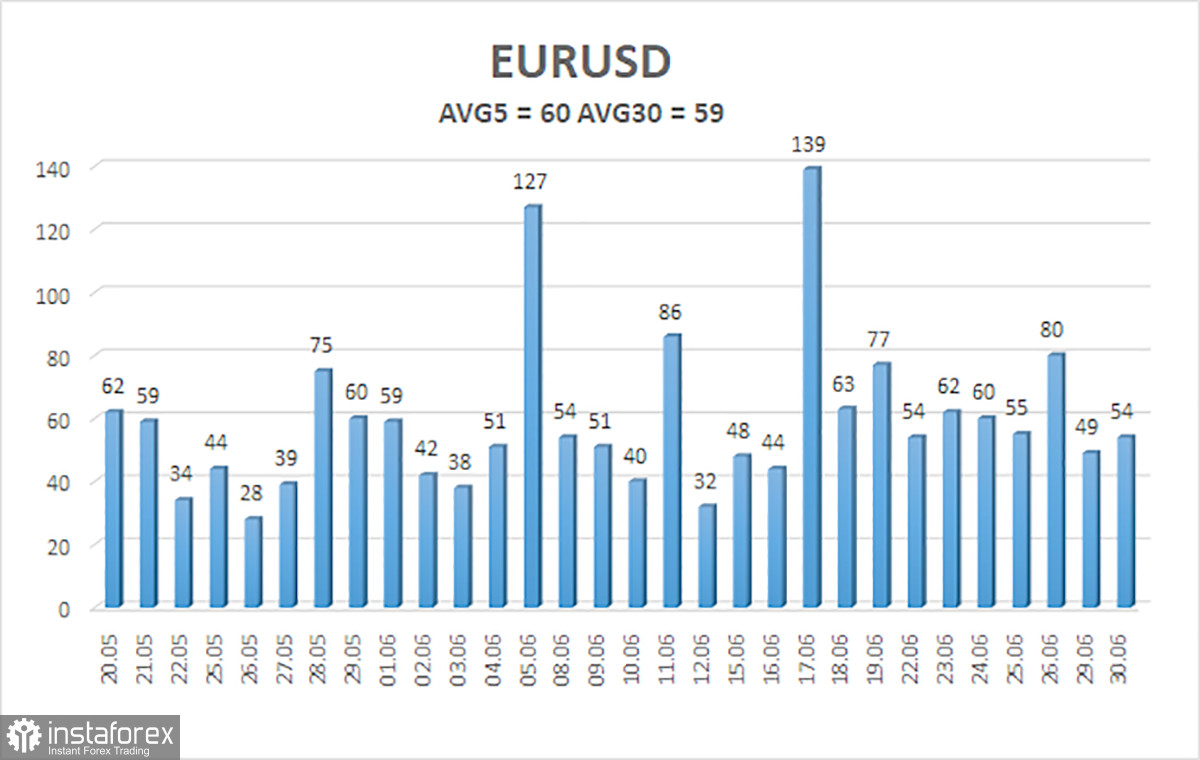
The average volatility of the EUR/USD currency pair over the last 5 trading days as of July 1 is 60 pips, which is considered "average." We expect the pair to move between 1.1354 and 1.1474 on Wednesday. The upper channel of the linear regression has shifted downward, indicating a continuation of the downward trend. The CCI indicator has entered the oversold area and has formed two bullish divergences, warning of a possible end to the downward trend.
The EUR/USD pair continues to exhibit a downward trend, presumably a correction within the broader global upward trend clearly visible on the daily or weekly timeframe. The global fundamental backdrop for the dollar remains negative, but in 2026, it was initially geopolitical factors, followed by the Fed's hawkish stance, that provided powerful support for the US currency. When the price is below the moving average, short positions can be considered with targets at 1.1353 and 1.1292. Above the moving average line, long positions remain relevant with targets at 1.1536 and 1.1597. Bears are currently very strong for no visible reason.


