
Lihat juga


 01.09.2026 08:24 AM
The absence of significant data from the U.S. was the main reason the dollar had to give up some ground against riskier assets yesterday. Without fresh data, the American currency lacked a new catalyst for growth, and after a strong rally following the Jackson Hole event, it paused, giving the market a chance for a slight correction. This type of behavior is typical when the calendar is empty since traders partially take profits in the absence of drivers—especially before important fundamental events.
Today, the Eurozone will release a block of important data, with the primary event being the August consumer price index. Before this, data on retail sales in Germany and the Eurozone manufacturing PMI will be published, followed by the July unemployment rate report. Retail sales reflect consumer demand, the manufacturing PMI shows the state of the industry, and the unemployment rate characterizes the labor market; together they provide a broad context ahead of the key inflation release.
However, inflation will be the focus, with a sharp rise to 3.3% expected. The consumer price index directly influences expectations for the European Central Bank's rate, and such acceleration could prompt traders to make new purchases of euros, as it would bolster arguments for a stricter ECB stance. If the forecasts are confirmed, the EUR/USD pair will have a basis for growth. At the same time, a weaker result would return the single currency's dependence on the dollar, so the reaction will depend on whether inflation meets expectations.
As for the pound, a significant block of British data is also ahead of us today, including the manufacturing PMI, the number of approved mortgage applications, and the volume of net loans to individuals. The manufacturing PMI is based on company surveys and reflects the state of the industry, with a 50-point threshold dividing growth and contraction, while mortgage approvals and consumer lending indicate activity in the housing market and households' willingness to borrow, which indirectly points to consumer demand.
From this data, the market will assess the economy's resilience and the likely trajectory of the Bank of England's rates. Weak figures, especially in the manufacturing sector, will quickly put pressure back on the GBP/USD pair, as a weakening of the industry would undermine confidence in the economy's strength. However, strong results could support the pound; yet, given the strengthened dollar following Jackson Hole, the British currency will find it challenging to continue growing.
If the data matches economists' expectations, it's better to act based on the Mean Reversion strategy. If the data is dramatically higher or lower than expectations, it's best to use the Momentum strategy.
Buy on a breakout above the level of 1.1620, which may lead to a rise towards 1.1639 and 1.1657;
Sell on a breakout below the level of 1.1597, which may lead to a decline towards 1.1580 and 1.1557;
Buy on a breakout above the level of 1.3555, which may lead to a rise towards 1.3574 and 1.3596;
Sell on a breakout below the level of 1.3527, which may lead to a decline towards 1.3502 and 1.3475;
Buy on a breakout above the level of 160.02, which may lead to a rise towards 160.24 and 160.43;
Sell on a breakout below the level of 159.80, which may lead to a decline towards 159.60 and 159.39;
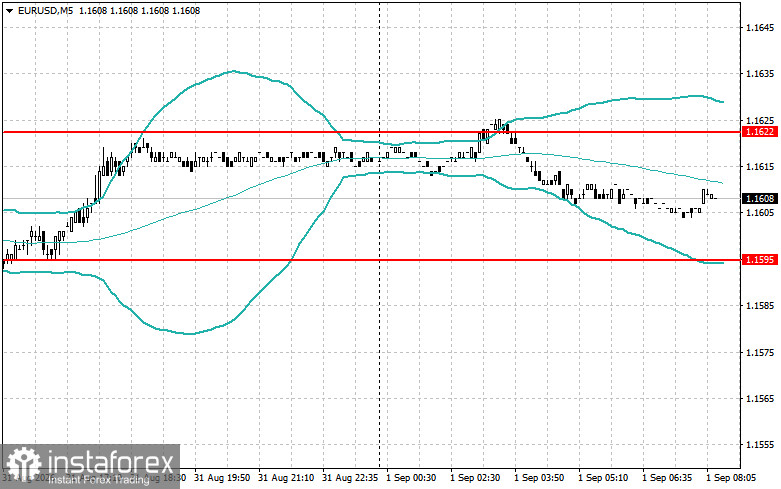
Look for short positions after a failed breakout above 1.1622 when the price returns below this level;
Look for long positions after a failed breakout below 1.1595 when the price returns to this level;
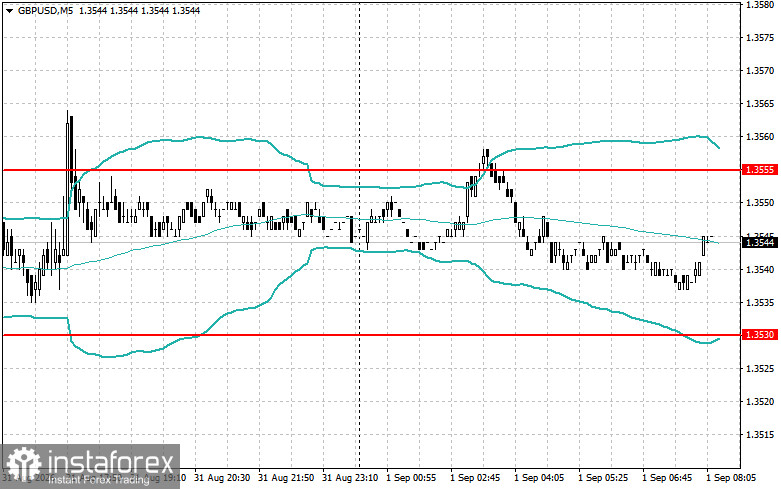
Look for shorts after a failed breakout above 1.3555 when the price returns below this level;
Look for longs after a failed breakout below 1.3530 when the price returns to this level;
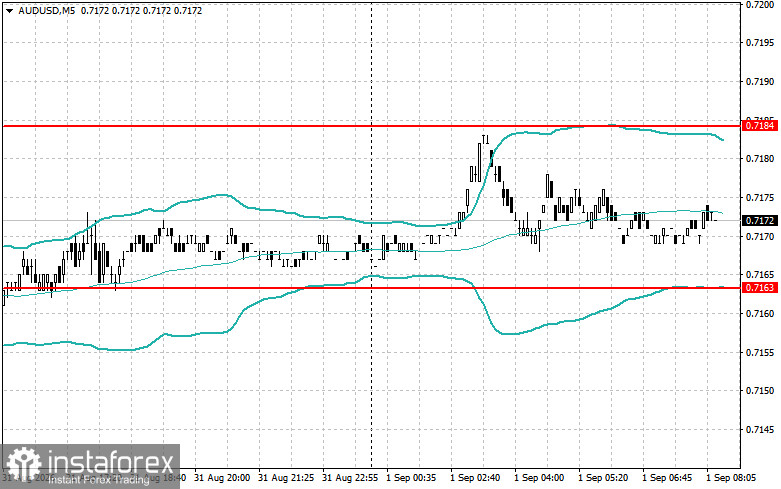
Look for shorts after a failed breakout above 0.7184 when the price returns below this level;
Look for longs after a failed breakout below 0.7163 when the price returns to this level;
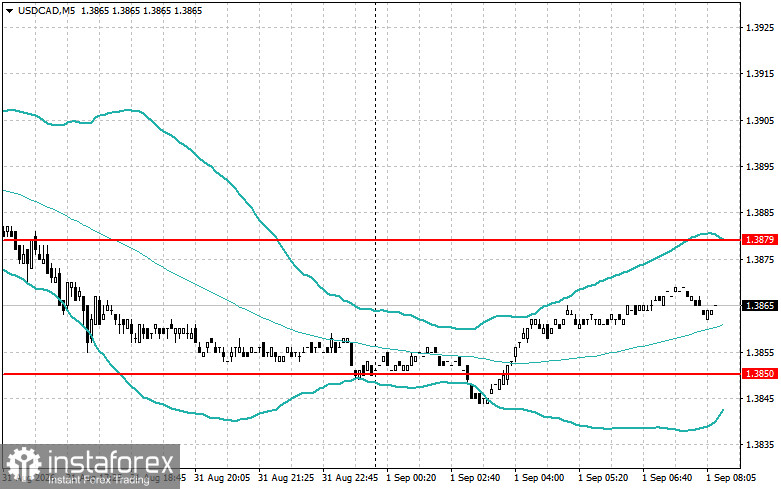
Look for shorts after a failed breakout above 1.3879 when the price returns below this level;
Look for longs after a failed breakout below 1.3850 when the price returns to this level;


