
Lihat juga


 28.09.2026 09:53 AM
Oil rose, with Brent approaching $108 per barrel and WTI trading above $94, after Iran said it would not soften conditions for reopening the Strait of Hormuz and Donald Trump rejected its proposal. Hopes for a rapid resumption of shipping through the strait — which before the war carried roughly one-fifth of the world's oil and LNG flows — have been postponed.
The parties' positions look contradictory. In a Sunday Axios interview Trump said Washington could have accepted Iran's terms about a year ago, that Iran overplayed its hand, and at the same time said he expects talks to resume this week. Iran benefits from the uncertainty by retaining leverage; importers lose, since each additional week without clarity means more expensive energy.
The diplomatic noise is reflected in expert commentary. "The outlook for diplomatic efforts has become more uncertain, which contributed to the rise," said Itochu Research Institute. They added that the market had previously hoped for a deal before the US midterm elections in November, but that scenario now looks less likely. Indirect talks in New York failed to bridge differences over sanctions, the US blockade and the Hormuz issue. The parties discussed an arrangement under which the strait would be opened, and Washington would lift the blockade of Iranian ports.
Washington is also applying pressure beyond diplomacy. Treasury Secretary Scott Bessent said Iran is likely to ship its last oil cargoes to China within two weeks as Beijing sharply cuts support for Tehran. He said roughly 15 million barrels of Iranian oil remained at sea, which increases pressure on Tehran. In that scenario Washington wins if Iran makes concessions; Iran loses if it loses a major buyer.
A separate factor for refined products is US domestic policy. Trump said the White House is "very seriously" considering limits on diesel exports, which is trading at record prices. If introduced, such measures could lower prices for US consumers but harm foreign buyers and export-oriented refiners.
All this suggests expensive oil will continue to feed inflation expectations, keeping the Federal Reserve in tightening mode. As a result the dollar and yields rise, while gold and silver come under selling pressure. Winners are dollar holders; losers are energy importers and borrowers. I believe that until there is a real diplomatic breakthrough Brent will hover near $108, with the risk of new highs remaining, especially since the chance of military incidents has not diminished. The main restraining factor for further gains is the expected resumption of talks this week, which Trump has mentioned — and the market would react to renewed negotiations faster than to any Iranian words. If the sides again fail to reach agreement, oil will most likely continue to climb, and pressure on the Fed and the dollar will remain.
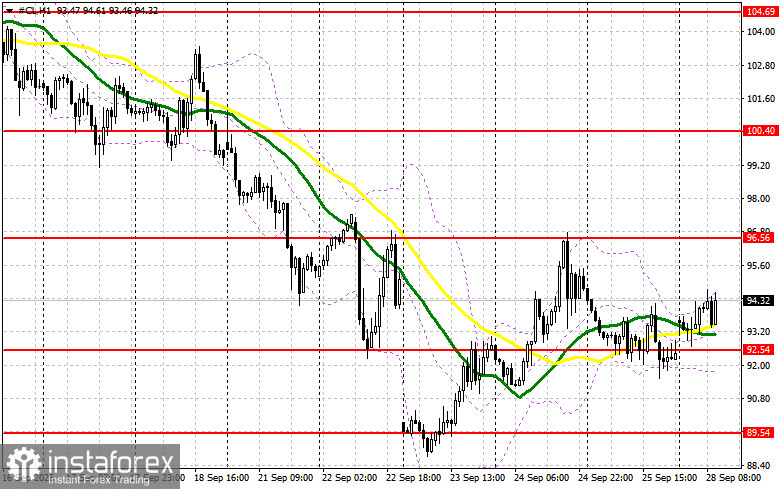
Technical picture: buyers need to take the nearest resistance at $96 to target $100, beyond which a breakout will be fairly difficult. The farther target is $104. On the downside bears will try to seize control of $92. If they do, a range break would seriously damage bullish positions and push Oil down to $89 with the prospect of reaching $87.


