
Lihat juga


 20.10.2026 07:46 AM
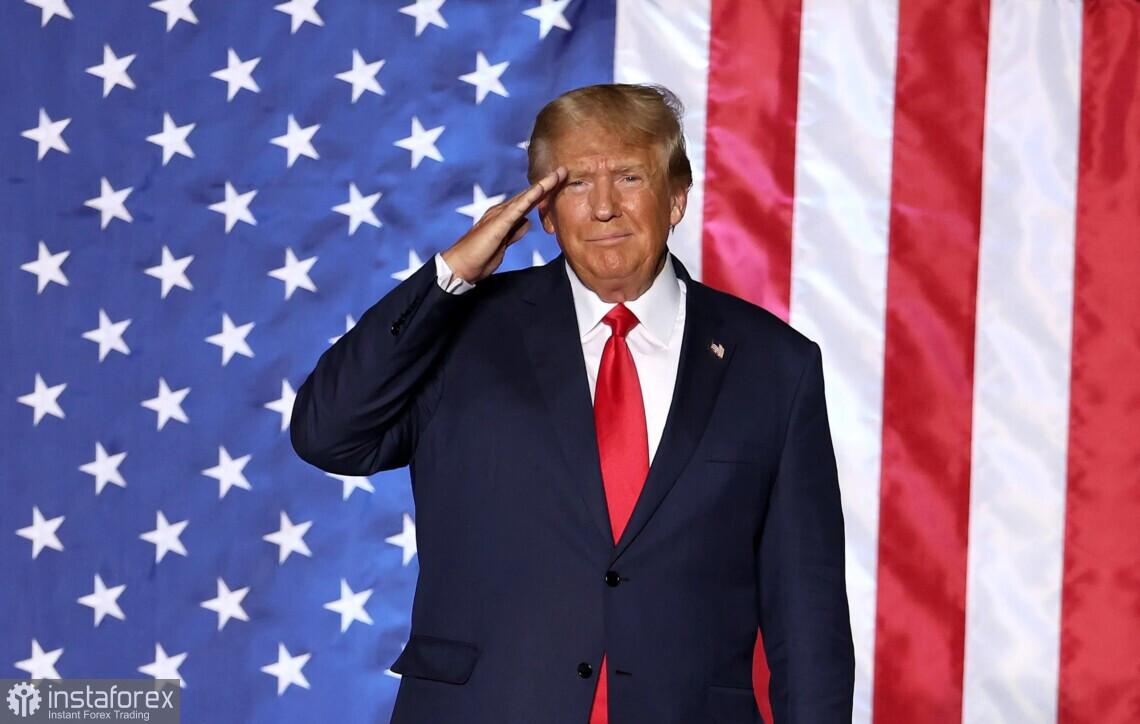
Donald Trump, president of the United States, really wants to win the Nobel Peace Prize. Last year the White House leader positioned himself as the world's chief peacemaker, hoping to secure the award. However, the prize did not go to him, so the president reasonably concluded that ending wars around the world was no longer required. And he started a war with Iran. Still, Trump keeps reminding everyone that he has ended eight wars, and he says that number could grow by two more in the near future. So what are the eight wars Trump claims to have finished?
I would wager that most readers have never heard of most of the conflicts on that list. Take the conflict between Congo and Rwanda. In March 2022 Rwanda intervened in Congo, and in June 2025 Trump announced the signing of a peace agreement. But the conflict, which in one form or another has lasted more than 30 years, did not end. Rwanda continues military operations, and Trump in effect stopped the fighting for only a couple of weeks.
The next "war" is between Thailand and Cambodia. In July 2025 clashes began on the border between the two states, then the countries agreed to a truce under Trump's projection, and a month and a half later fighting resumed.
Trump also credited himself with settling Israel's wars with the Gaza Strip and with Iran. The war against the Gaza Strip did wind down, but Israel continued operations against Hamas on Palestinian territory. As for the war between Israel and Iran, Tel Aviv has joined forces with Washington, and that conflict has now continued for eight months.
There was no war between Serbia and Kosovo. The countries did have a diplomatic dispute, but neither side conducted military operations. At present many disagreements remain between them, but there is no war. What war Trump claims to have ended in the Balkans is hard to understand.
In June 2025, Trump "ended" another war that never actually began—between Egypt and Ethiopia. Again, the countries had some disagreements that they likely would have resolved in time. But Trump intervened and declared another war over, one that in principle did not exist.
Other articles of mine: - EUR/USD analysis. October 20: Euro and pound are ready to square off with USD.
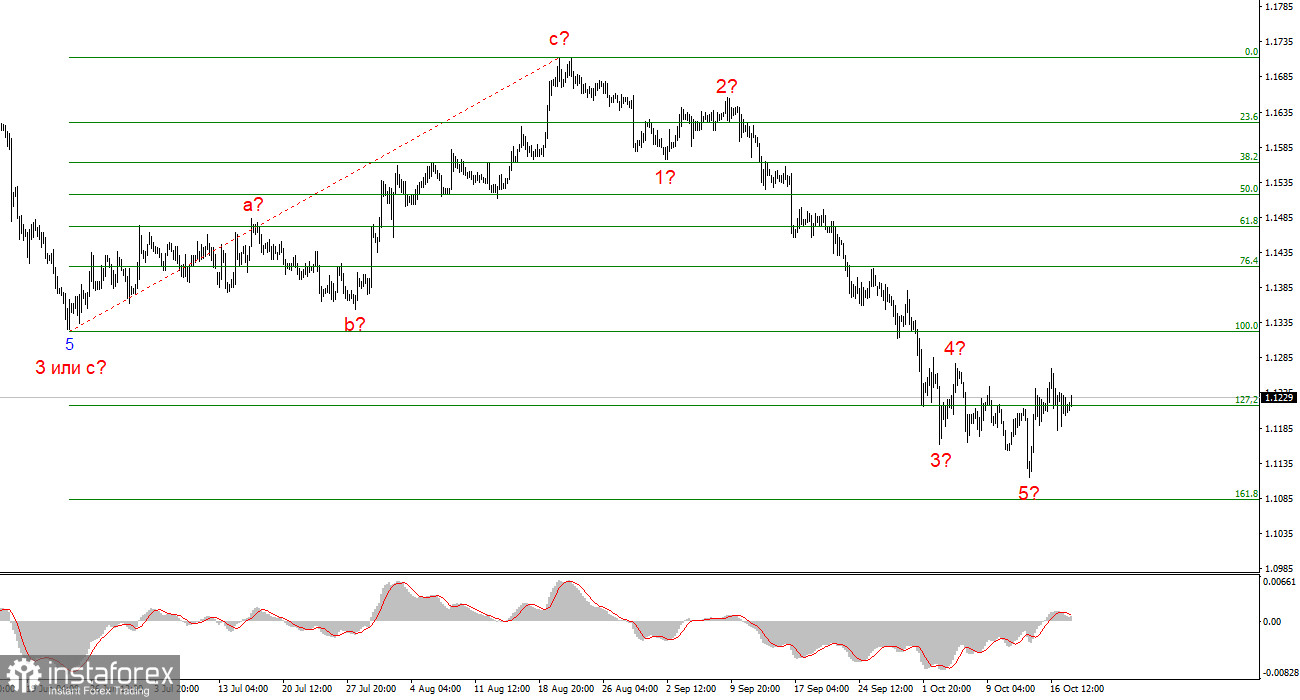
Wave picture for EUR/USD
Based on my EUR/USD analysis, I conclude the instrument remains within a global corrective A-B-C-D-E segment. However, this structure now looks fully formed and therefore may be complete. In my view this is a good time not only to buy the euro but also to expect a full bullish leg of the trend. On the higher timeframe, one should expect a rise to at least the 1.17–1.18 area. An unsuccessful attempt to break 1.1126, which equals 50.0% on the Fibonacci (lower chart, higher timeframe), also points to the market's readiness to buy.
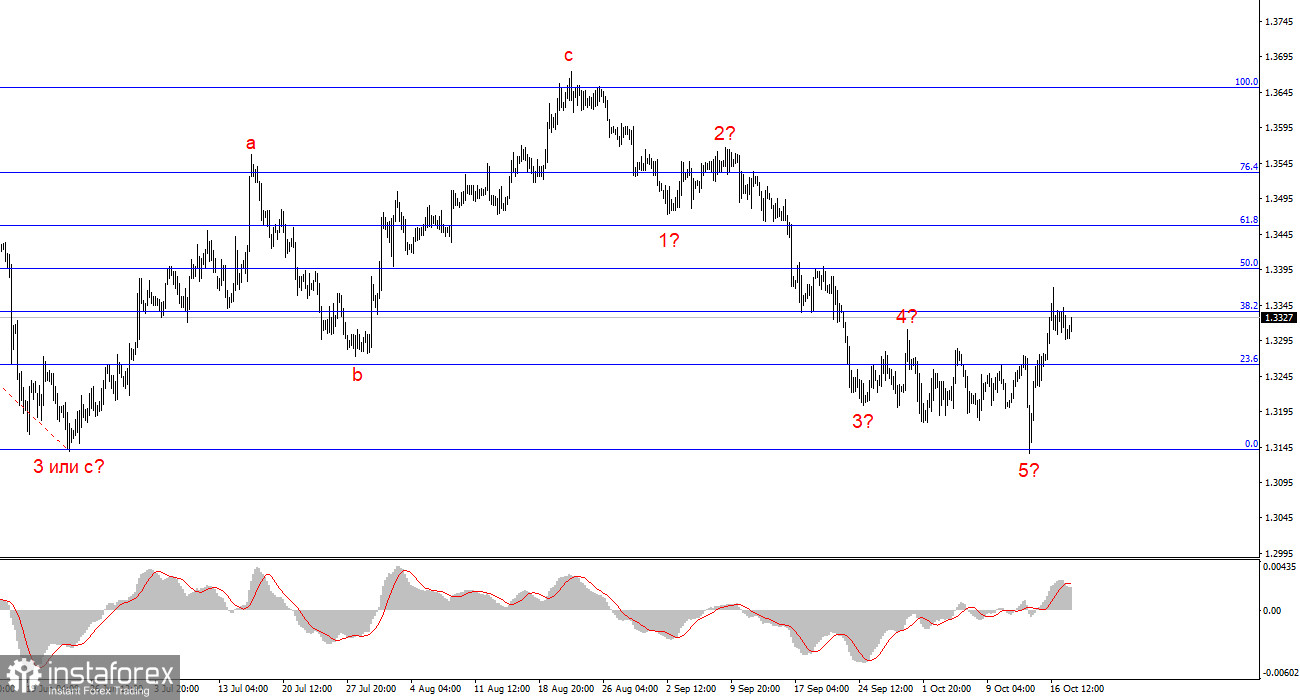
Wave picture for GBP/USD
The wave picture for GBP/USD has acquired a fairly clear shape. Charts show a distinct A-B-C corrective structure that after the Fed meeting could transform into A-B-C-D-E. If that assumption is correct, sterling will continue its decline toward targets below the 1.31 area near the low of wave C. However, completion of a similar structure in the euro could cause the pound's structure to finish at any stage.
Core principles of my analysis:
1) Wave structures should be simple and comprehensible. Complex structures are hard to trade and often change.
2) If you are not confident about what is happening in the market, it is better not to enter.
3) There is never 100% certainty about direction; do not forget protective stop-loss orders.
4) Wave analysis can be combined with other analytical methods and trading strategies.


