
یہ بھی دیکھیں


 20.03.2026 12:41 PM
Those affected must handle their own problems carefully. To reduce the negative economic impact of the Middle East conflict, the government may use fiscal stimulus, which could weaken the yen. One possible way to slow the USD/JPY rally is through currency interventions, which the Ministry of Finance is signaling.
According to Satsuki Katayama, speculators have driven the yen away from its fundamentals, and the government is ready to intervene in the Forex market at any moment to stop USD/JPY bulls. Tokyo has experience with such actions, which in the past have broken upward trends. However, at that time, the U.S. dollar was weakening against major global currencies, allowing Japan to choose the right moment.
USD/JPY Dynamics and Currency Interventions
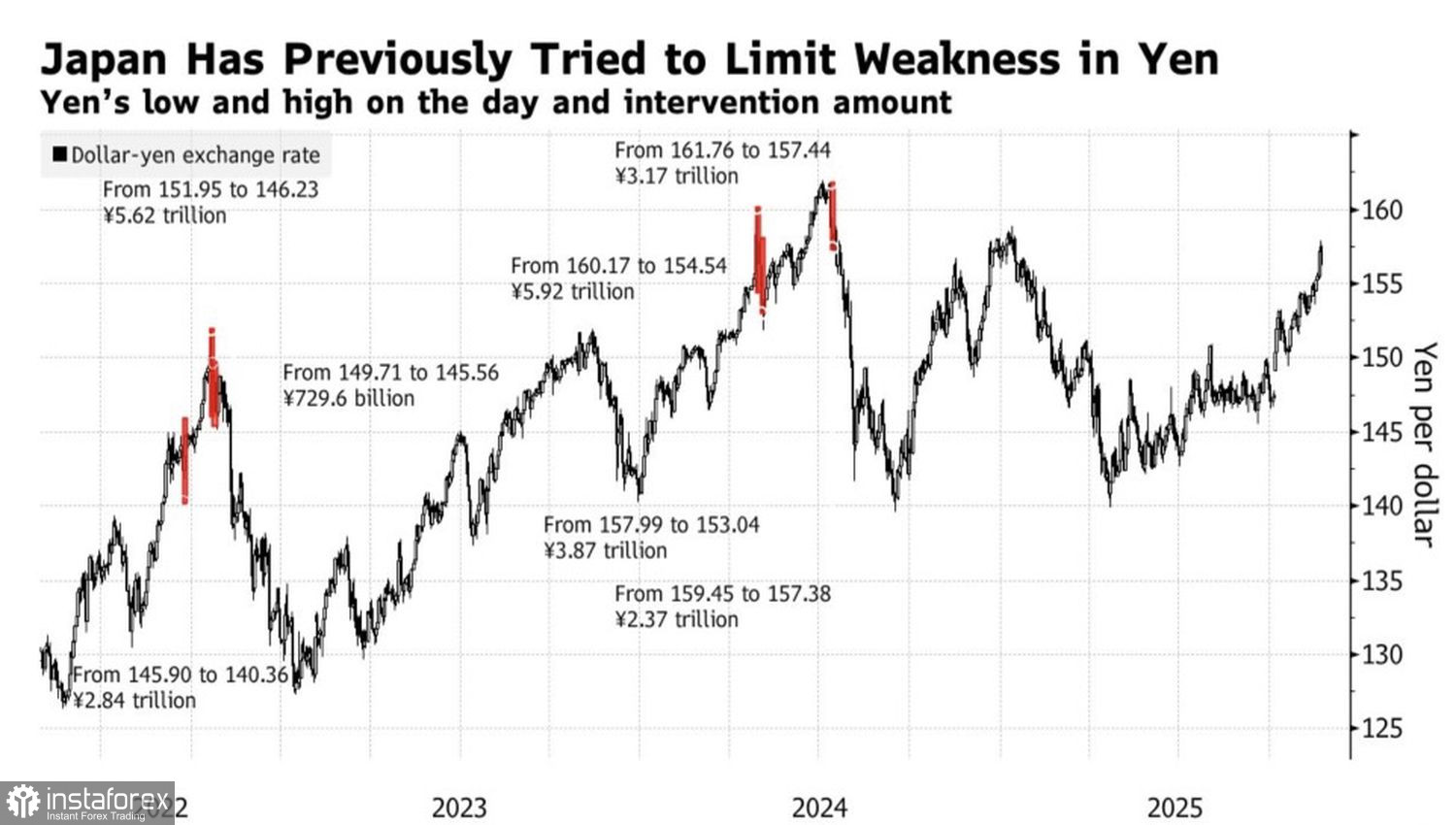
The rebound of USD/JPY from the psychologically important level of 160 created the impression that currency interventions had taken place again. In reality, the U.S. dollar retreated due to falling oil prices and broad pressure from central banks competing with the Federal Reserve. After their meetings, the futures market increased expectations for ECB monetary tightening from two to three rate hikes in 2026. Investors who had expected easing from the Bank of England began to believe in tightening instead.
The Bank of Japan also played its part. It kept the overnight rate at 0.75% by a vote of eight to one. Few would have expected that the previous stance—that monetary tightening could resume if forecasts are met—would help USD/JPY bears.
However, that is exactly what happened. The Middle East conflict pushed oil prices higher, which in turn is expected to accelerate both inflation expectations and actual inflation in Japan. This means the Bank of Japan's forecasts may be fulfilled, increasing the likelihood of a rate hike.
Inflation Expectations in Japan
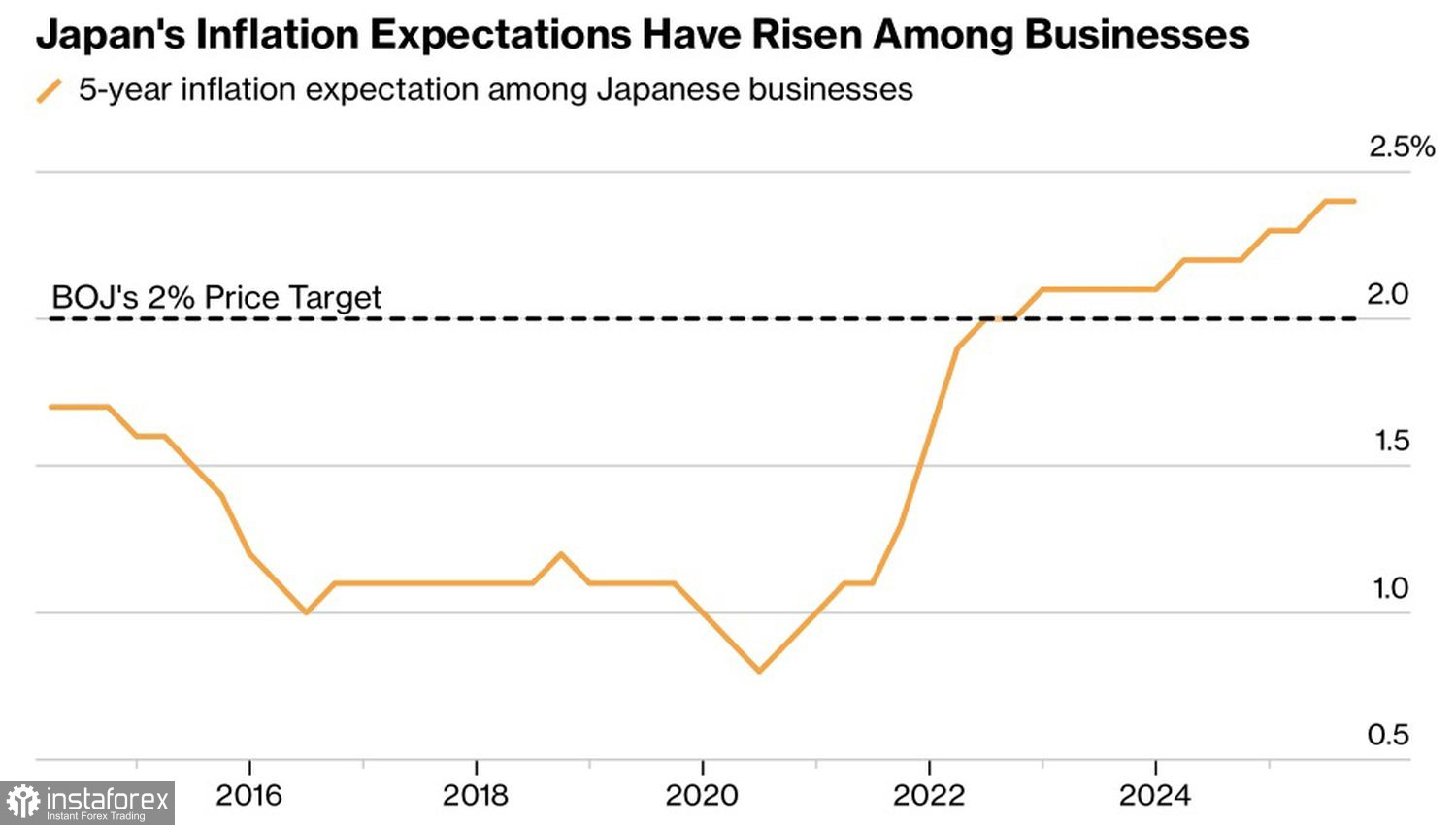
Kazuo Ueda added to the downward move in USD/JPY during the press conference, stating that the impact of the Middle East conflict on Japan's economy would be temporary. This implies that rising consumer prices could give the Bank of Japan sufficient grounds to raise the overnight rate.
However, the success of USD/JPY bears is unlikely to be long-lasting. As long as oil prices remain high, energy-exporting countries—and their currencies—benefit. The advantages of the U.S. dollar remain clear, especially as it also serves as a safe-haven asset. Demand for it remains strong amid ongoing tensions between the United States, Israel, and Iran.
Support from central banks, including the Bank of Japan, is certainly important for currencies. However, in the end, what matters most is which economy can withstand high oil prices and high interest rates.
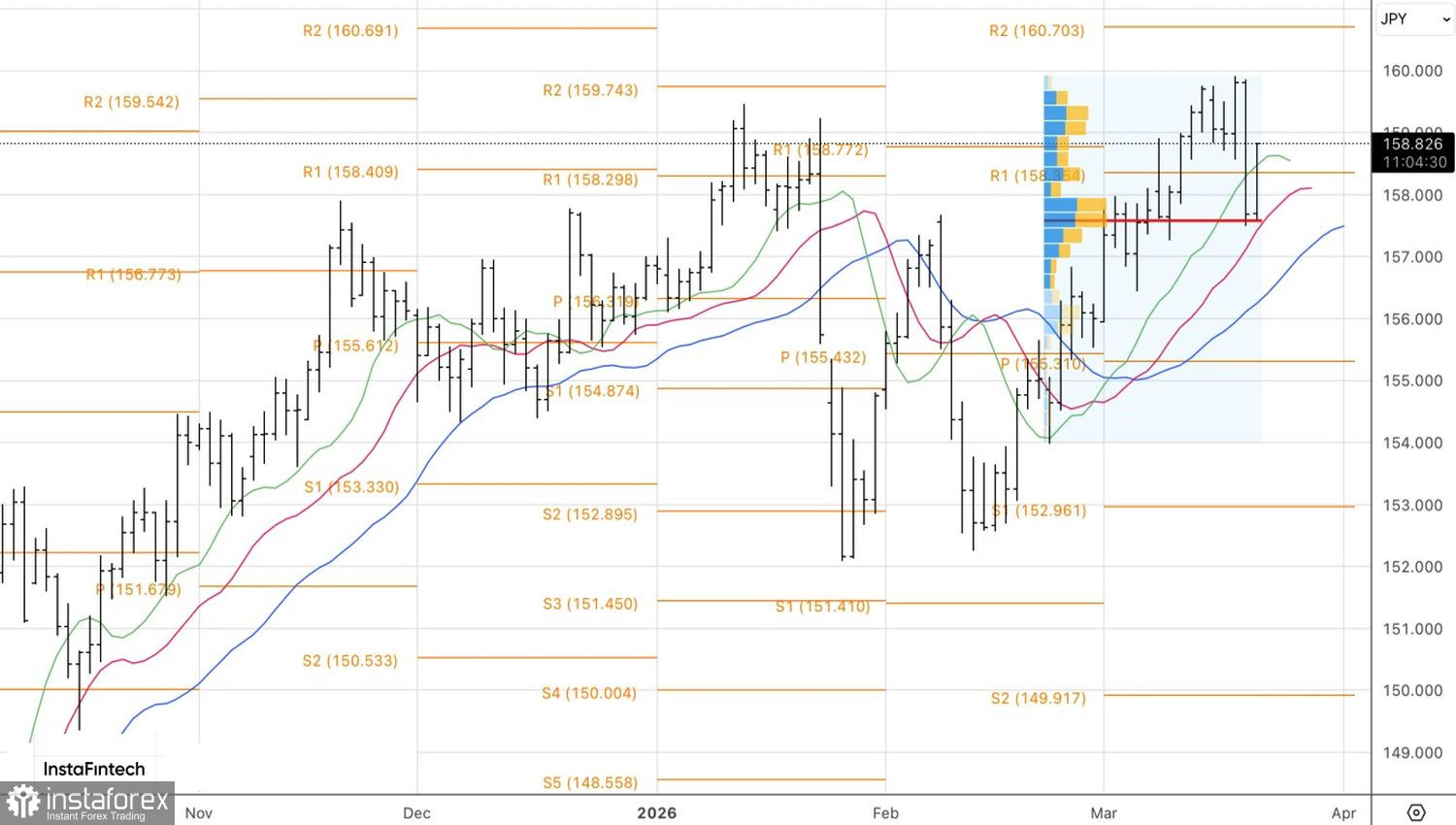
From a technical perspective, on the daily chart USD/JPY rebounded from its fair value at 157.6 and then resumed its rally. Bulls aim to restore the upward trend. As long as quotes remain above 158.4, buying the U.S. dollar against the yen remains reasonable.


