
یہ بھی دیکھیں


 29.10.2026 10:31 AM
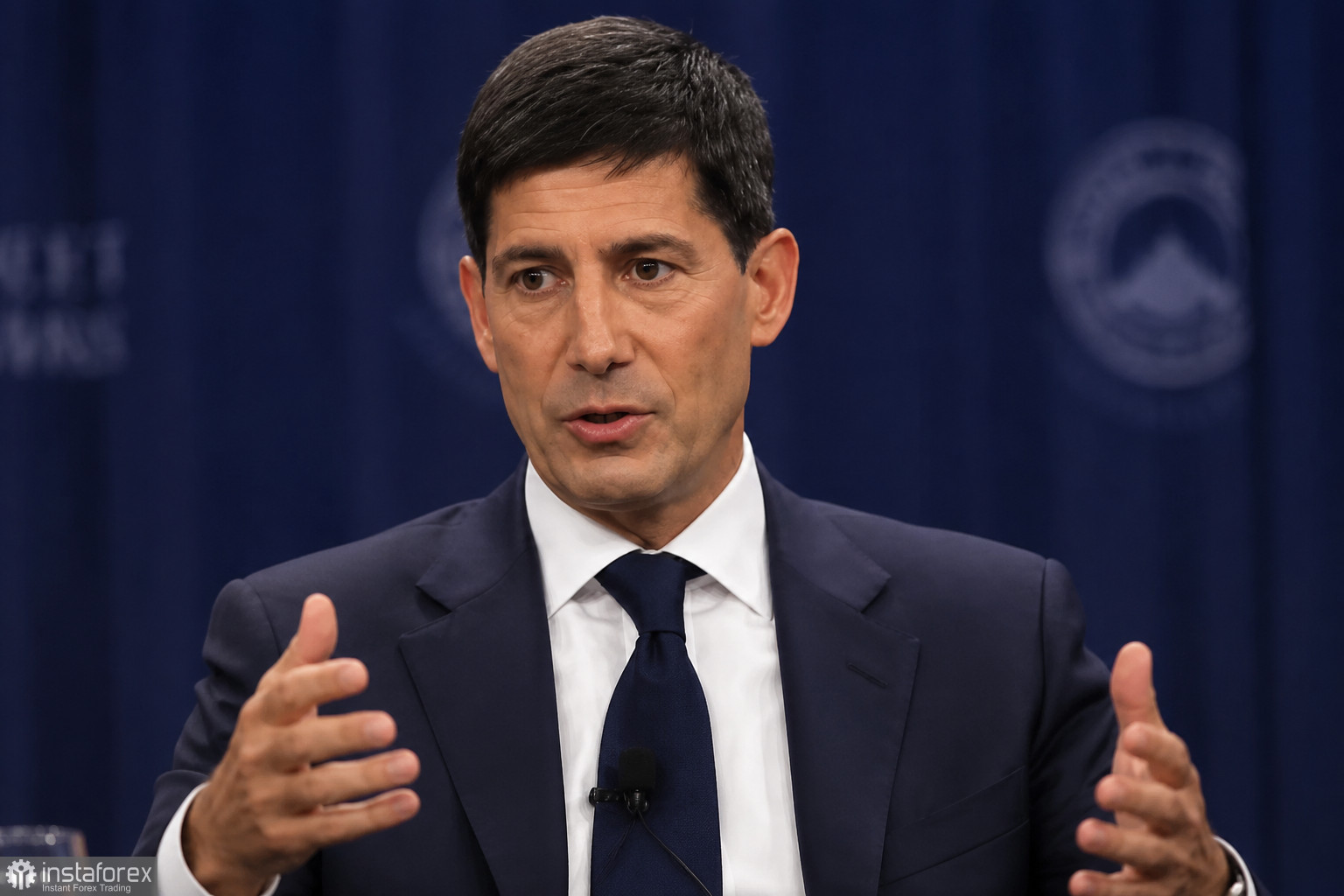
The Fed predictably and unsurprisingly left the policy rate unchanged on Wednesday, but I want to note up front that two FOMC governors voted to raise. Those two—Lisa Cook and Beth Hammack—have previously held more hawkish views than their colleagues. I had allowed for this scenario but also warned that several votes for tightening would not change the Fed's overall stance. In the end, ten governors voted to hold the rate.
Fed chair Kevin Warsh told the press that inflation remains elevated, signalling that monetary tightening will continue. He also pointed to strong growth and the resilience of the US economy, as well as significant investment in fixed capital. He promised the Fed will ensure price stability at the 2% inflation target but stressed that policymakers must now determine which policy path is necessary to return inflation to target in a timely manner.
I have previously asked what "in a timely manner" actually means. Mr. Warsh and his colleagues cannot answer that precisely, and the October pause shows the Fed is in no rush. Therefore, a new rate increase should be expected in December, but the further trajectory will depend on economic data and the conflict in the Middle East. If inflation continues to rise (which cannot be ruled out), there may be another pause early in 2027 and further tightening in March.
Kevin Warsh also announced some changes to the Fed's operations. Starting in 2027, the FOMC will hold eight meetings a year again, as before, but several meetings will now be devoted not to changing policy parameters but to defining and discussing strategy. In 2027 the rate may be changed at only seven meetings, and in 2028 at six.
On that basis I consider the base case to be a December tightening and a pause in January. In my view, regardless of precise inflation or labor market prints, this scenario will be realized: one round of tightening is not enough, and the Fed does not intend to raise more often than roughly once every two meetings. I believe this scenario has long been priced by market participants.
Other articles to read:
EUR/USD analysis. Oct 29. FOMC outcome brings no surprise
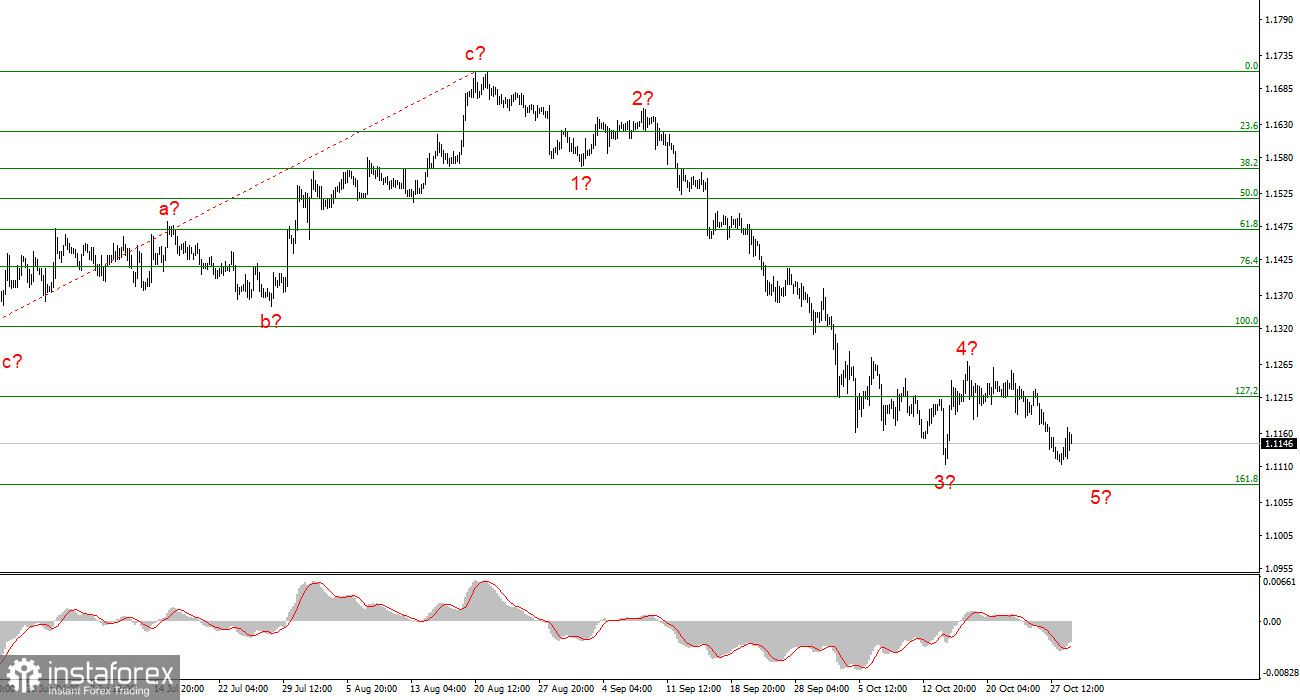
Wave picture for EUR/USD
Based on my EUR/USD analysis, I conclude the instrument remains within a global corrective A-B-C-D-E segment. However, this structure now appears fully formed and may be complete. In my opinion this is a good time not only to buy the euro but also to expect a full bullish leg of the trend. On the higher timeframe, one should expect a rise to at least the 1.17–1.18 area. The failed breakout at 1.1126—equal to 50.0% on the Fibonacci retracement (lower chart, higher timeframe)—also indicates the market is prepared to buy.
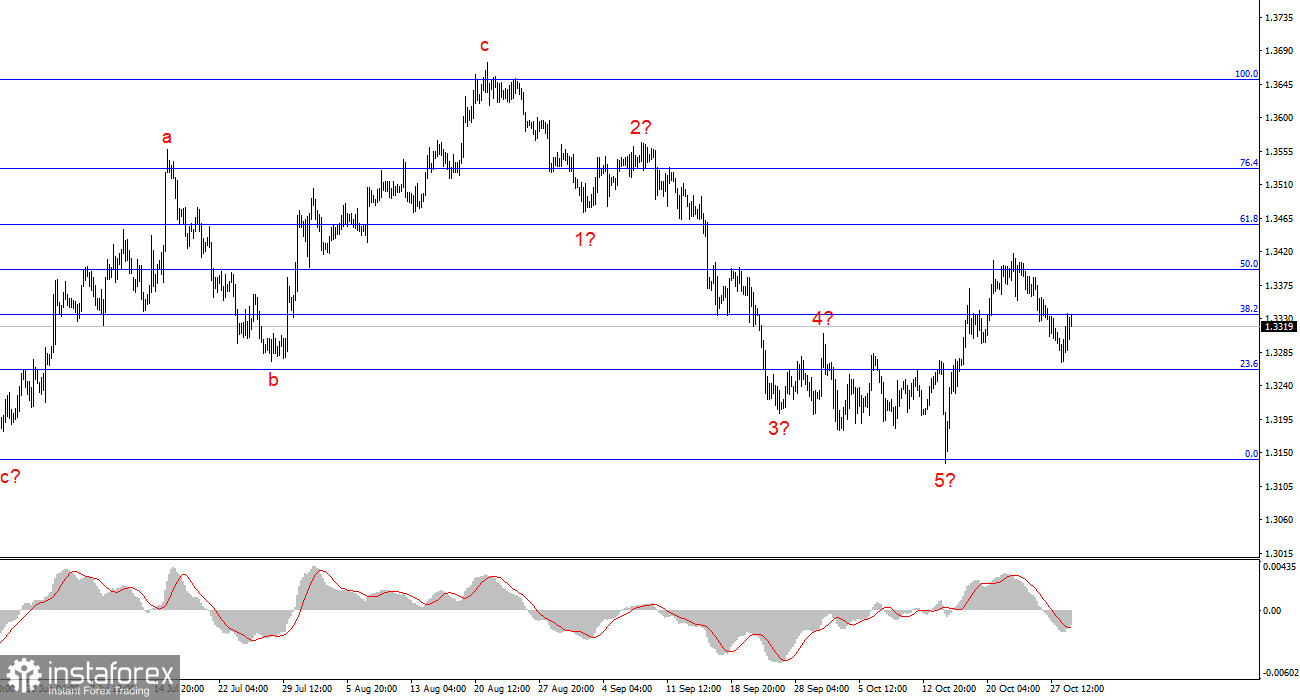
Wave picture for GBP/USD
The wave picture for GBP/USD has become fairly clear. Charts show a distinct A-B-C corrective structure that may be complete. A similar structure in EUR/USD may also be finishing. If that assumption is correct, the pound has finished the decline that many questioned in recent weeks. In that case, Sterling could not only begin a corrective wave but also move into a full bullish leg with targets above the peaks of waves B and D—i.e., above the 1.37 area. I think now is a good time to build long positions.
Core principles of my analysis:
1) Wave structures should be simple and comprehensible. Complex structures are hard to trade and often change.
2) If you are not confident about what is happening in the market, it is better not to enter.
3) There is never 100% certainty about direction; do not forget protective stop-loss orders.
4) Wave analysis can be combined with other analytical methods and trading strategies.


