
আরও দেখুন


 16.01.2026 10:17 AM
On the hourly chart, the GBP/USD pair continued its decline on Thursday after consolidating below the support level of 1.3437–1.3470 and by the end of the day reached the 1.3352–1.3362 level. A rebound from this zone allows for expectations of a reversal in favor of the British pound and a return to the 1.3437–1.3470 level. A consolidation below 1.3352–1.3362 would increase the chances of continued decline toward the next Fibonacci level of 61.8% at 1.3294.
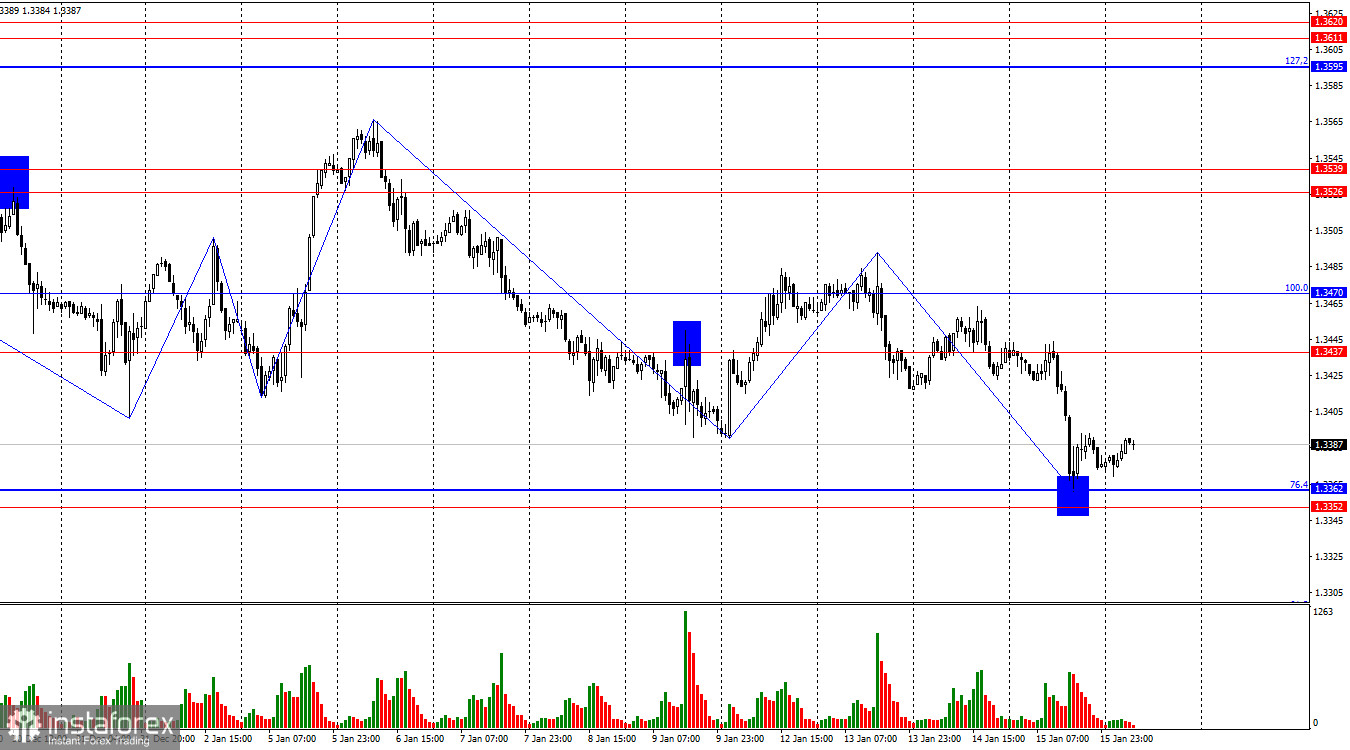
The wave situation has shifted to a "bearish" one. The last completed upward wave failed to break the previous high, while the most recent downward wave broke the previous low. The news background for the pound has been weak in recent weeks, but the news background in the United States has been even worse. Nevertheless, bears have continued to attack in recent days, which raises some questions about the logic behind the strengthening of the U.S. dollar.
The news background on Thursday could have supported the bulls, as fairly positive GDP and industrial production data were released in the UK early in the day. However, traders ignored these reports, did not receive any U.S. data, and by the end of the day the dollar once again emerged victorious. In my view, the current decline in the GBP/USD pair cannot be called logical, as many events are causing concern about the U.S. economy. For example, Donald Trump's trade tariffs, which the U.S. Supreme Court may overturn in the near future. However, "near future" is a vague term—it may happen soon, or it may not. Let me remind you that the first hearing on the tariffs case was scheduled back in November. Two full months have passed since then, and the court still cannot decide whether the trade tariffs were legal. Knowing American bureaucracy, one can assume that the court may consider this case for several more months. If, in the end, the tariffs are canceled, this decision would deal a crushing blow to the U.S. economy, which showed growth over the past two quarters precisely due to revenue inflows from importers.
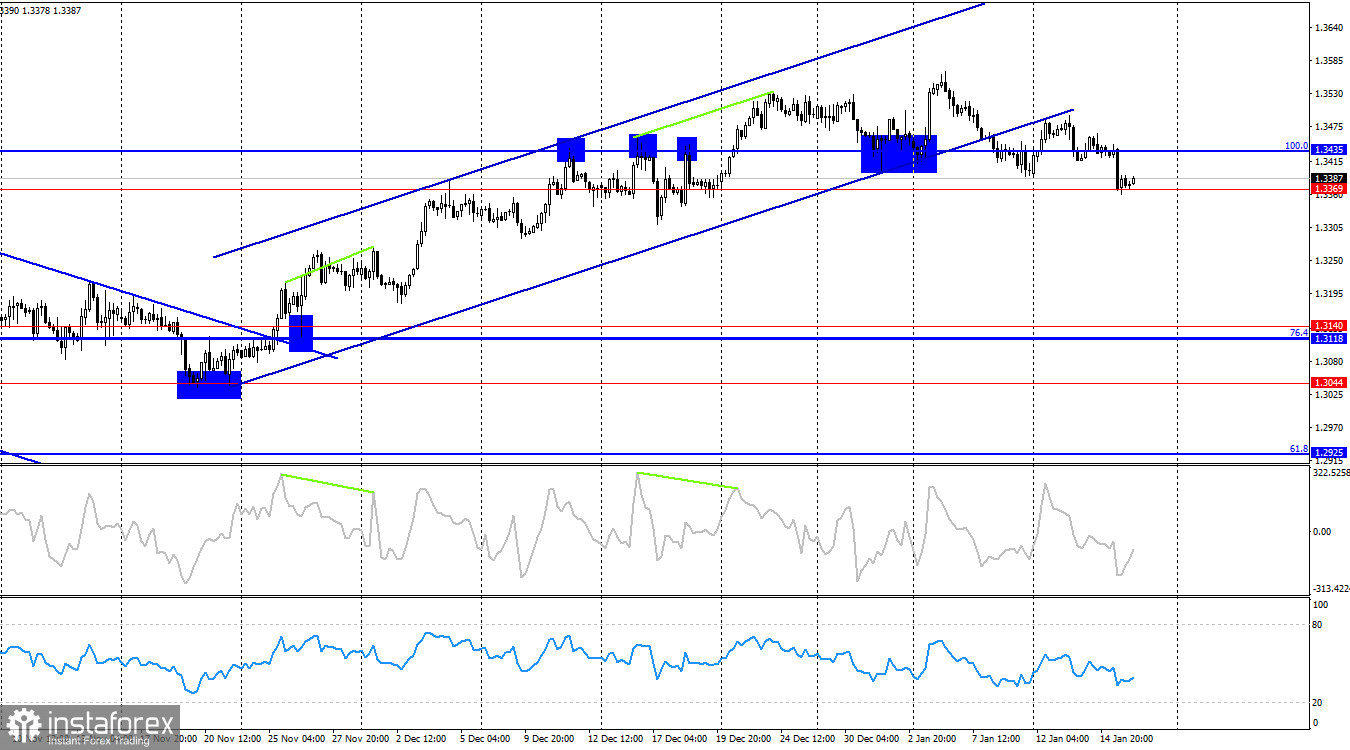
On the 4-hour chart, the pair has returned to the support level of 1.3369–1.3435. A rebound from this zone would again favor the British pound and a resumption of growth toward the next Fibonacci level of 127.2% at 1.3795. A consolidation below the 1.3369–1.3435 level would allow traders to expect a reversal in favor of the U.S. dollar and a decline toward the support level of 1.3118–1.3140. No emerging divergences are observed today.
Commitments of Traders (COT) Report:
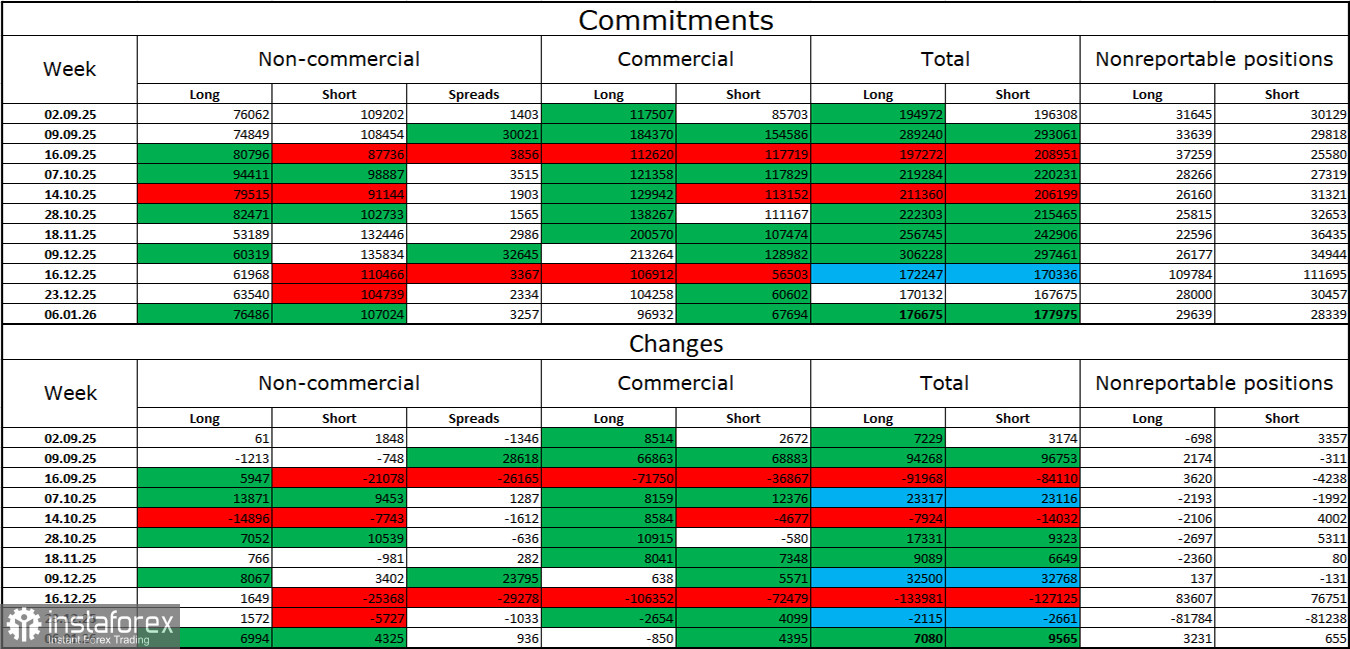
Sentiment among the "Non-commercial" category of traders became more bullish over the last reporting week. The number of long positions held by speculators increased by 6,994, while the number of short positions increased by 4,325. The gap between long and short positions now stands at approximately 76,000 versus 107,000 and is rapidly narrowing. Bears have dominated in recent months, but the pound appears to have exhausted its downward potential. At the same time, the situation with euro currency contracts is the exact opposite. I still do not believe in a bearish trend for the pound.
In my opinion, the pound still looks less "dangerous" than the dollar. In the short term, the U.S. currency may occasionally enjoy demand in the market—but not in the long term. Donald Trump's policies have led to a sharp decline in the labor market, and the Federal Reserve has been forced to ease monetary policy in order to curb rising unemployment and stimulate job creation. U.S. military aggression also does not add optimism for dollar bulls.
News Calendar for the U.S. and the UK:
On January 16, the economic calendar contains only one "second-tier" event. The impact of the news background on market sentiment on Friday will be weak.
GBP/USD Forecast and Trading Advice:
Selling the pair is possible today if it closes below the 1.3352–1.3362 level on the hourly chart, with a target of 1.3294. Buying can be considered today on a rebound from the 1.3352–1.3362 level on the hourly chart, with a target of 1.3437–1.3470.
Fibonacci grids are drawn from 1.3470–1.3010 on the hourly chart and from 1.3431–1.2104 on the 4-hour chart.


