
আরও দেখুন


 17.02.2026 12:35 AM
On November 3 of this year, the midterm elections will take place in America, which are actually not so "midterm." It is worth noting that the entire House of Representatives and one-third of the Senate will be renewed during these elections. Political analysts unanimously predict a crushing defeat for the Republican Party, resulting in the loss of at least one chamber of Congress. What are the grounds for this?
Firstly, Trump's political approval ratings have dropped to historic lows. It is difficult to say when the last time was that anyone had an approval rating of only 30%. And this is by no means the limit of decline, as Trump's policies do not improve. Americans are dissatisfied with changes in the economy (which look good only on paper), dissatisfied with immigration policies and the billions of dollars spent to deport migrants from the U.S., dissatisfied with the shrinking and "cooling" labor market for over a year, dissatisfied with the tariff policies of the White House, unhappy with rising prices, and dissatisfied with Trump's geopolitical ambitions, which have led many countries to dislike America.
For example, a survey conducted in the European Union on the question "What is your opinion of Donald Trump?" revealed that 94% of Danes, 84% of Germans, 81% of Britons, 77% of Italians, 77% of Spaniards, and 76% of the French have a very negative view of the U.S. president. What lies behind this? It is the reputational losses for the U.S., a decrease in foreign investments, and a drop in foreign demand for American goods and services. A few months ago, I mentioned an informal boycott of American goods in Europe. Europeans are simply refusing to buy anything labeled "Made in the USA." The tariffs that "fill the U.S. budget by hundreds of billions of dollars" are paid by Americans themselves, not by China or the EU.
Ultimately, if Trump simply raised taxes, it would have the same impact on the vast majority of Americans. What difference does it make under what guise they pay more? Whether it's more direct taxes, more hidden taxes (built into product and service prices), or paying more due to import tariffs? Therefore, I am personally not surprised that Trump's approval ratings are "beneath the floor."
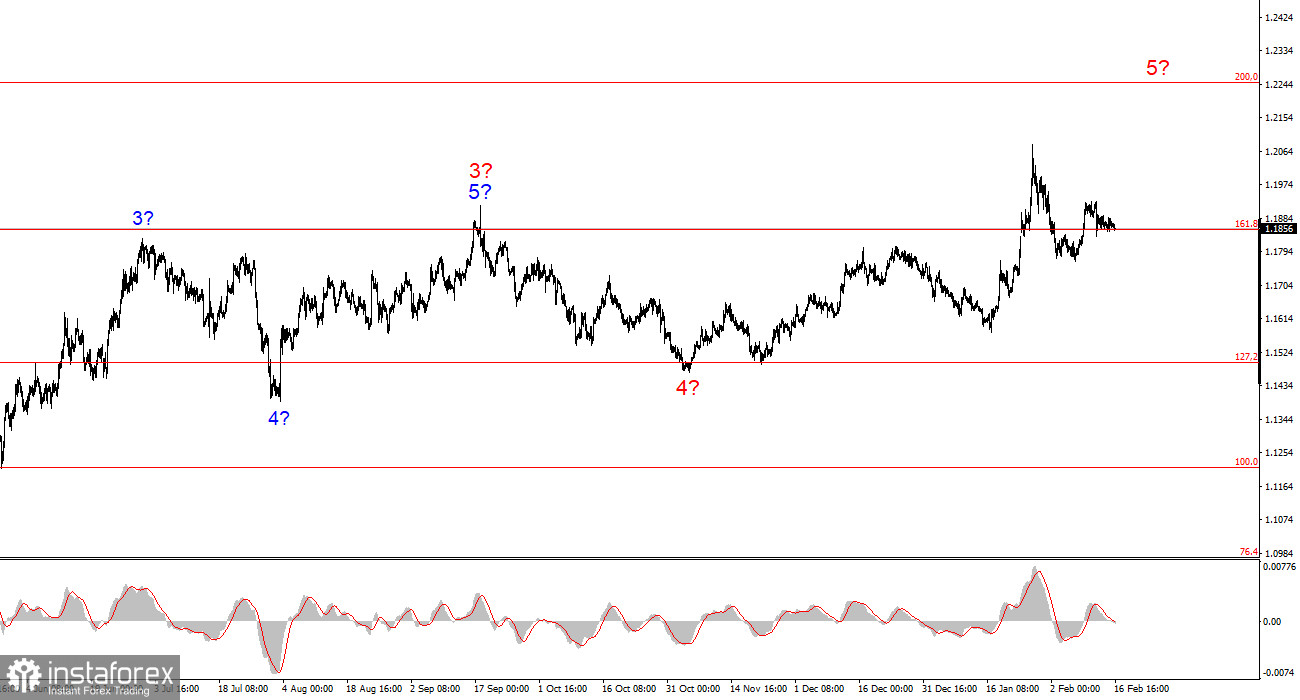
Based on the analysis of EUR/USD, I conclude that the instrument is continuing to build an upward phase of the trend. The policies of Donald Trump and the Federal Reserve's monetary policy remain significant factors in the long-term decline of the U.S. currency. The targets for the current segment of the trend may reach up to 25,000. At the moment, I believe the instrument remains within a global wave 5, so I expect prices to rise in the first half of 2026. However, in the near future, the instrument may construct another downward wave within the correction. I believe it is now appropriate to search for areas and levels for new purchases with targets around the marks of 1.2195 and 1.2367, corresponding to the 161.8% and 200.0% Fibonacci.
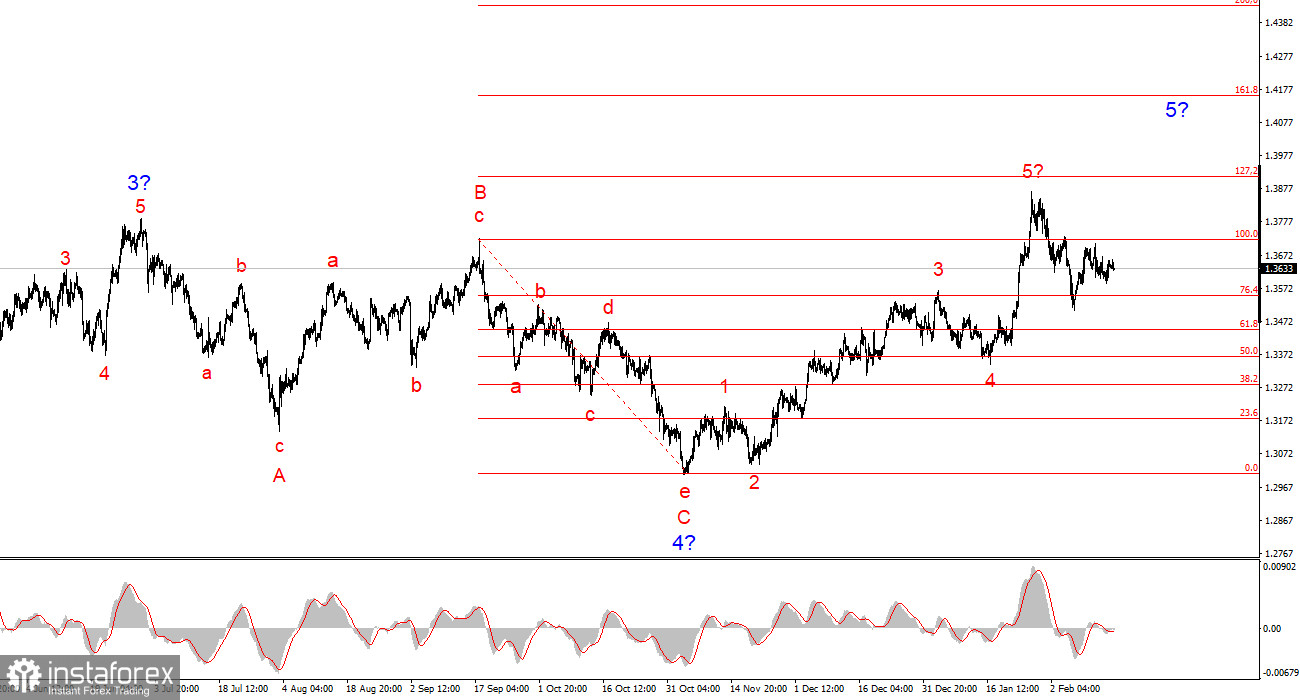
The wave picture of the GBP/USD instrument is quite clear. The five-wave upward structure has completed its formation, but the global wave 5 may take a much more extended form. I believe that in the near future, we may observe the construction of a corrective set of waves, after which the upward trend will resume. Therefore, in the coming weeks, I advise looking for opportunities for new purchases. In my opinion, under Trump, the British pound has a good chance of rising to $1.45-1.50. Trump himself welcomes the decline of the dollar, and the Fed has the opportunity to lower rates again at the next meeting.


