
আরও দেখুন


 14.05.2026 06:39 PM
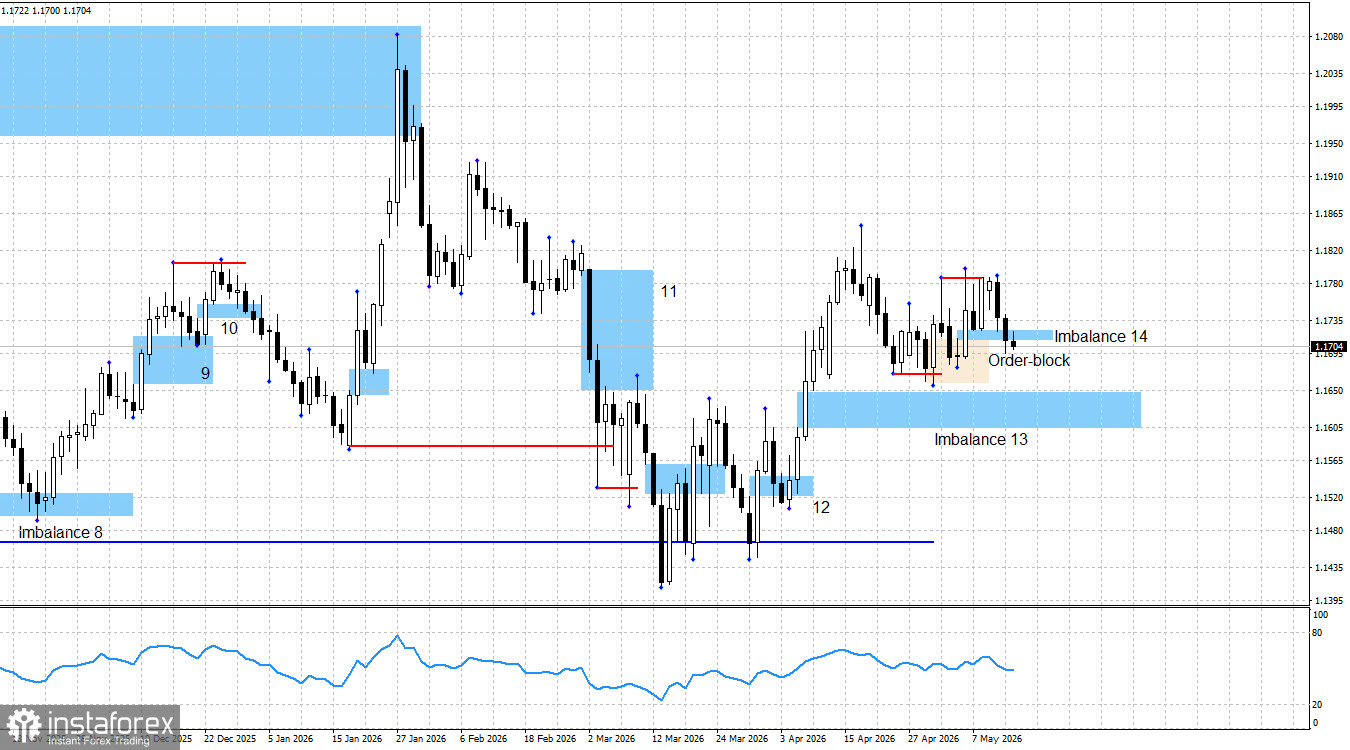
The EUR/USD pair reversed in favor of the euro after the formation of a bullish order block and began a new upward move. However, at the moment, bullish attacks appear too weak and unconvincing. Bullish traders risk losing the initiative in the market, as they continue to face strong pressure from geopolitics.
So far, this pressure has not been enough to completely break the bullish impulse, but bears continue to apply pressure because optimism regarding a ceasefire between Iran and the United States, as well as the reopening of the Strait of Hormuz, has fallen to near-zero levels.
The problem is that time is passing, the Strait of Hormuz remains closed, global oil supplies are tightening, and Iran and the United States are not moving closer to consensus on the key issues required to sign an agreement. As a result, the market is gradually losing faith that any agreement between Tehran and Washington is even possible.
A new acronym has even appeared — NACHO (Not A Chance Hormuz Opens). In other words, there is virtually no expectation that the Strait of Hormuz will reopen anytime soon.
I have previously written that there are currently no signs of a near-term agreement between Iran and the United States. I also noted that bulls would struggle to maintain attacks under such a news backdrop. The bullish impulse has not completely faded yet, but it is close to doing so.
In the current situation, traders looking to open new positions are left waiting for the formation of new bullish patterns or signals while hoping the bullish impulse remains intact. I still consider the trend bullish.
Among the bullish patterns currently visible are Imbalances 13 and 14, which create two potential areas of interest for long positions. There are currently no bearish patterns at all, so even if the trend has already shifted bearish, there is still no technical basis for opening short positions. The only notable event was the liquidity sweep on May 6, but a liquidity sweep alone is not considered a pattern.
It is also important to note once again that the entire rise of the U.S. dollar between January and March was driven solely by geopolitics. As soon as the United States and Iran agreed to a ceasefire, bears immediately retreated, and for more than a month the market has mostly been controlled by bulls.
At present, the ceasefire remains fragile, but negotiations continue, and hopes for peace still exist. I have repeatedly stated that I do not believe the bullish trend has ended, despite the breakdown of important trend-forming lows and despite the war involving Iran.
Markets often price in the most pessimistic scenario immediately, attempting to anticipate the most extreme developments. Therefore, I believe traders may have already fully priced in the geopolitical conflict in the Middle East. In that case, bears may only be capable of isolated attacks.
The overall technical picture is currently very clear. The bullish advance remains intact but desperately requires support. Ideally, that support would come from geopolitics — specifically, if Iran and the United States continue moving toward compromise.
Without a positive news backdrop, bulls may still continue advancing, but the pace will certainly not be strong or aggressive.
Thursday's economic backdrop provided traders with no meaningful information. The market is waiting for some kind of clear resolution in the Middle East but instead received another speech from Christine Lagarde, even though everyone already expects the ECB to raise interest rates next month.
The U.S. retail sales report released today also matched market expectations exactly.
There are still many reasons for bulls to remain active in 2026, and even the outbreak of war in the Middle East has not reduced them. Structurally and globally, Trump's policies — which contributed to the significant decline of the dollar last year — have not changed.
Over the coming months, the U.S. dollar may occasionally strengthen due to investor flight from risk, but this factor requires constant escalation in the Middle East conflict. I still do not believe in a long-term bearish trend for EUR/USD. The dollar has received temporary support from the market, but what will sustain bearish attacks over the longer term?
The May 15 economic calendar contains only one event, which I would not classify as particularly important — especially under current conditions. Therefore, the impact of the news background on market sentiment on Friday is likely to remain weak.
In my view, the pair remains in the process of forming a bullish trend. The fundamental backdrop changed sharply three months ago, but the trend itself cannot yet be considered canceled or completed.
Therefore, bulls may well resume their advance in the near future, provided geopolitics does not suddenly shift toward a new escalation.
Traders previously had opportunities to open long positions based on the signal from Imbalance 12 and from the order block signal. The upward movement may continue toward this year's highs.
However, in the coming days it will be important for bulls to maintain market control. For the euro to continue rising without major obstacles, the Middle East conflict must continue moving toward sustainable peace, and signs of de-escalation do occasionally appear — though still relatively rarely.
At the moment, bullish traders do not yet have sufficient support for a new strong impulse, which is why upward progress remains slow and difficult.
The main zones for new long positions remain Imbalances 13 and 14.


