
यह भी देखें


 06.04.2026 12:36 AM
America will be the key and effectively the sole source of news next week. In fact, almost every weekend, I find myself saying the same thing, as the fate of the EUR/USD and GBP/USD pairs depends on the American news background. Let me remind you that a couple of weeks ago, meetings of all three central banks took place, and the European banks adopted a rather hawkish stance, unlike the Fed. However, even this did not save the euro and the pound from new declines. Moreover, last Friday's labor market and unemployment data released in America were also ignored by markets.
Therefore, it is more accurate to say that the geopolitical backdrop will matter. As for economic data, I have significant doubts. In reality, a considerable number of important reports will come out of the US next week. But what relevance will they have if the Non-Farm Payrolls and unemployment reports were disregarded on Friday?
The week will start with the release of the ISM Services Index for March, continue with durable goods orders, Q4 GDP, and the Core Personal Consumption Expenditures (PCE) Price Index. It will conclude with the March inflation figures, which may spike by a full 1%. I consider the inflation report key, as strong price growth could prompt the FOMC to alter its monetary policy plans.
Currently, the plans call for maintaining interest rates at their current level until the end of the year; however, a significant rise in inflation could prompt the American central bank to reassess these plans.
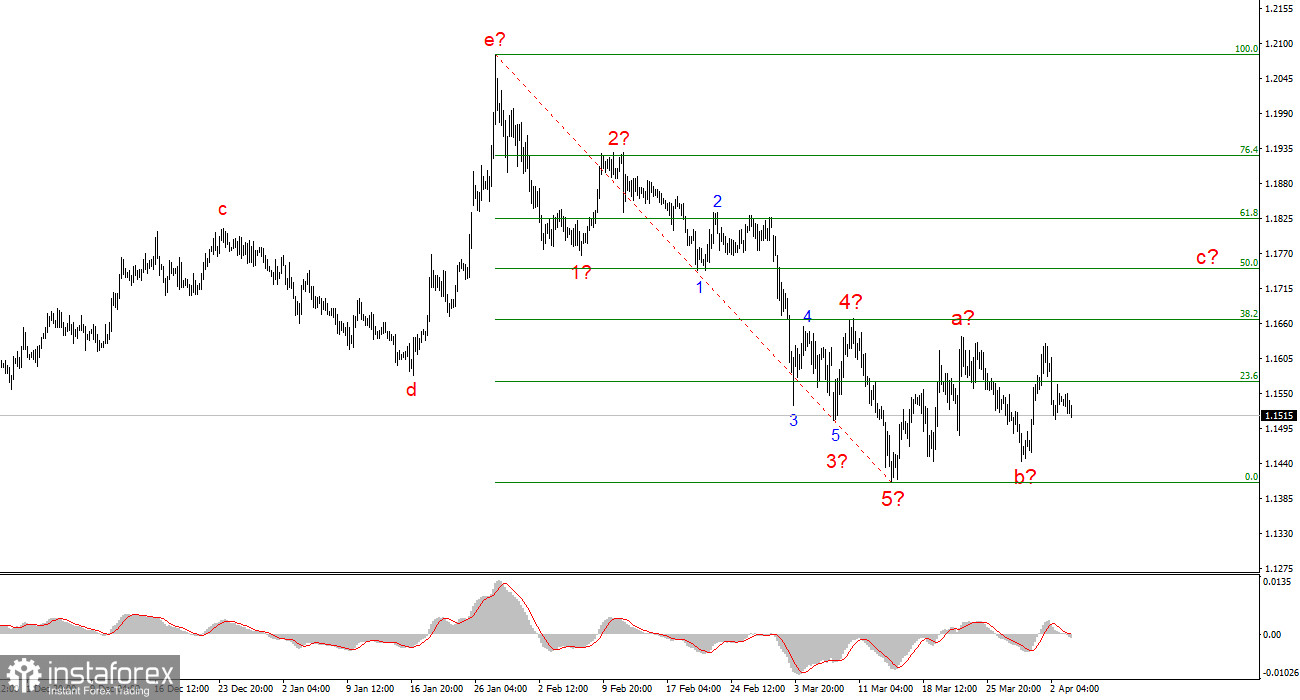
Based on the analysis of EUR/USD, I conclude that the instrument remains within an upward segment of the trend (lower image) and, in the short term, has completed the formation of a downward wave structure. Since the five-wave impulse structure is complete, my readers can expect price increases over the coming week with targets located around 1.1666 and 1.1745, corresponding to 38.2% and 50.0% on the Fibonacci scale. Further movements of the instrument completely depend on events in the Middle East.
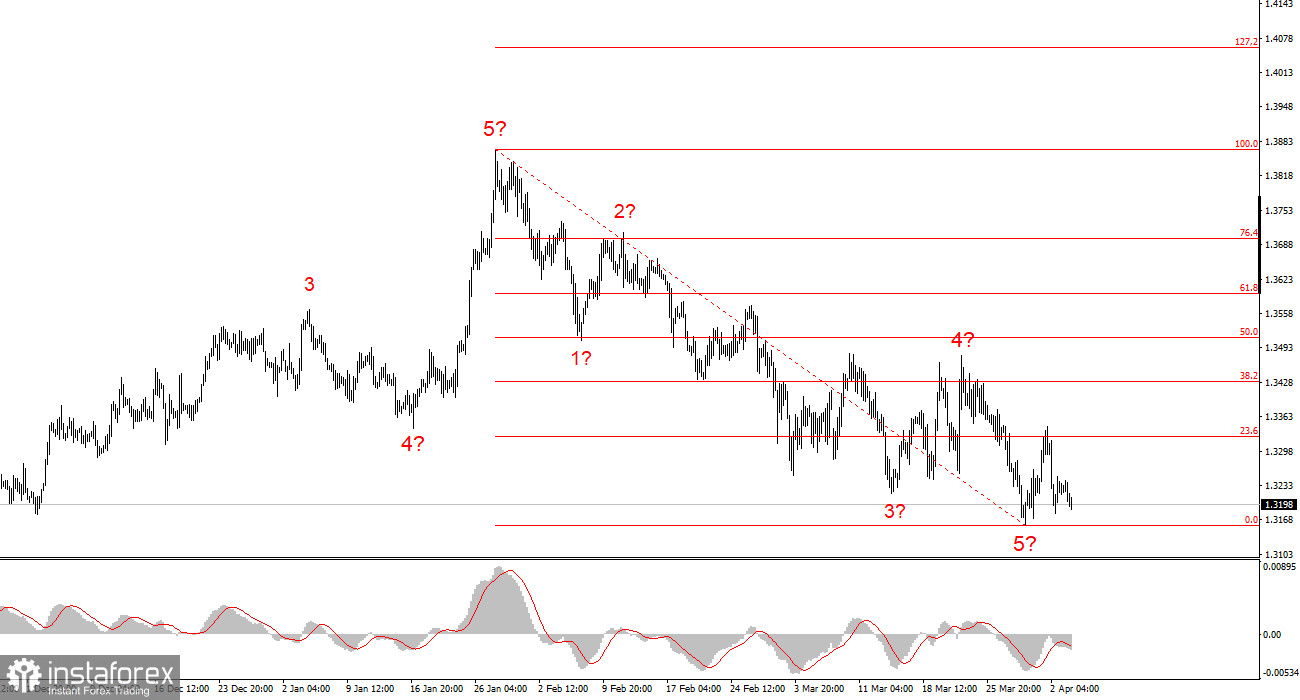
The wave picture for the GBP/USD instrument has become clearer over time, as I had anticipated. We now see a clear five-wave bearish structure on the charts with an extension in the third wave. If this is indeed the case, and geopolitics does not provoke a new collapse of the instrument in the near future, we will see the formation of a minimum three-wave corrective structure, within which the pound may rise to the levels of 1.3429 and 1.3512, corresponding to 38.2% and 50.0% on the Fibonacci scale from the last downward wave set. Therefore, in my opinion, now is a good time to buy.

