
यह भी देखें


 14.04.2026 08:15 PM
Last week, the GBP/USD pair rose by nearly 300 points amid sharply increased chances of achieving a sustainable ceasefire between Iran and the United States. This week, the pound has gained another 200 points. Expectations, however, were not fulfilled, as negotiations in Islamabad failed. Surprisingly, on Monday and Tuesday, bulls are pushing higher as if long-term peace has been established in the Middle East. What could explain this? There are two reasons.
The first is technical. Last week, a new bullish imbalance was formed, and the price effectively tested it overnight on Monday and received a reaction. In other words, a bullish signal was generated within a bullish trend.
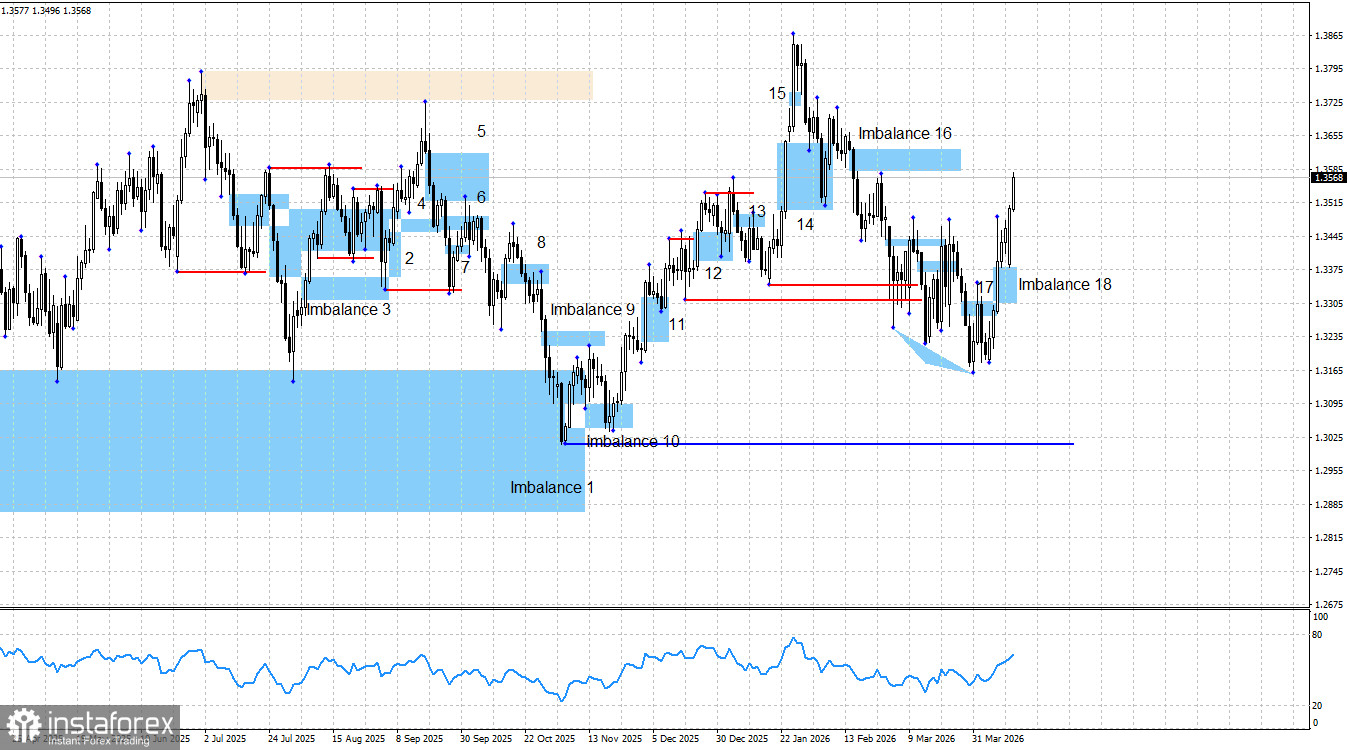
The second reason is again geopolitical. The market has had enough time and opportunities to price in the most pessimistic scenario in the Middle East. After the failed negotiations in Islamabad, nothing has changed. Oil has not reached new record highs, no new missile strikes have occurred, and the Strait of Hormuz remains blocked. The situation has not improved, but it has not worsened either.
As mentioned in previous analyses, an important and relatively rare "Three Drives Pattern" was formed, which triggered the upward movement. Thus, traders received a bullish signal while the trend remained bullish throughout. At present, the ceasefire remains fragile, and the parties involved in the conflict have yet to decide whether to continue negotiations or resume hostilities. Talks may resume this week, as reported multiple times by the media. The Strait of Hormuz is now under a dual blockade, and the Bab el-Mandeb Strait could potentially join it, which is a negative factor. However, as of Tuesday, the overall situation has not changed. Conditions in the Middle East may deteriorate, but they may also continue toward de-escalation.
The probability of a decline in both pairs remains, as the ceasefire in the Middle East is quite fragile. At the same time, the "Three Drives Pattern," marked on the chart by a triangle, allowed bulls to take control, which is a positive factor. It is always advantageous to receive a buy signal within a bullish trend, as such signals have the highest probability of success. Monday's signal was somewhat difficult to act on in time, but signals can form at any time of day. In the near term, the pound may continue rising toward this year's highs.
There was no significant economic news on Tuesday. Therefore, the pound's growth is not related to economic data. The geopolitical situation has not improved in recent days, but the most pessimistic scenario has already been priced in by the market. For bears to regain control, the situation in the Middle East would need to worsen significantly—for example, a resumption of hostilities or a blockade of the Bab el-Mandeb Strait.
In the United States, the overall backdrop remains such that, in the long term, there are few reasons to expect strength in the dollar. The conflict between Iran and the United States has not materially changed this outlook. The long-term situation for the dollar remains challenging: the U.S. labor market continues to weaken, the economy is increasingly approaching recession, and the Federal Reserve—unlike the ECB and the Bank of England—is not planning monetary tightening in 2026. Additionally, a fourth large wave of protests against Donald Trump has taken place across the country. From an economic standpoint, there are no clear drivers for dollar appreciation.
A sustained bearish trend in GBP/USD would require a strong and stable positive backdrop for the dollar, which is difficult to expect under the current administration. Geopolitics supported the dollar for two months, but this support is now fading. While it cannot be ruled out that the dollar may strengthen again due to geopolitical factors, there are currently no clear reasons to expect this.
Economic calendar for the US and the UK:
On April 15, the economic calendar contains one relatively important event. The impact of the news flow on market sentiment may emerge in the evening.
GBP/USD Forecast and Trading Advice:
The long-term outlook for the pound remains bullish. The "Three Drives Pattern" signaled potential growth, followed by the formation of a bullish imbalance and a bullish signal. The price swept liquidity from the last two bullish swings, but bears did not step in—another positive sign for the pound.
Under the current circumstances, despite geopolitical risks, I expect the upward movement to continue. The euro is also likely to keep rising. The target for the pound is the 2026 high, with the immediate target (nearest target) at 1.3580—imbalance 16, which has not yet been tested. A reaction from this level may trigger a corrective pullback.

