
यह भी देखें


 27.05.2026 07:19 PM
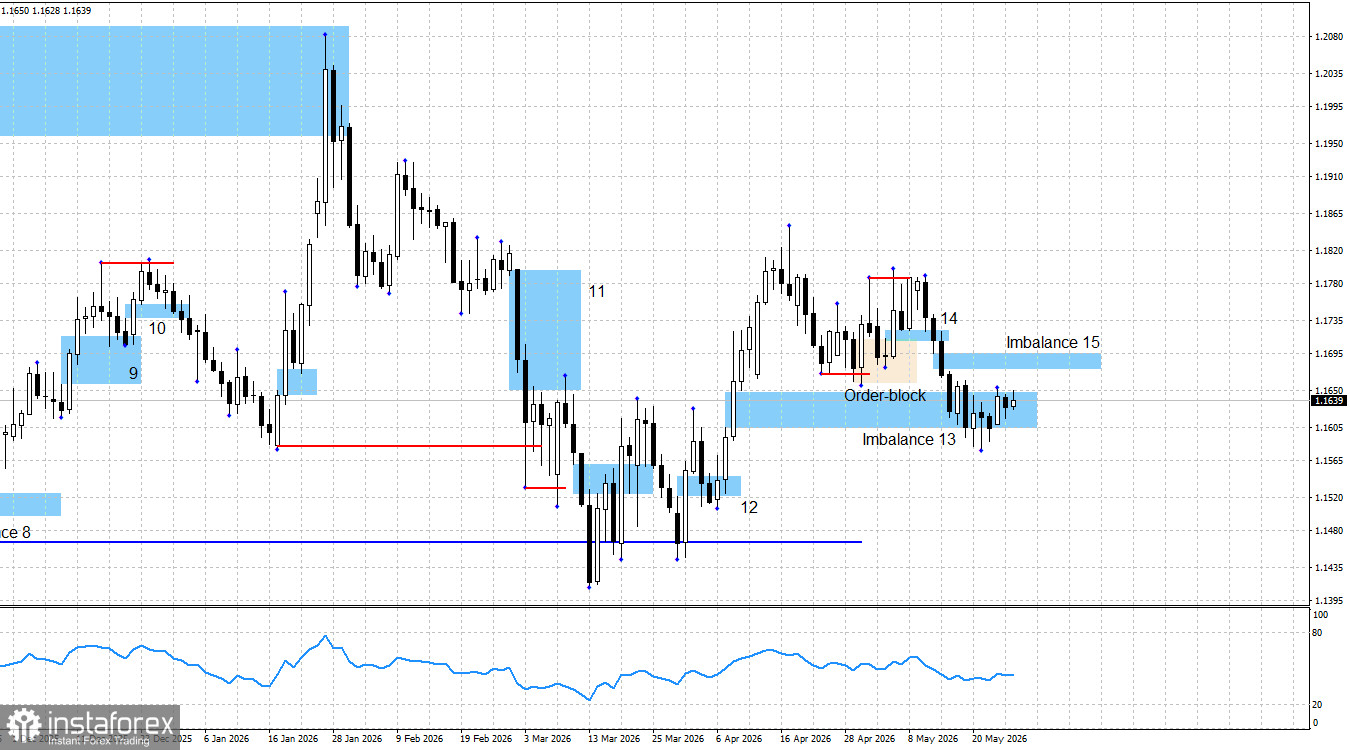
Over the past few days, the EUR/USD pair has been attempting to reverse in favor of the euro and resume its upward movement in line with the bullish trend. During the past week, the euro remained within imbalance 13, while bears failed to invalidate this bullish pattern. Therefore, despite the euro's decline over the last two weeks, the bullish trend remains intact. Within a bullish trend, I prefer to look for and trade buy signals rather than sell signals. Thus, within imbalance 13, I am still waiting for the formation of a buy signal. However, the near-term outlook for the euro will depend not on technical analysis or trading signals, but on geopolitics.
Last week, there were repeated reports about a possible agreement between Iran and the United States. However, although the flow of optimistic statements from Washington continued into the new week, on Tuesday the United States launched new strikes on southern Iran near the port of Bandar Abbas. According to media reports, the missile strikes targeted missile launchers as well as boats that, according to the U.S. military, were attempting to lay mines. Who is right or wrong in this situation is for readers to decide, as there is little point in analyzing such issues during the second month of the ceasefire and the third month of the conflict. At this stage, only one thing matters — whether the parties will reach a deal or not. Market sentiment toward the euro and the dollar depends directly on this outcome.
Under the current conditions, traders can only wait either for another reaction from imbalance 13, which remains the last bullish pattern within the current bullish impulse, or for its invalidation. If the pair's decline is treated as a corrective pullback, then it may already be complete within imbalance 13. However, without geopolitical support, bulls will struggle to launch a new offensive. If the current movement is interpreted as the beginning of a new bearish trend, then traders should expect the failure of negotiations and a resumption of the conflict, while also watching for signals within imbalance 15. In my opinion, the first scenario remains more likely.
Once again, I must point out that the entire rise of the U.S. dollar in January–March was driven solely by geopolitics. As soon as the United States and Iran agreed to a ceasefire, bears immediately retreated, while bulls dominated the market for more than a month afterward. At present, the chances of reaching an agreement have once again begun to decline. The market remains highly skeptical of any information suggesting a quick resolution of the conflict or an imminent agreement between Iran and the United States.
To put it more precisely, a deal will probably eventually be signed. However, "eventually" is not exactly what the market needs for an active rally in the pair. If, hypothetically, the agreement is signed a year from now, traders are unlikely to become optimistic today and start aggressively selling the U.S. dollar.
The overall technical picture currently remains clear. The bullish trend is still intact, but it urgently requires support. Ideally, this support should come from geopolitics — Iran and the United States should at least sign a framework agreement and then continue discussions regarding Iran's nuclear program. Without a positive news backdrop, bulls will find it difficult to launch another offensive.
The economic backdrop on Wednesday was once again absent. There were no economic reports at all, but Donald Trump may still comment on the current situation later in the day. The market has already become accustomed to receiving nearly all information regarding negotiations and the current stage of the conflict from the White House.
Bulls still have many reasons to remain active in 2026, and even the conflict in the Middle East has not reduced their number. Structurally and globally, Trump's policies — which triggered a significant decline in the dollar last year — have not changed. In the coming months, the U.S. currency may periodically strengthen amid investor flight to safe-haven assets, but this factor requires constant escalation in the Middle East conflict. I still do not believe in a bearish trend for EUR/USD. The dollar has received temporary market support, but what will bears rely on for a long-term offensive?
On May 28, the economic calendar contains four events, none of which I consider particularly important. The impact of the economic backdrop on market sentiment on Thursday may remain weak, including during the second half of the day.
In my view, the pair remains in the process of forming a bullish trend. The information backdrop changed sharply three months ago, but the trend itself cannot yet be considered canceled or completed. Therefore, bulls may well resume their offensive in the near future if geopolitics provides at least minimal support.
Traders previously had opportunities to open long positions based on the signal from imbalance 12 as well as the order block signal. The upward movement may resume toward this year's highs from imbalance 13. However, this week it is important for bulls to maintain control of the market.
For the euro to continue rising without obstacles, the Middle East conflict must continue moving toward a stable peace settlement. Failed negotiations, rejection of the framework agreement by either side, or another ceasefire violation would immediately allow bears to regain the initiative. At present, bulls still lack sufficient support for a full-scale offensive. The buying zone is located at 1.1605–1.1649.

