
यह भी देखें


 22.10.2026 04:54 AM
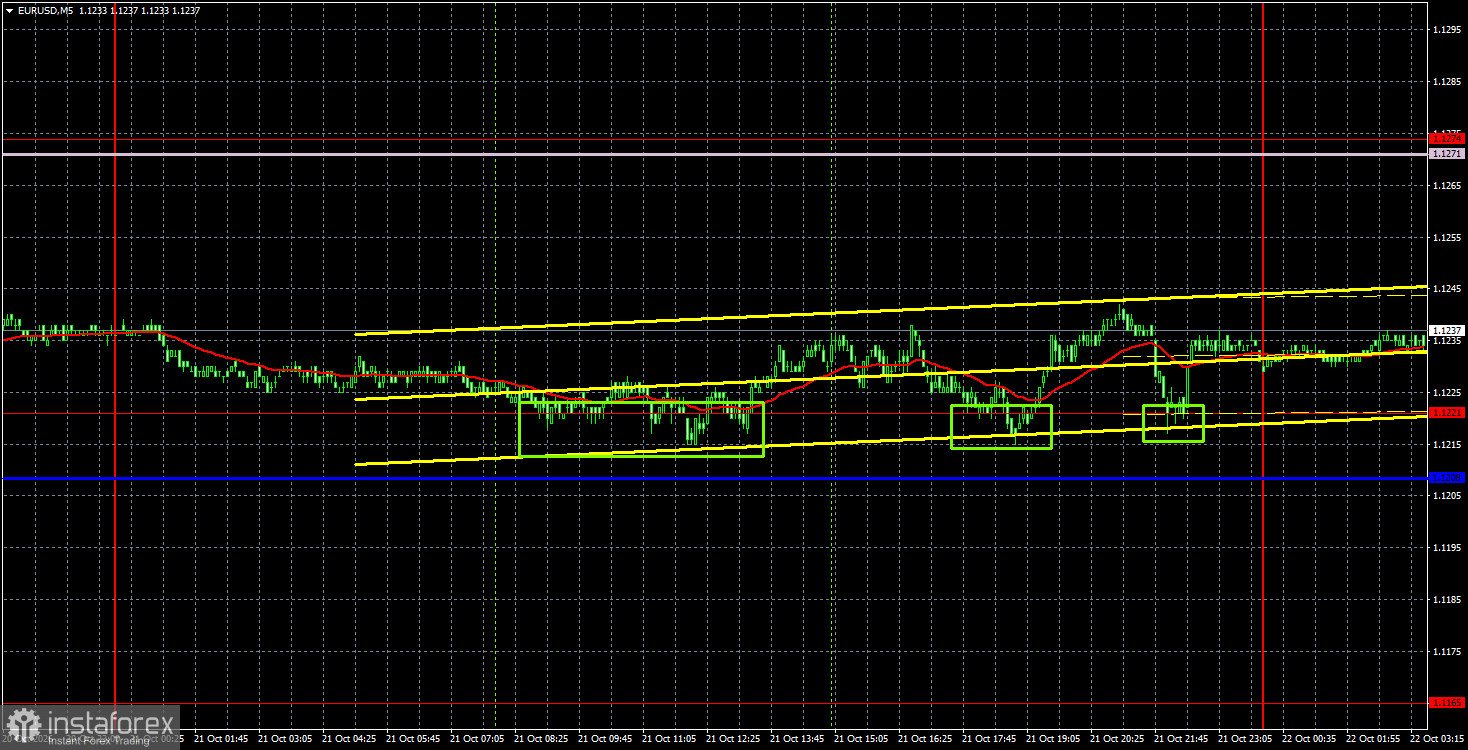
The EUR/USD currency pair showed no interesting moves on Wednesday, and volatility was less than 30 pips. Therefore, it makes no sense to talk about any events or price changes. The pair stayed flat all day, and the only noteworthy event was a speech by European Central Bank chief Christine Lagarde, who said nothing important or interesting. Otherwise, traders would have reacted to her words. As a result, the euro remains in a state of daze. After a month-long, nonstop decline, it cannot even show a noticeable correction. The price sits above the Ichimoku lines, but only because those lines themselves fell below the price. Thus, we cannot state an unequivocal transition to an uptrend even after the trend line was overcome. Most likely, the euro will continue to attempt to resume growth, since the dollar has no new grounds to rise. However, given the current market mood, we would not be surprised if the U.S. dollar's strengthening resumes—simply because the market will start buying the dollar again.
Technically, the downtrend may be over since the trend line has been broken. For five consecutive weeks, the market bought the dollar on any excuse, but every fairy tale ends. For now, one can conclude that the market has simply paused. Market participants still show no willingness to buy the euro.
On the 5-minute TF, three buy signals formed on Wednesday, but none brought profits because the price could not rise even 20 pips. All day, we observed sideways movement within the 1.1215–1.1242 channel.
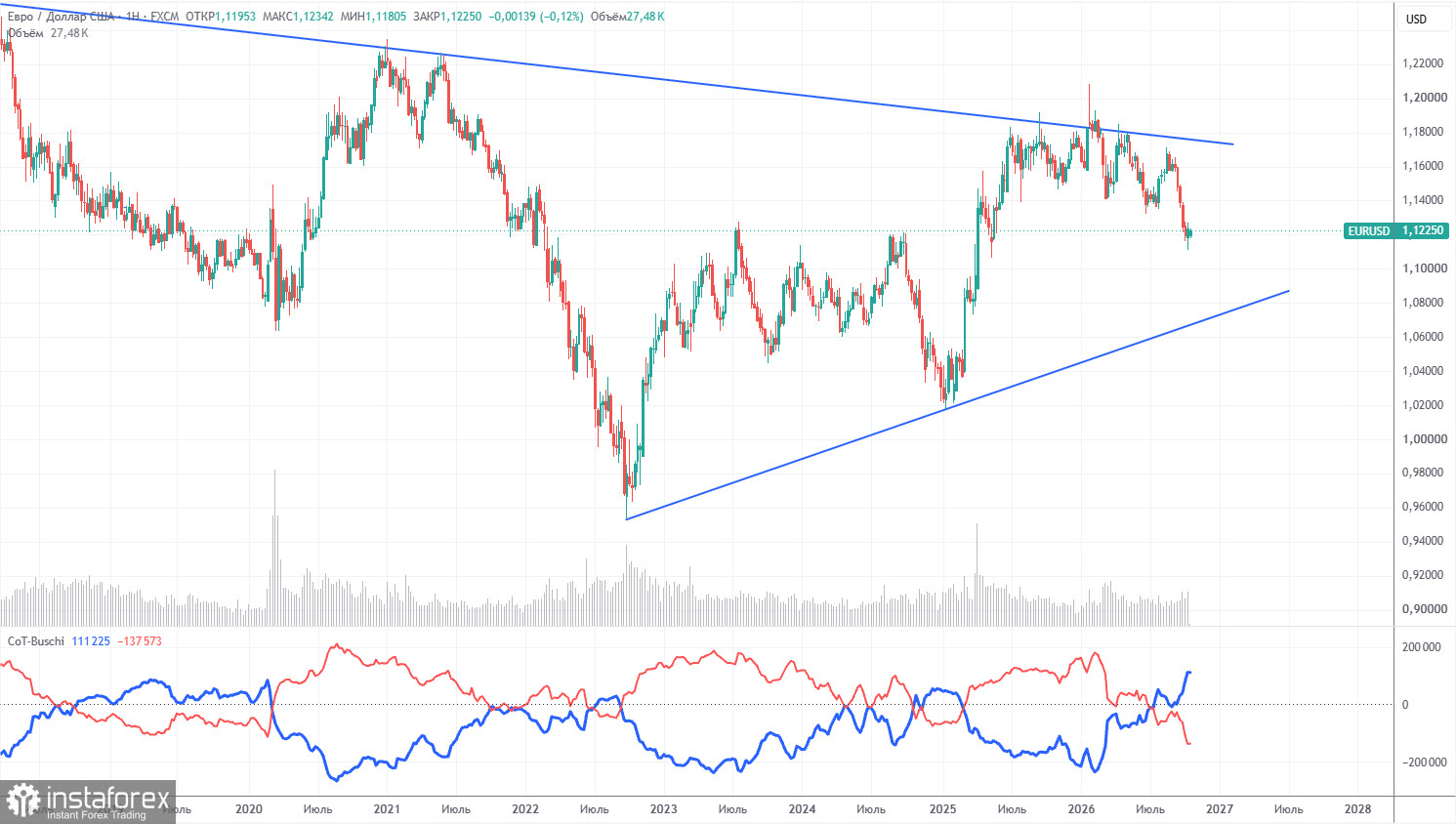
The latest COT report is dated October 13. The weekly chart shows that non-commercial traders' net position remains bearish and has declined substantially in 2026 due to geopolitical events. Over the past eight months, traders have reduced euro exposure in favor of the US dollar. Donald Trump's policies have not changed, but the dollar has served as a "reserve" currency for a time.
However, we still see no fundamental basis for further long-term strengthening of the US dollar. The war in the Middle East made the dollar temporarily very attractive, and the Federal Reserve's monetary stance surprised the dollar for the second time this year. In the long run, the euro could fall to $1.08 (the trendline), but the uptrend will remain relevant. Recently, the market has incorporated only dollar-positive factors and ignored everything else.
The positioning of the red and blue indicator lines points to the bears' advantage. Last reporting week, long positions in the "Non-commercial" group fell by 20,100, while shorts rose by 18,200. Accordingly, net non-commercial positions fell by another 38,300 contracts over the week.
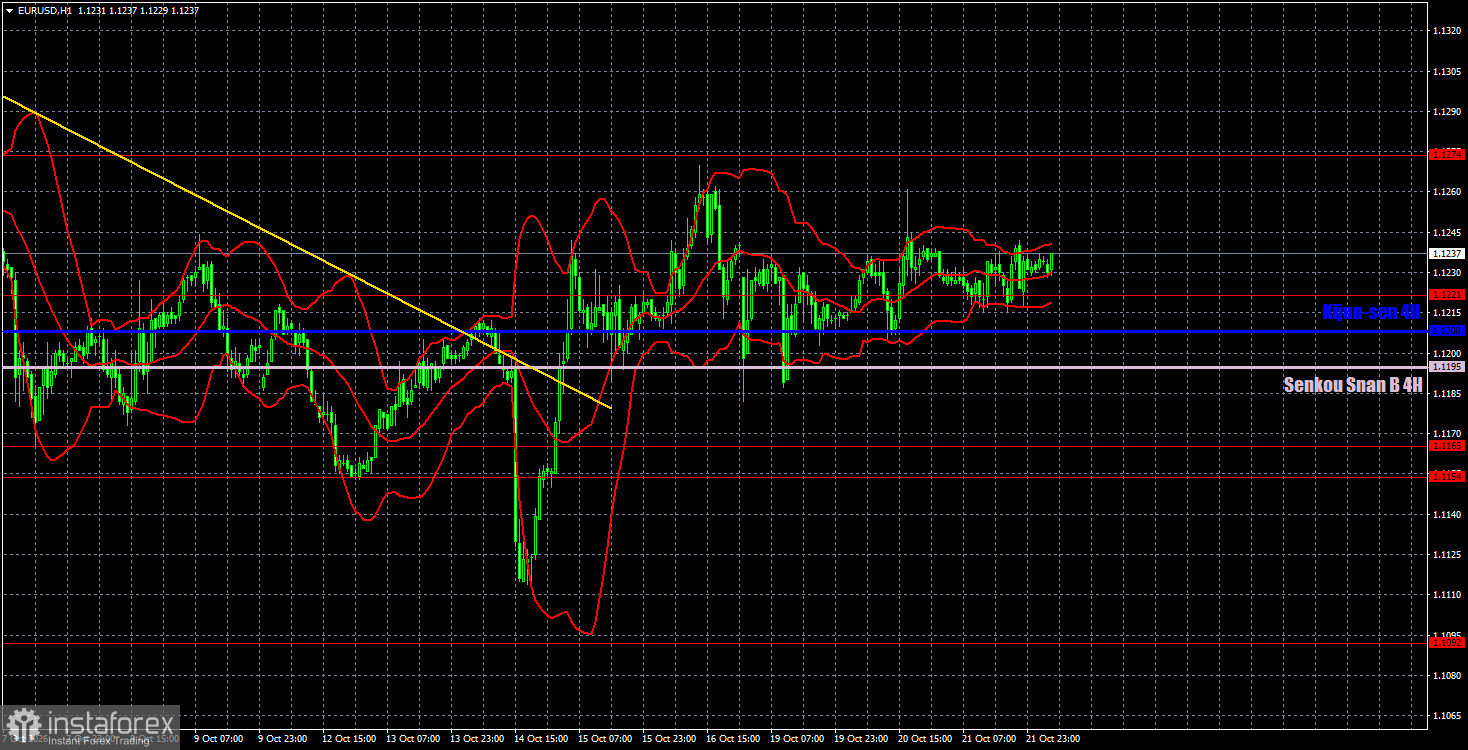
On the hourly timeframe, the EUR/USD pair finally has the opportunity to form an uptrend. If you also look at the daily and weekly TFs, it becomes clear that the chances of a strong, lasting trend remain high. All year 2026, the dollar was helped by "black swans" that arrived in the market almost like flocks. However, we view any dollar rise in the long term as a correction. Perhaps the correction is now complete?
For October 22 we highlight the following levels for trading — 1.1092, 1.1154–1.1165, 1.1221, 1.1274, 1.1362–1.1368, 1.1461–1.1473, 1.1536–1.1542, 1.1585, 1.1657–1.1665, as well as the Senkou Span B line (1.1195) and the Kijun-sen (1.1208). The Ichimoku indicator lines may move during the day, so account for this when determining trading signals. Remember to move your Stop Loss to breakeven if the price moves 15 pips in the right direction. This will protect against losses if the signal proves false.
On Thursday, the EU has no major events scheduled, and the U.S. will release only the initial jobless claims report. Thus, traders will have little to react to today, and volatility may again be extremely low.
Traders can consider short positions near 1.1154–1.1165 and 1.1092 if price holds below 1.1195–1.1208. If price bounces from the 1.1208–1.1221 area, consider 1.1274 as a target for long positions.

