
यह भी देखें


 17.11.2026 09:17 AM
Today, oil fell, with Brent sliding below $92 per barrel after a more than 3% drop on Monday. December WTI fell 0.9% to $84.97. As of yesterday morning, Brent traded near $96.50, a loss of almost $5 in a day. The catalysts were signs that supply is outpacing demand and Vice President J.D. Vance's signal that the US does not want a long war with Iran.
In an interview, Vance said Washington will not allow the war to become a prolonged commitment and ruled out even a two-year involvement. "We are not going to be there forever," said US Vice President J.D. Vance. For the market, this is a signal that the risk of large-scale escalation and new strikes on Iran is lower.
Oil has been weakening for almost three weeks. On October 30 Brent was $116.06 — a six-month high — and now it is roughly 21% lower. Back then, on October 29, Vance sent a letter to Iran's Supreme National Security Council secretary Mohsen Rezaei, and on November 12 Donald Trump said the US does not need a deal with Iran. Now Washington has made clear the war has limits, and Trump, after Democratic gains in the midterms, did not order new strikes. Brent fell below $92 on November 10 and near $91 on November 12, then bounced to $95.70 on November 13, so the current decline has returned the price to November lows. Moreover, the IEA expects a supply surplus of about 2 million barrels per day this quarter, and a major Wall Street bank warns of a risk of oversupply next year.
Downward pressure persists. Oil flows through the Strait of Hormuz rose 78% to 9.1 mb/d in Q3, according to the US DOE, though they remain well below last year's levels. Saudi Arabia sharply increased output in October and, together with the UAE, cut official selling prices. US retail diesel fell below $6 per gallon for the first time since early September, which slightly eases inflationary pressure.
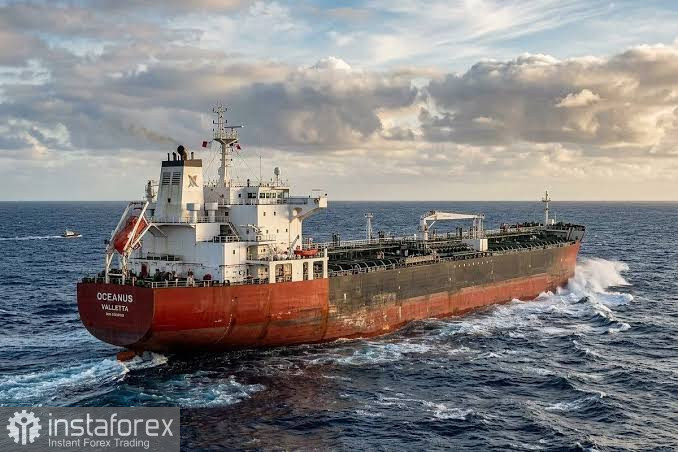
Risks have not disappeared. A fourth tanker caught fire in the Hormuz area after a mine explosion, and the UK's maritime trade body received notice of another vessel incident. Various media report US intelligence believes Iran planned attacks on senior Trump administration officials using a "dirty bomb" or chemical weapons in Washington, but the White House said no credible threats currently exist.
Clearly, the market is reacting more to a supply surplus and Washington's unwillingness to prolong the war than to Iran's threats. All this suggests continued downward pressure on oil. I expect Brent to trade in an $88–$96 range, biased toward the lower bound, in the coming days while the surplus picture holds; a move above $100 would require a new escalation in the Hormuz area or a sharp deterioration after Iranian statements.
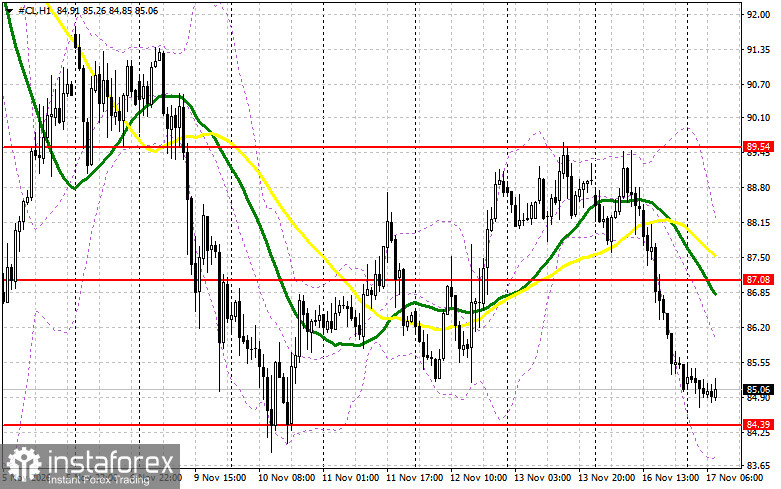
Technical picture: buyers need to take the nearest resistance at $87 to target $89, above which a breakout will be difficult. The further target is around $92. On a decline, bears will try to seize control below $84. If they succeed, a range breakout would hit bulls hard and push oil toward an $81 low, with prospects of reaching $78.

