
यह भी देखें


 20.11.2026 10:01 AM
The US dollar is headed for a fourth straight weekly gain — and foreigners are footing the bill. Over nine months, $670bn flowed into US stocks, 43% more than last year, while EUR/USD remains under pressure.
Weekly performance of the US dollar
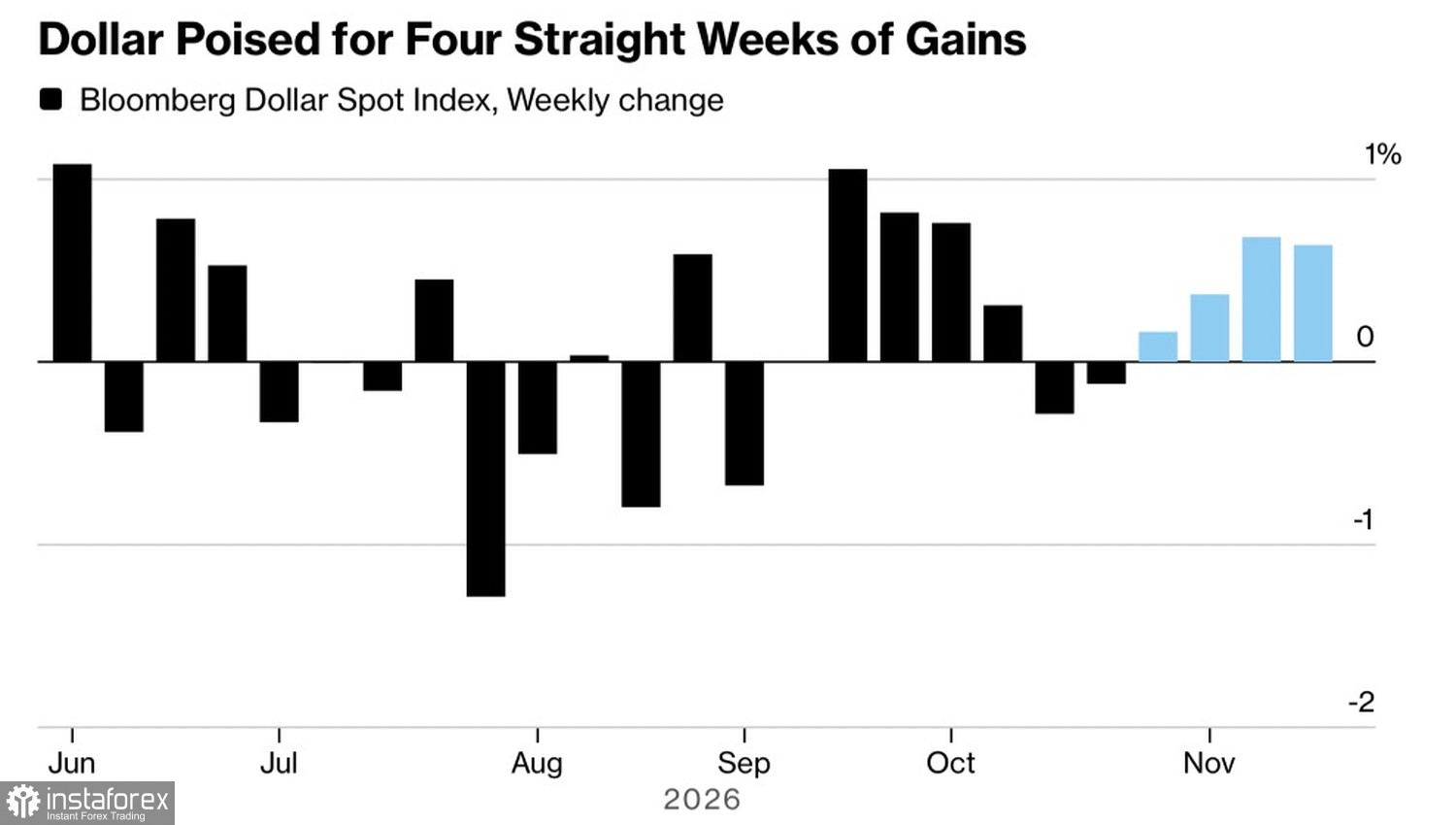
A positive factor for the dollar was Anthropic's Nasdaq debut — the largest IPO in history. Investors worldwide converted their currencies into dollars to buy the stock, which was priced at $83, valuing the company at $1.5 trillion. Spectra Markets estimates foreign inflows into the IPO at $10–15bn. Non-residents are competing with corporations that want to buy dollars ahead of Thanksgiving Day. The greenback is acting like a bouncer at the entrance, taking a fee from every buyer.
Support for the dollar is also coming from a broad inflow of capital into US stocks. According to the US Treasury, this is the highest level at least since 2016. The USD index is up more than 3% year-to-date. Barclays, Deutsche Bank and Standard Chartered expect the rally to continue into 2027, citing US leadership in AI and rising productivity.
A "bullish" factor for the dollar is the Fed's stance. The minutes of the October meeting show that almost all officials expect a federal funds rate increase in the coming months. The 10-year Treasury yield has stayed above 5% for the longest stretch since 2007, which Nomura says keeps borrowing in other currencies to buy dollars attractive. Bank of America called the week a period of declining risk — which benefits the greenback. For EUR/USD, the combination of high yields and expectations of tighter monetary policy remains an unfavorable backdrop.
Central bank interest rate moves and outlook
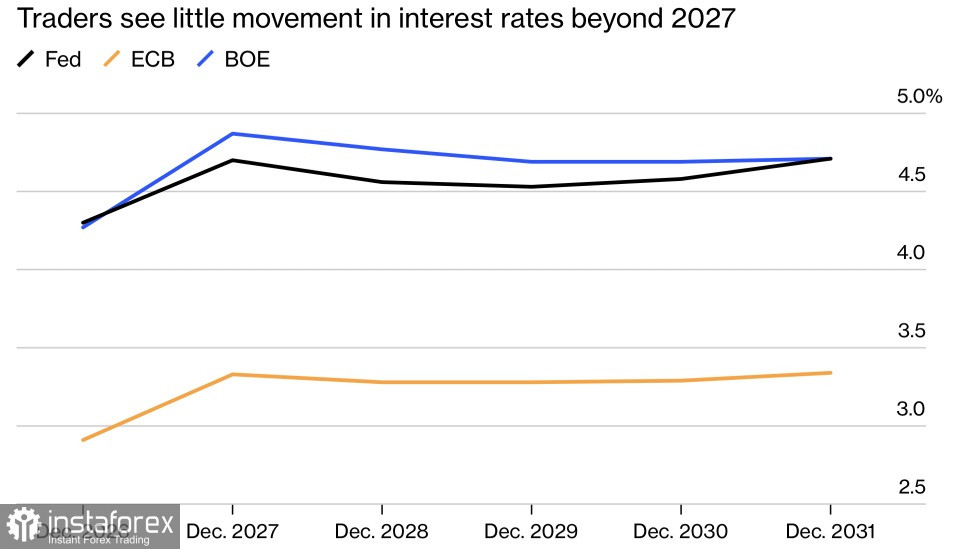
However, correction in tech shares — which even a record IPO could not stop — is weighing on the dollar. Investors have rotated back into bonds in search of safety, pushing yields down. BMO believes equity weakness will tighten financial conditions and limit the scale of any further federal funds rate hikes. At the start of 2026, the market had been expecting rate cuts from the Fed, ECB and Bank of England, but the war in Iran choked oil supplies and pushed inflation higher. Now hopes for easing have all but vanished, and all three regulators are expected to raise rates within the next 12 months.
A negative factor for the dollar could be the US debt ceiling. The Bipartisan Policy Center estimates the US will hit the $41.1tn limit in February or March. Extraordinary Treasury measures will buy six to nine months, and the ceiling will likely need to be raised between August and December 2027.
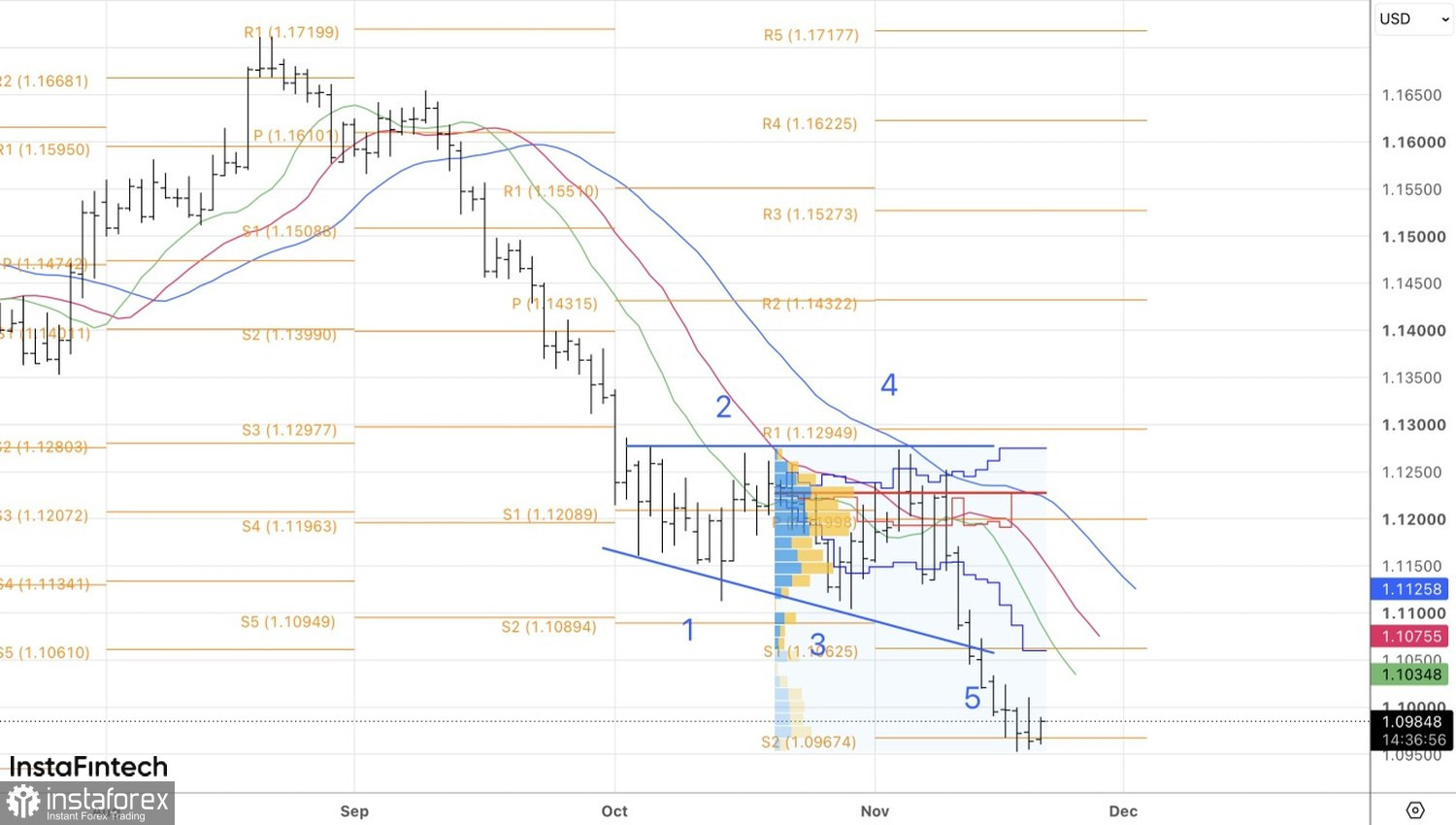
Technically, on the daily chart, EUR/USD is showing short-term consolidation in a trading range of 1.095–1.10 within a downtrend. In these conditions, one should consider a strategy of placing pending sell orders from 1.095 and buy orders from 1.10.

