
यह भी देखें


 24.11.2026 09:28 AM
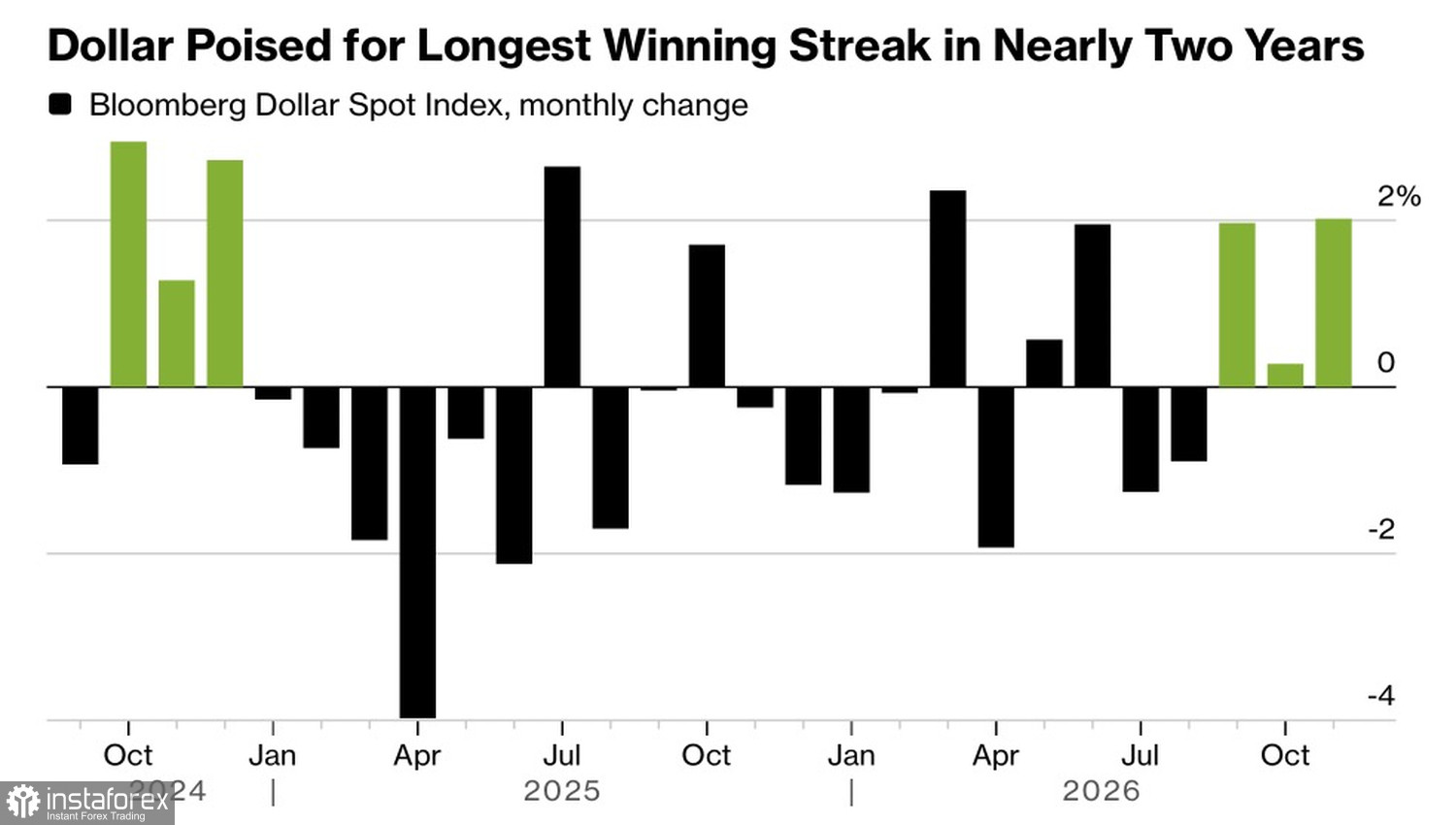
Can you call the dollar weak when it is on track for a third consecutive monthly gain, the longest run in nearly two years? The Bloomberg Dollar Index rose by roughly 2% in November, while EUR/USD fell to 1.0881, the lowest level since April 2025.
Dollar monthly performance
The Fed is the primary support for the US dollar. After the September fed-funds increase, the first in three years, the central bank remains in a tightening mode that, in Goldman Sachs' view, will continue to support the greenback over the coming months. Traders price in about 65 bps of cumulative hikes through September 2027. New York Fed President John Williams reiterated that the Fed still has work to do to return inflation to the 2% target.
A bullish driver for the dollar is the return of AI appetite. Nvidia restored Jensen Huang to the CEO role, and Wall Street saw its best day since April 2025. Credit Agricole calls this a risk-on trigger that supports US assets and spills over into emerging-market currencies. Semiconductor stocks jumped sharply, and the AI investment boom continues to attract capital to US equities.
A bearish risk for the dollar would be further declines in energy prices. Oil has fallen materially on cautious optimism about efforts to end the US–Iran conflict. The bond market is signaling investors expect the Fed's hawkish stance to ease if energy prices drop. Goldman Sachs expects the dollar to weaken modestly next year as markets come to terms with an overly hawkish Fed pricing and inflation moves closer to 2%. US business activity expanded at the slowest pace in four months, with the S&P Global composite PMI falling to 54.6.
European business activity dynamics
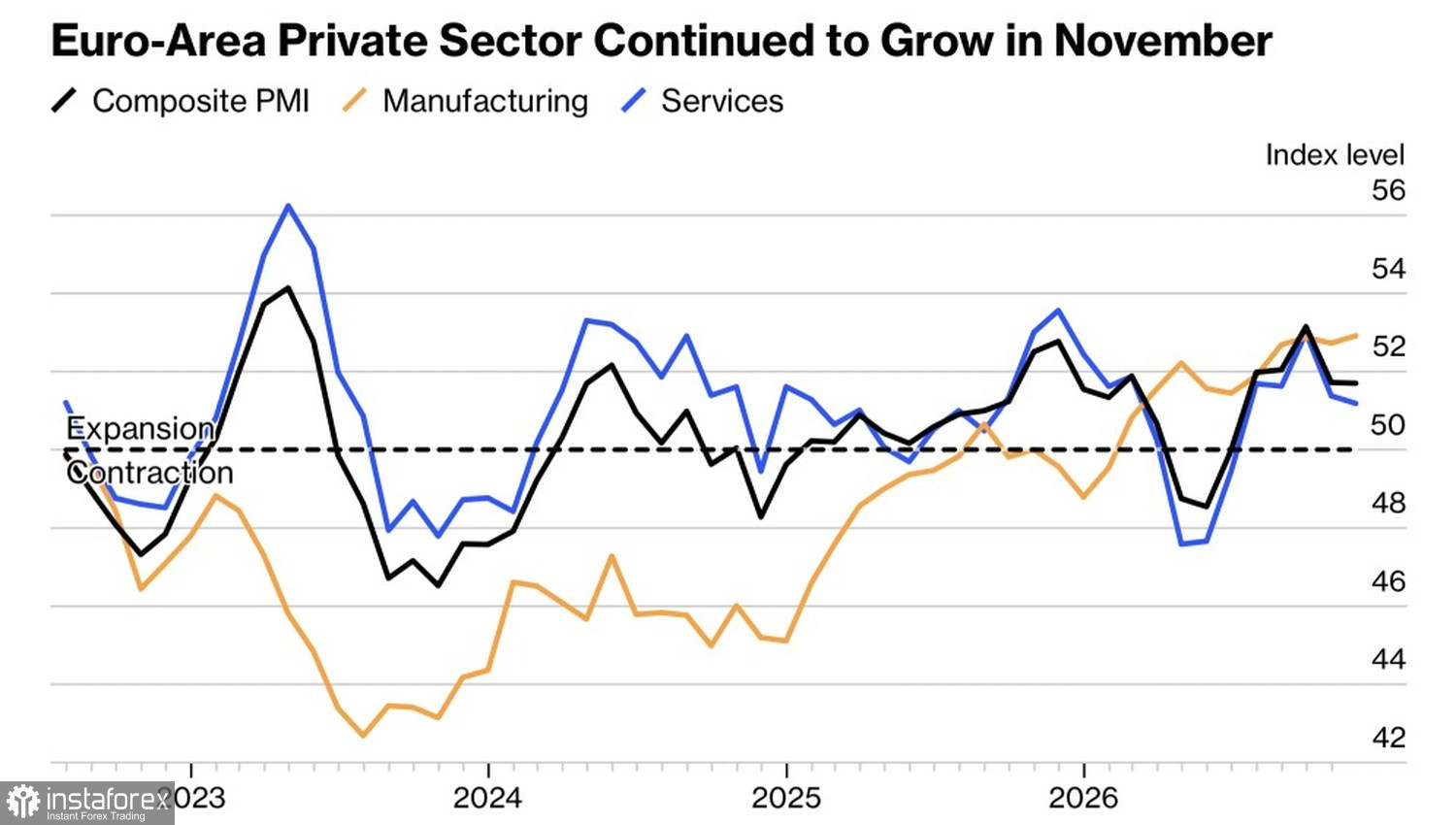
EUR/USD is under pressure from divergence within the eurozone. The composite PMI for November was 51.7, still above the expansion threshold, but economists had looked for a small improvement. Germany outperformed on government spending, while activity in France fell more than expected amid budget and election worries.
The European Commission now expects euro-area GDP to rise by 1.2% this year. Bloomberg Economics notes that the energy shock and tighter financial conditions have removed some of the economy's momentum, yet the ECB remains on track for another deposit rate increase in December. Goldman Sachs projects the euro will weaken to 1.08 and below over the next three months.
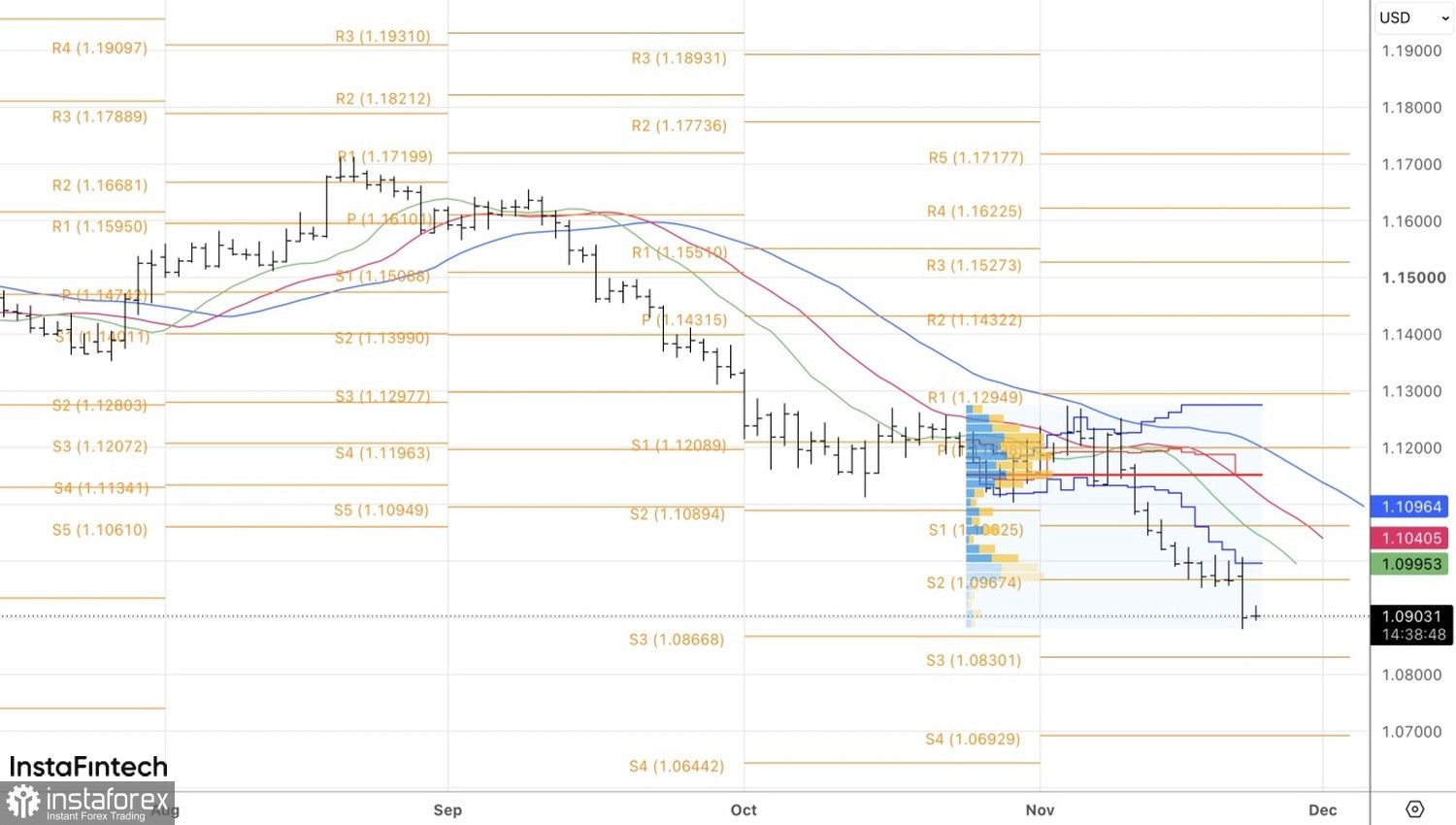
Technically, the daily EUR/USD chart shows a replay of an inside bar. Long positions opened near 1.10 have turned into losers, and sellers followed from 1.095. Short euro positions should be held and selectively added on rallies. Pivots at $1.083 and $1.07 serve as target references.

