
यह भी देखें


 25.11.2026 06:45 AM
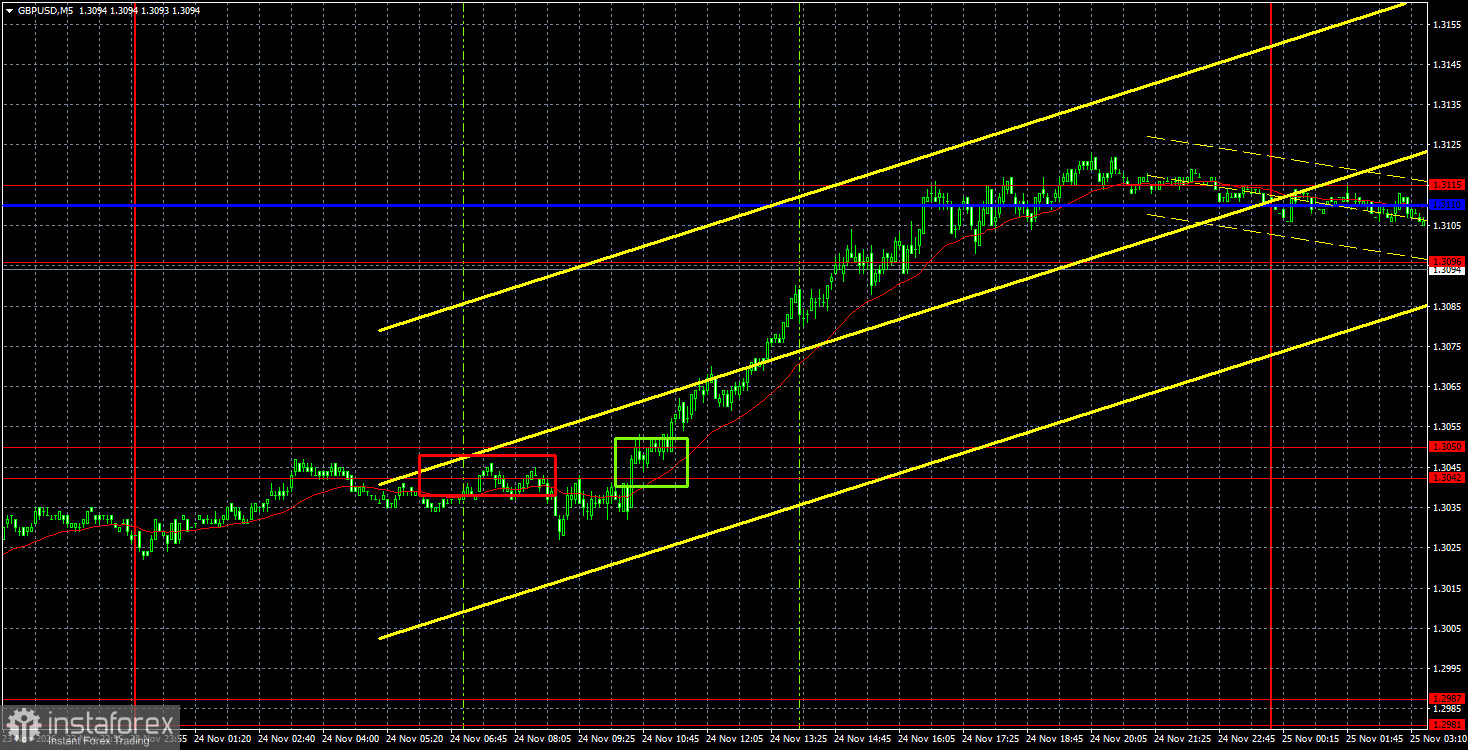
On Tuesday, GBP/USD traded higher, but that move offers no real hope of a broad recovery for the pound or a shift into an uptrend, even within the weekly sideways channel. Why did the pound rise yesterday? There were no significant macro releases in the UK or the US, and both the Bank of England's and the Federal Reserve's stances remain hawkish. In practice, the market is focused only on Fed policy — or perhaps that factor has little to do with market sentiment, and the dollar is rising for broader reasons. In that sense, Fed policy simply coincides with the pair's moves, which is why analysts point to it. But as we have said repeatedly, the market essentially ignores all other factors, so the recent price action cannot be called logical. The pound rose roughly 100 pips yesterday — and what changed? It did not even break the last local high. In short, we saw a simple technical bounce that changes nothing.
Technically, the pound continues to form a downtrend. Higher-timeframe charts may still show long-term upside potential, but the pound is again falling too quickly and too sharply relative to fundamentals, which even distorts technical structure on higher charts. The pound's fate depends on whether traders can defend the key 1.3000 area — and for now it looks likely they will not. The down move is almost relentless, making it difficult to draw a clean trendline.
On the 5-minute TF, two trading signals formed on Tuesday. The first sell signal proved false. The second was a buy signal that allowed traders to cover short positions and finish the day in profit, since the pound spent most of the day moving higher.
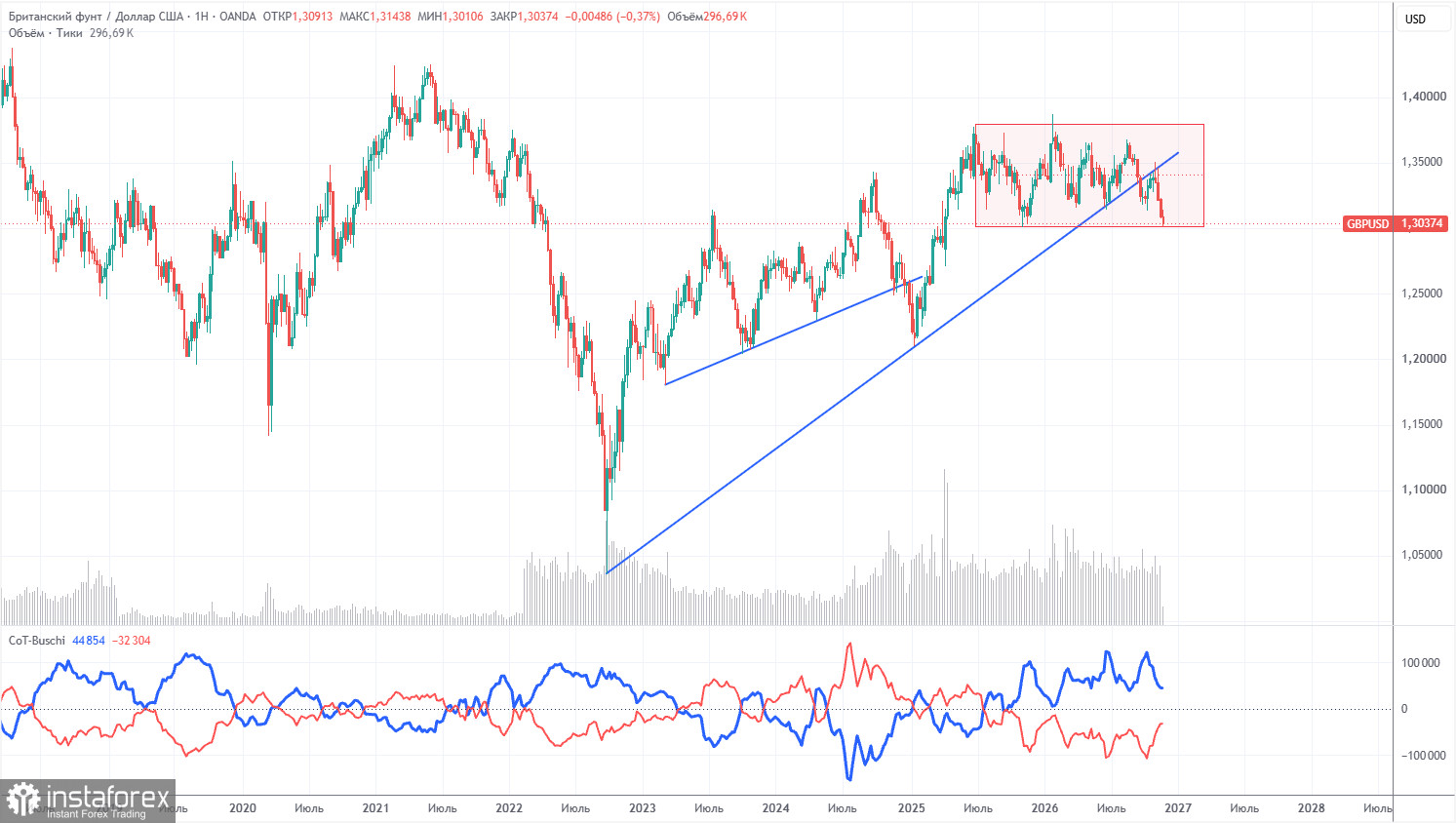
COT reports for the pound show that non-commercial traders have dominated the market with short positions throughout 2026. The net position is negative, even as the longer-term uptrend remains intact. Given events in the Middle East, it is unsurprising that dollar demand has been high in 2026. The U.S.–Iran war is formally paused but could resume at any time. The Fed's shift toward tighter policy also supports the dollar, and the rising trendline has been breached — though it was breached within a flat, so we do not consider the uptrend conclusively finished. Price may attempt to break out of the sideways channel soon; if it does, that would signal the start of a more sustained downtrend.
We also note a strong divergence between the red and blue COT indicator lines, indicating a wide split between commercial and non-commercial positions. Such divergence often precedes a trend change. According to the latest COT report (dated November 17), the "Non-commercial" group opened 9,000 BUY contracts and closed 1,900 SELL contracts; their net position increased by 10,900 contracts over the week—a development that has had no visible effect on the pound so far.
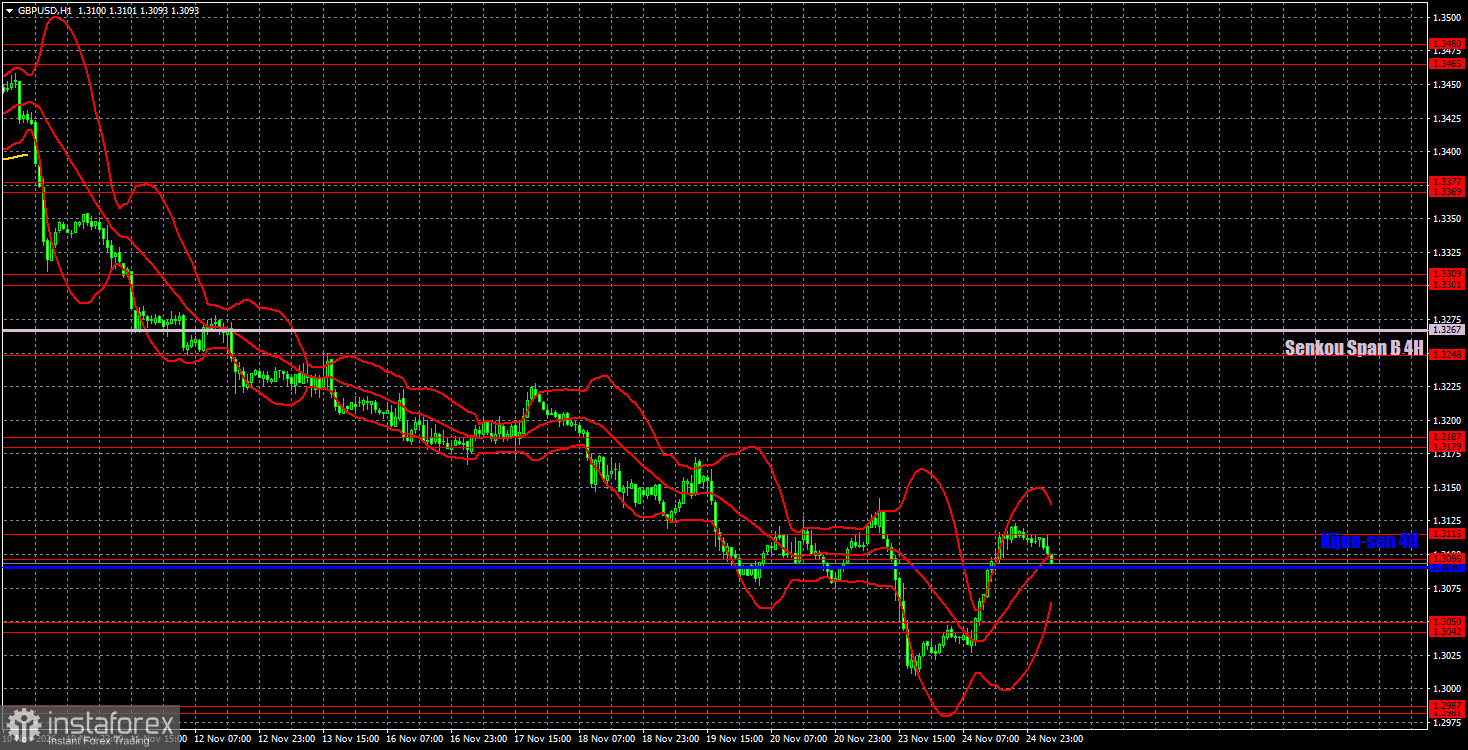
On the hourly timeframe, GBP/USD continues a relentless downward move that could break the sideways channel even on the weekly chart. If that happens, nothing will prevent the pound from a medium-term decline. The only hope remains that liquidity is taken from the October 14 low, but the market keeps selling and ignoring virtually all factors.
For 25 November we highlight the following important levels for trading: 1.2863; 1.2981–1.2987; 1.3042–1.3050; 1.3096–1.3115; 1.3179–1.3187; 1.3248; 1.3301–1.3309; 1.3369–1.3377; 1.3465–1.3480. The Ichimoku Senkou Span B (1.3267) and Kijun-sen (1.3090) lines can also generate signals. It is recommended to move the Stop Loss to breakeven after the price moves 20 pips in the favorable direction. Ichimoku lines may shift during the day, which should be considered when defining trading signals.
No major UK releases are scheduled today; in the U.S., attention should be on the PCE index — the Fed's preferred inflation gauge — which can provoke significant market moves. The likelihood of further dollar strength is higher than that of dollar weakness at present.
Traders may consider short positions near 1.0886 if price consolidates below 1.0949. A rebound from 1.0949 would allow traders to consider targets of 1.1006 and 1.1115 for long positions.

