
Lihat juga


 20.05.2026 09:39 AM
Markets can rally even in a stagflationary environment if corporate profits permit, and companies can be rewarded with rising share prices, Yardeni Research — one of Wall Street's most prominent S&P 500 bulls — recently argued. That view now appears belated. The broad index did continue to push higher while the Middle East conflict amplified inflation risks, supported at the time by earnings season and a fear-of-missing-out (FOMO) dynamic. As spring draws to a close, however, greed is yielding to fear.
A number of major banks are shifting to a more cautious stance. Wells Fargo Securities has advised clients to be vigilant in the second half of the year, citing inflation, financial strains, and the US midterm elections. Historically, when those factors have coincided, the S&P 500 has posted declines of 10 percent or more in the second half in 71 percent of cases, compared with 44 percent in other years.
Bank of America cautioned that an excessive crowding into US equities could trigger profit taking. Its survey shows that net equity overweighting among asset managers rose from 13 percent in April to 50 percent, a level last seen in January 2022. Cash allocations fell to 3.9 percent, the lowest since February 2024.
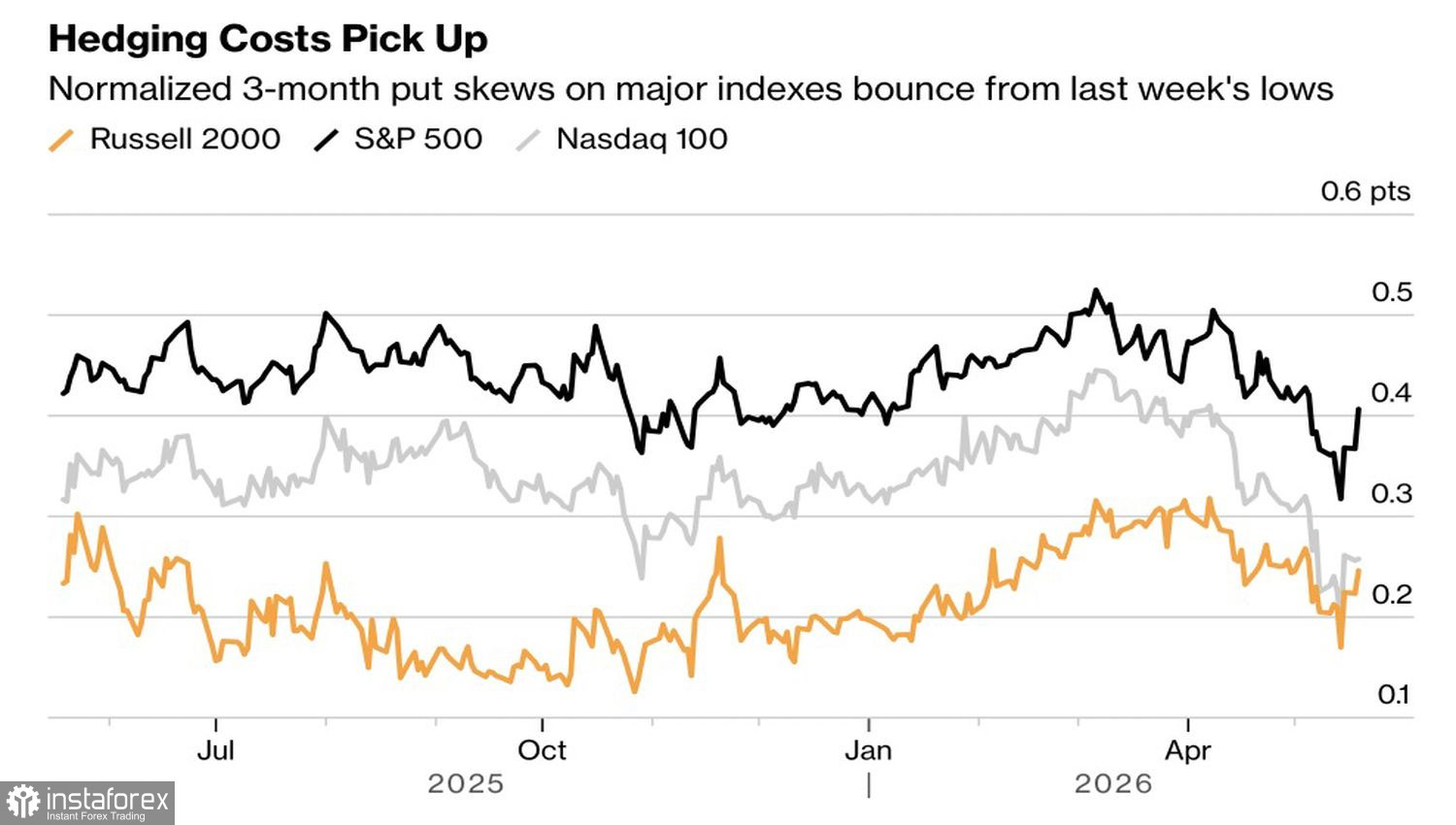
Hedging costs for US equity exposure have moved higher, signaling increased demand for insurance against further declines. Investors have shown particular interest in protective derivatives tied to the Russell 2000, reflecting concern that tighter Federal Reserve policy would disproportionately hit small-cap stocks.
Robust corporate results soothed market attention for a time, but traders are beginning to confront a harsher outlook. Derivatives pricing has pushed the implied probability of a Fed funds rate increase in 2026 to about 57 percent, the highest level since the Fed's tightening cycle of 2022–23. That prospect is unfavorable for equities.
The question is whether strong earnings from market leaders such as NVIDIA will be enough to save the rally. Investors may attempt a classic buy-the-dip response. If that strategy fails to lift the broad index to fresh record highs, it will signal bulls' weakness and could precipitate a large-scale sell-off.
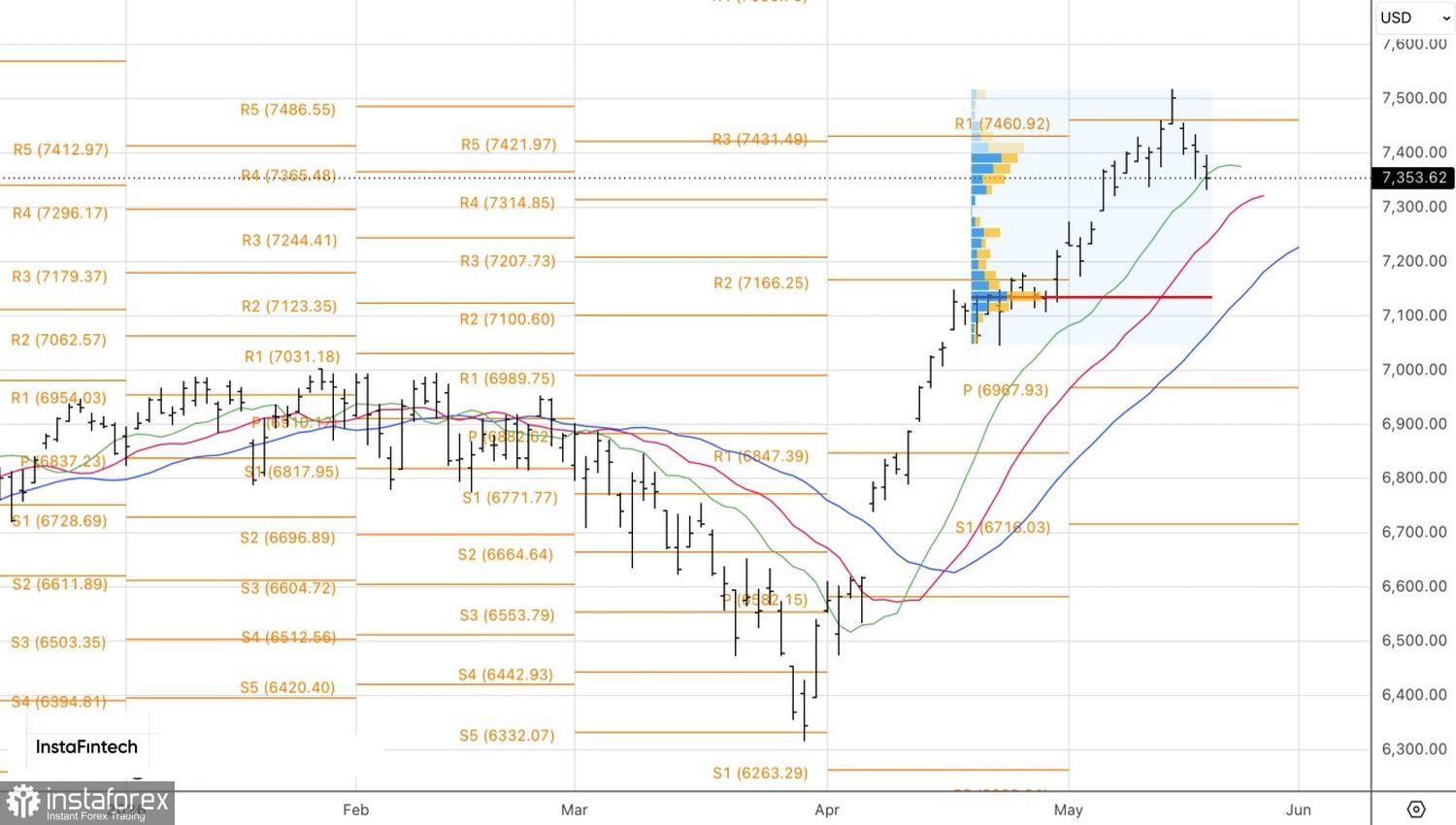
Technically, the S&P 500 has retraced to its rising trend line on the daily chart. A decisive break and close below key support at 7,365 would raise the risk of further declines toward 7,200 and 7,130 and would likely accelerate selling pressure.


