
আরও দেখুন


 23.02.2026 03:06 PM
No shock — the Supreme Court's decision to strike down White House tariffs was widely expected. The administration immediately played its trump card, however, imposing a new 15% global levy for a 150-day period. After that window, Donald Trump promised the duties would become permanent — and all that would be required are the appropriate investigations. The US has used similar tools in dealings with China before. That part is straightforward. The unanswered question is how other countries will respond. Until that becomes clear, EUR/USD is pacing like a caged tiger.
Until the picture is clarified, Europe is prepared to put trade talks with the United States on hold. India is likewise postponing negotiations. No one has spare cash to burn, and no one wants to pay for access to the big, beautiful shop called America — at least, not the way Trump imagines it.
German business climate
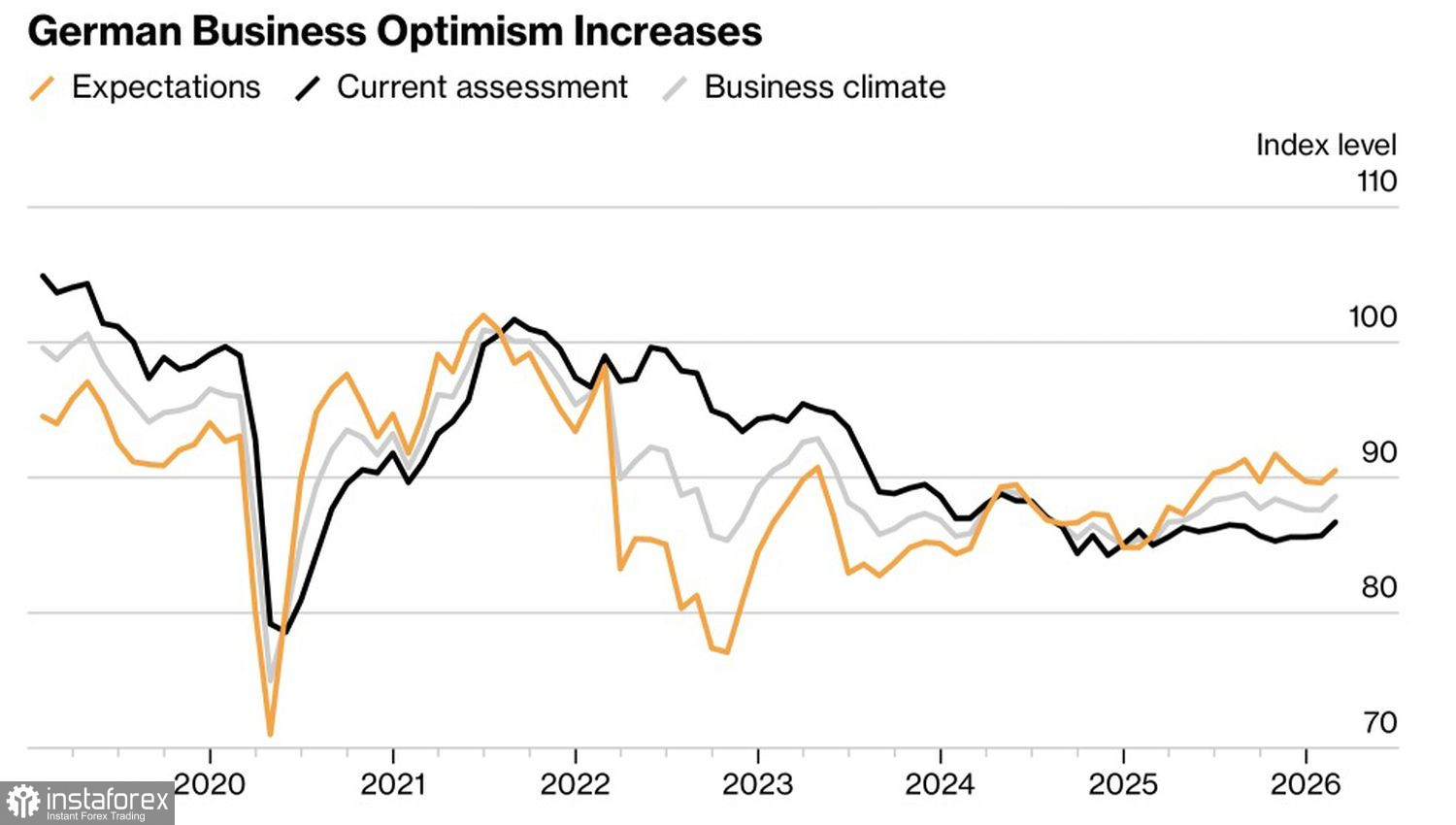
For now, the EU appears able to absorb tariffs. Evidence: Germany's manufacturing business activity moved back into expansion above the 50-pont threshold for the first time in three years, and German business climate indicators beat Bloomberg-consensus forecasts in February.
The market's key question is how tariffs will affect the Fed's policy. In 2025, many assumed that tariffs would weaken the economy and force earlier rate cuts, which weighed on the dollar. However, the shutdown episode showed that uncertainty makes decision-making hard — the Fed can very plausibly sit on its hands for a long time. And for now, the rate differential still favors the dollar.
If in the fourth quarter, the Fed signaled concern about unemployment and thus preemptively eased three times, January changed the narrative. As Jerome Powell said, looking at the data, it is hard to argue policy is restrictive. The central bank is again more worried about inflation. The labor market looks healthy — and that was before January's impressive payrolls gain of 130,000.
US economic performance
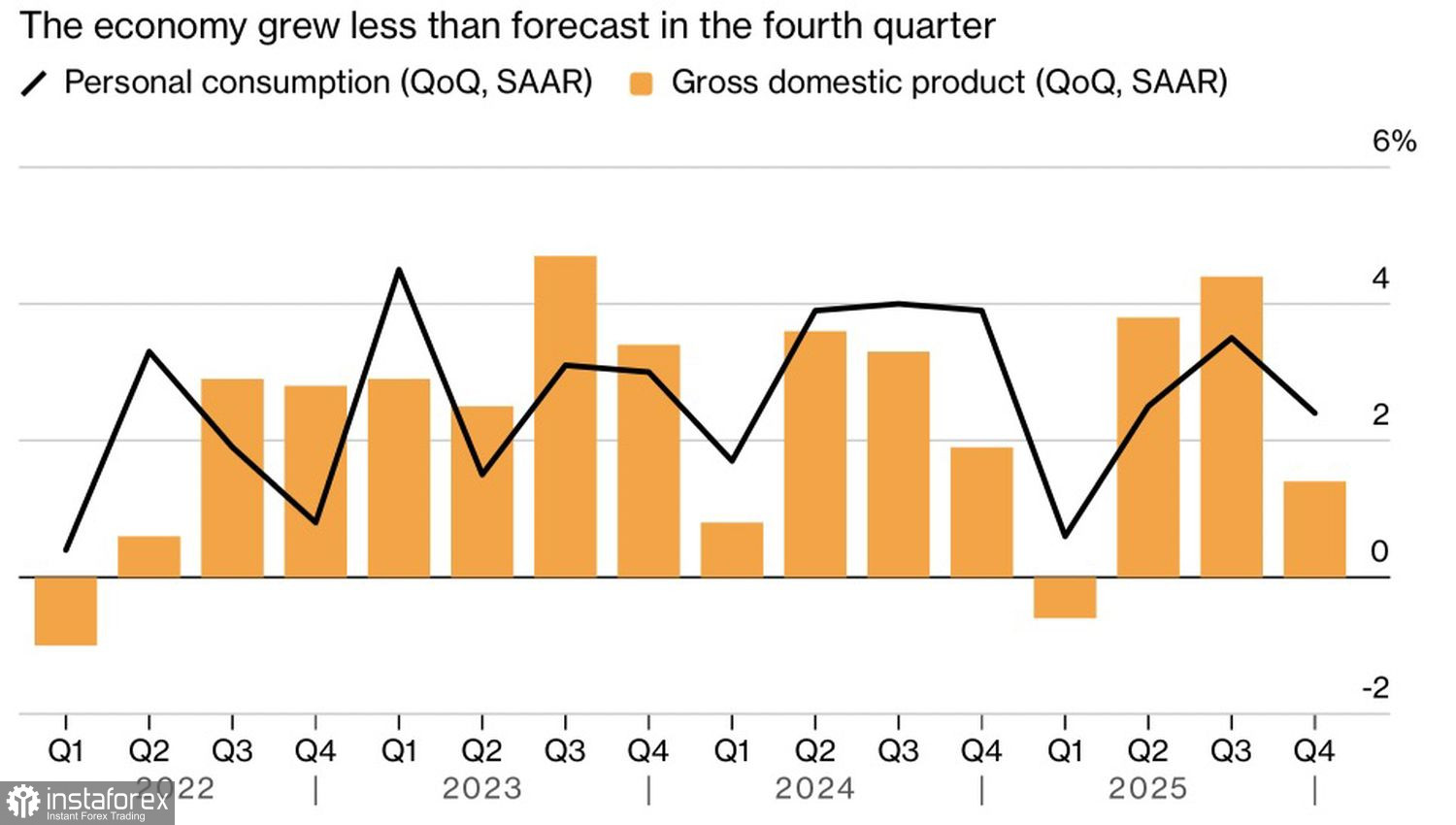
Sadly, the slowdown in US growth from 4.4% to 1.4% paints a new problem for the Fed. Conventionally, a recession begins with a cooling labor market — and that process has already started. If it continues, GDP risks sliding into the red. At that point, the central bank will have little choice but to cut interest rates aggressively — very bad news for the dollar. That shock could arrive alongside a new Fed chair in the person of Kevin Warsh.
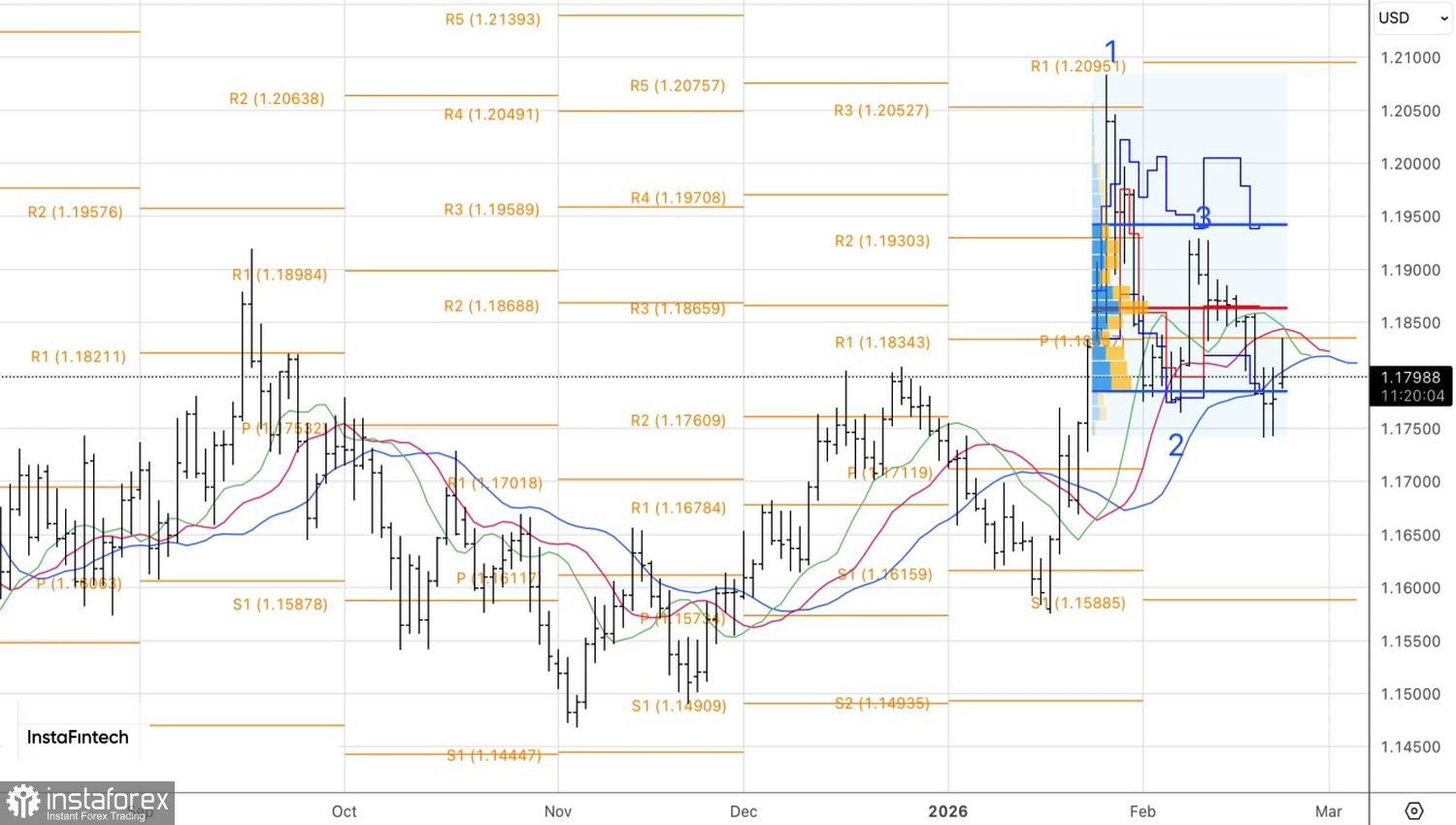
Technically, the daily chart shows that EUR/USD has formed a pin bar with a long upper wick. There is a high probability that the major currency pair will move in the opposite direction — that is, lower. A break below support in the form of the lower edge of the fair-value range 1.1785–1.194 would justify adding to previously established short positions.


