
আরও দেখুন


 08.07.2026 12:24 AM
Everything is understood in comparison. A year ago, Christopher Waller advocated for rate cuts, ready to endure a longer return of inflation to 2% since the shaky labor market outweighed price pressures. Today, the FOMC governor acknowledges that risks have completely flipped. The labor market has stabilized, and inflation is gaining momentum. At the same time, Waller is confident in PCE's return to target levels. The question is not the target itself, but the speed of its attainment. EUR/USD is closely listening to such admissions.
According to ANZ Research, the Federal Reserve will remain on hold until at least mid-2027 before moving to a gradual 50-basis-point rate cut. Price shocks have not led to a permanent acceleration in broad inflation: wage growth is declining, inflation expectations are anchored, and the median and trimmed mean CPI are gradually slowing. Such a pause should bring inflation back to target without sharp moves. For the U.S. dollar, this is more of a neutral signal than a strictly "bearish" one, as rate cuts are postponed indefinitely.
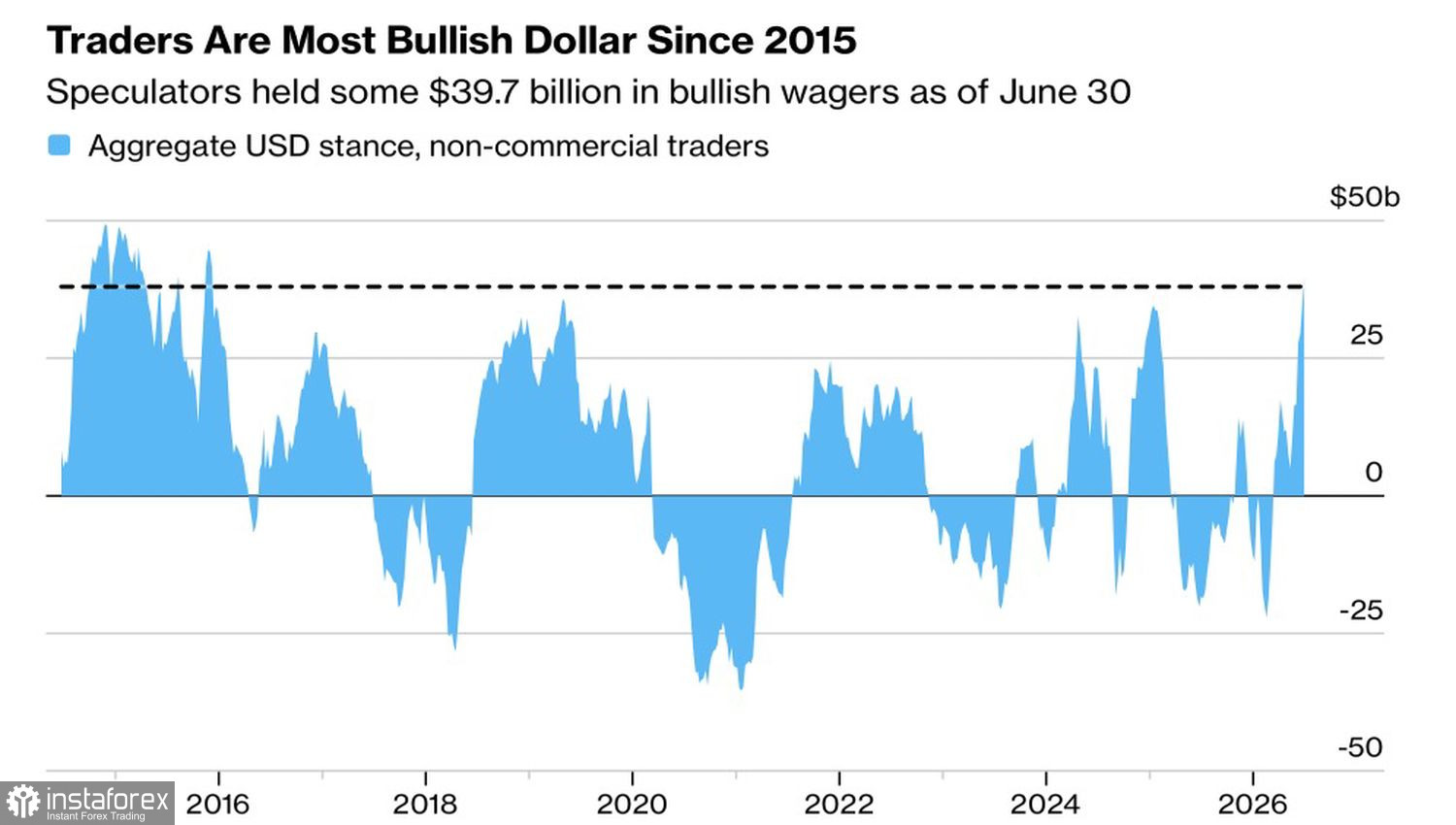
This is unlikely to prompt speculators to quickly shed their maximum net long positions in the dollar since 2015.
Meanwhile, before Iran's attacks on vessels in the Strait of Hormuz, things in the Middle East were looking up. Traffic through this key oil artery of the world has returned to a new norm of 30-60 tankers per day. While below pre-war levels, this is enough to ease tensions in global markets. Major producers in the region are ramping up production and finding alternative routes. At the same time, countries are not rushing to replenish strategic reserves, creating an oversupply and hinting at further declines in Brent.
The return of oil prices to pre-war levels is undoubtedly a plus for the energy-importing Eurozone. However, European Central Bank Executive Board member Isabel Schnabel warns against euphoria. According to her, falling energy prices do not mean a return to pre-war conditions. The peace agreement remains fragile, and markets are still pricing in higher oil costs in the future. Gas prices are still about 40% above pre-war marks, continuing to pressure consumers in the currency bloc.
Thus, a contradictory picture emerges for EUR/USD. On one hand, the Fed's long pause and falling oil prices create a foundation for a rally in the main currency pair. On the other hand, the fragility of global conditions and expensive gas do not allow the Eurozone to breathe freely. The euro may be relieved by the pause, but it is clearly too early to celebrate a victory.
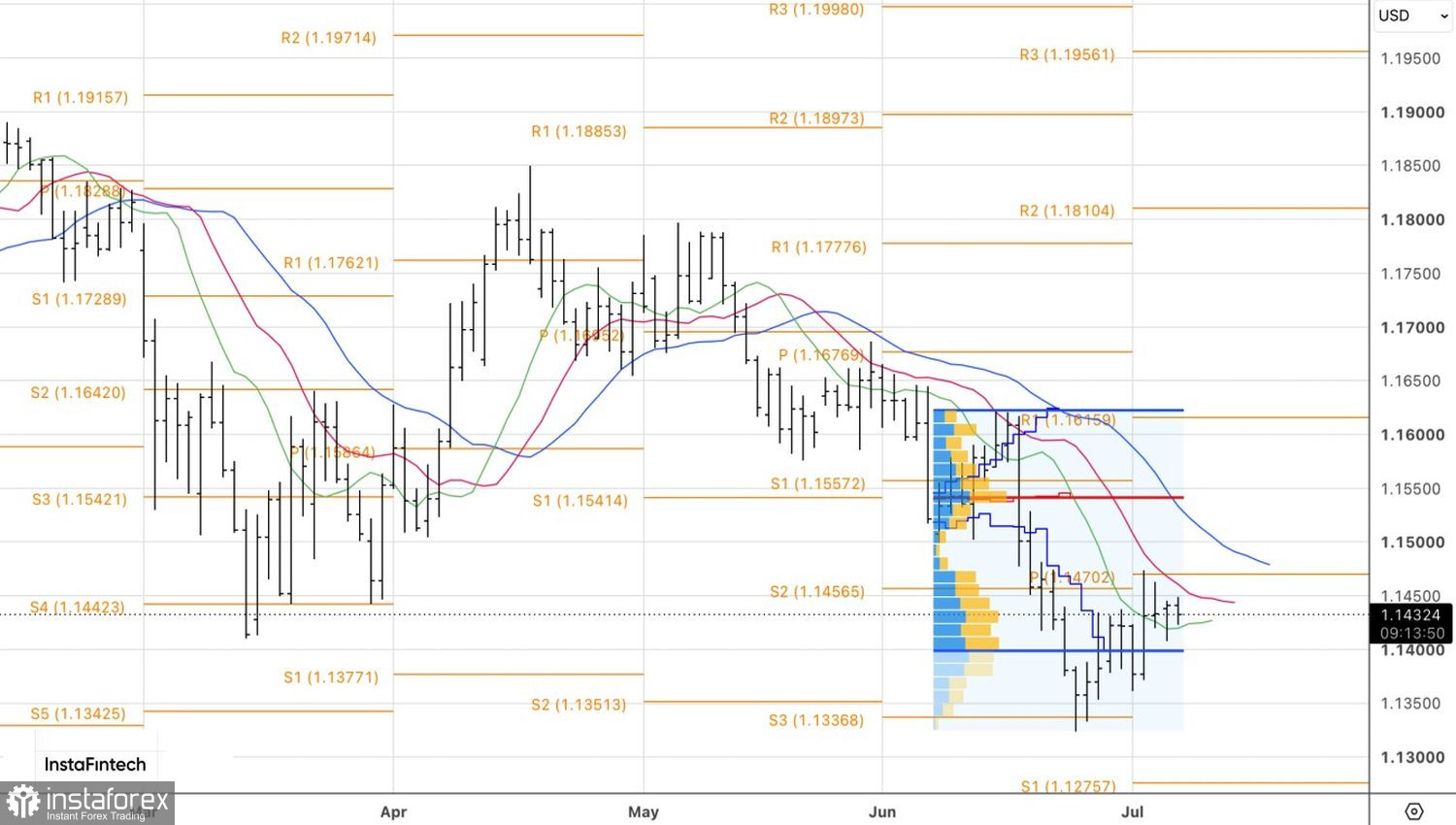
From a technical perspective, the EUR/USD daily chart shows consolidation, with several pin bars forming long, opposing shadows. This indicates strong uncertainty. Only a breakout of resistance at $1.146 will allow the euro to spread its wings and serve as a foundation for buying. Conversely, a drop in quotes below $1.140 will provide grounds for selling.


