
আরও দেখুন


 26.10.2026 03:36 PM
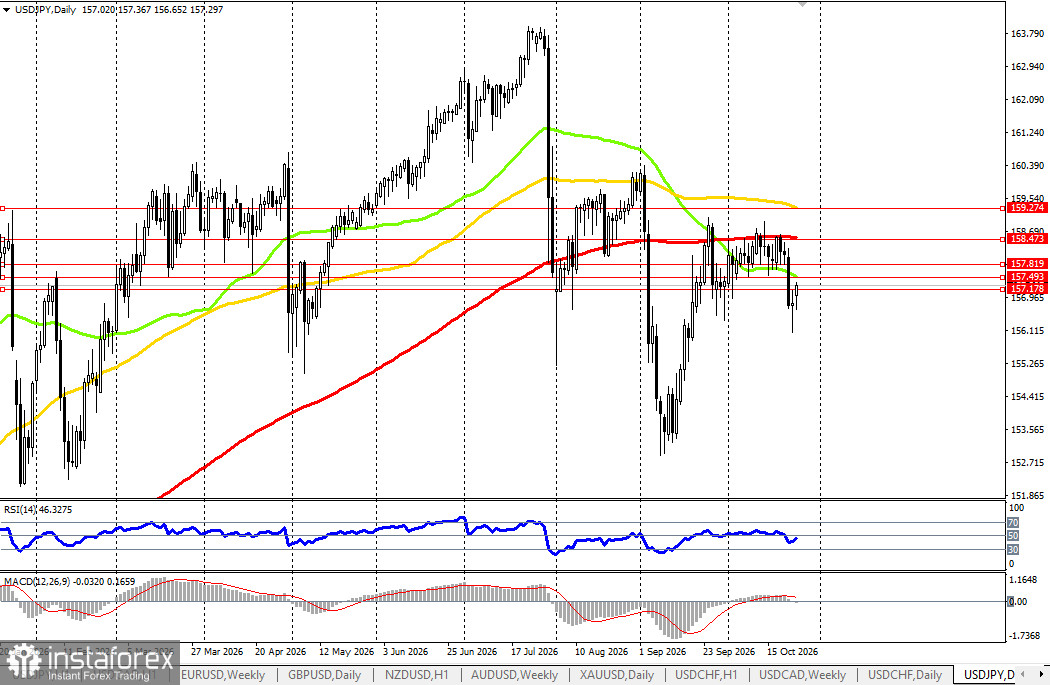
USD/JPY trades around 157.29, bouncing from last week's low near 156.10. A week ago the pair rose to 158.68 but then plunged amid risk-off flows. Over the past three months USD/JPY has not once held above 160.00 for long. The reason is not only market forces: the Ministry of Finance of Japan, the US Treasury, and the Bank of Japan are all active, and the BoJ is hiking rates at the fastest pace in decades.
Bank of Japan: hawkish pause before December
The Bank of Japan raised rates in June and September to 1.25%—two hikes in three months, the fastest tightening since 1990. The policy rate has entered the neutral range the BoJ estimates at 1.1–2.5%. No change is expected at the October 29–30 meeting, but the tone could be hawkish. Reuters reports the BoJ may for the first time since 2013 acknowledge that the 2% inflation target has been reached and highlight upside risks. Energy prices and a weak yen that makes imports more expensive are adding to price pressure: Tokyo's annual inflation accelerated to 2.7% in September from 1.9% in August. Market expectations have shifted sharply: a Bloomberg survey shows 83% of economists now expect a December hike (versus 35% a month earlier), and 67% expect quarterly tightening. The median peak rate is forecasted at 1.75%. Morgan Stanley MUFG calls the upcoming decision a "hawkish pause," while Daiwa Institute expects hikes in December and March.
Japanese government: interventions and policy
The main brake on USD/JPY is the risk of intervention. In 2026 Japan's Ministry of Finance has spent over £27 trillion supporting the yen, including a record £15.4 trillion (about $97 billion) from July 30 to August 26. On July 31, Japan and the US carried out the first joint intervention since 1998. Finance Minister Satsuki Katayama said actions targeted "excessive volatility and disorderly moves" in the yen. Authorities do not publish formal "red lines," but the market treats 160.00 as the threshold beyond which interventions become likely. The US factor matters too: President Trump discussed yen weakness with Prime Minister Sanae Takaichi, and US Treasury Secretary Scott Bessent supports a stronger yen.
Takaichi is known as a dovish policy backer, yet after Bessent's remarks her cabinet said it is not pursuing reflation. Bloomberg estimates roughly two-thirds of economists think the government has softened resistance to rate hikes. MUFG Securities believes the prime minister's office will not welcome new hikes but may quietly accept them to maintain US relations. Cautious comments by Minister for Economic and Fiscal Policy Minoru Kiuchi on October 23 were read as an argument against rushing tightening, and the pair rebounded from lows.
US: Fed keeps USD advantaged.
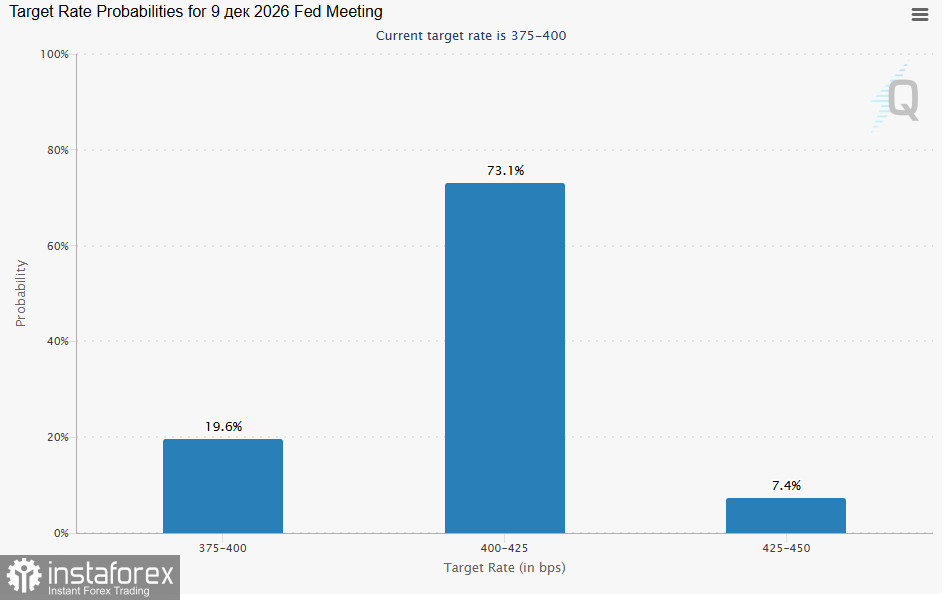
The Fed raised rates in September to 3.75–4.00%, and, in a Reuters poll of 100 economists, 94 expect the Fed to hold at the October meeting on October 28. Markets, however, price a roughly 80% chance of a December hike. US annual inflation accelerated to 3.7% in September, and consensus for the Fed's preferred PCE gauge on October 29 is 3.6% (core 3.1%). Fed Chair Kevin Warsh has not precommitted outcomes, but the case for pausing tightening is weakening.
A restraining factor for the dollar is falling Treasury yields: the 10-year yield dipped below 5% to about 4.97% on Monday, and the dollar index sits near 101.64. Brent has eased toward $115/bbl on reports of Qatari mediation with Iran.
Fiscal risks
Japan's public debt exceeds 200% of GDP; the US ratio is about 124% of GDP. For Japan, high debt makes rate hikes costly for the budget and explains government caution. For the US, 30-year yields above 5.3% and the November 3 midterms add uncertainty. For now the market views US fiscal risks as less acute than the twin threats of BoJ tightening and potential Japanese intervention.
Interest rate differential
The gap between the Fed's upper bound (4.00%) and the BoJ rate (1.25%) is 275 bp. If both rise in December, that differential will persist. It will shrink only if the BoJ keeps hiking quarterly while the Fed pauses. Therefore the carry trade—borrowing in yen to invest in dollars—remains profitable and supports the pair, while interventions and higher BoJ expectations limit upside.
What could change the picture?
Moves that would support the yen (push USD/JPY lower):
- BoJ recognition on Oct 30 that 2% inflation is achieved and a hint at a December hike;
- a dovish tone from Kevin Warsh on Oct 28 and softer PCE prints;
- renewed risk-off — a tech sell-off or Middle East escalation;
- USD/JPY nearing 160.00 and fresh warnings from Japan's Finance Ministry.
Moves that would support the dollar (push USD/JPY higher):
- confirmation of a December Fed hike and PCE above expectations; - a cautious BoJ tone with no December signal; - pressure from the Japanese government to slow tightening.
Technical picture—resistance 157.80–158.10
On the daily chart, the price sits below all three EMAs: EMA50 (157.493), EMA200 (158.473), and EMA100 (159.274). On the weekly chart the uptrend persists: the price is above EMA100 (153.716) and EMA200 (149.731). The nearest resistance is 157.49, then the cluster 157.80–158.10, where the three time-frame EMAs converge. Supports: 157.18 and last week's low at 156.10.
Conclusion
USD/JPY is squeezed between two forces. The 275-bp rate differential and a hawkish Fed support the dollar, while accelerated BoJ tightening, intervention risk near 160.00, and safe-haven demand for the yen pull the pair lower. Buying USD/JPY here is a bet that the Fed will be tougher than the BoJ and that intervention limits will not be enforced. Selling bets ignores that the yen remains a funding currency and that the long-term trend is still up.
This week is decisive: Oct 28 — Fed and Warsh press conference; Oct 29 — US GDP and PCE; Oct 30 — BoJ decision. If the BoJ confirms inflation achievement and the Fed softens tone, the pair will come under downward pressure. Until then — a holding pattern.
This material is for information and analysis only and is not individual investment advice.


