
यह भी देखें


 12.02.2026 09:47 AM
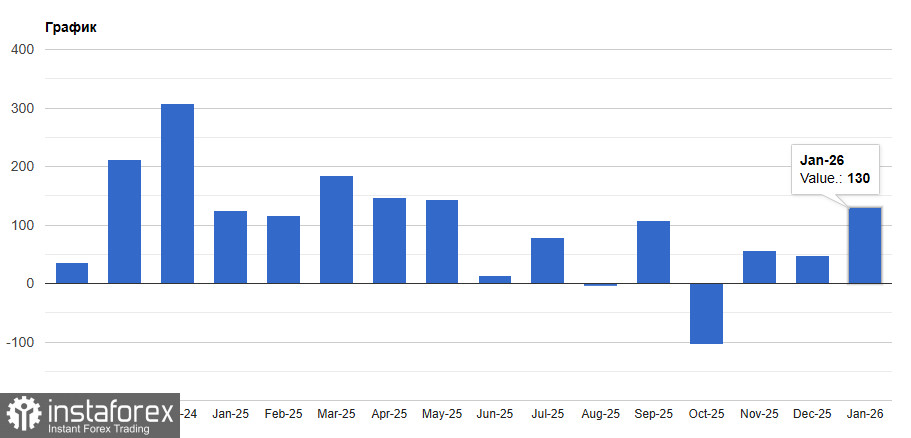
January labor market data in the United States surprised many observers. The dollar reacted positively after it emerged that job creation in January posted the largest monthly gain in a year, and the unemployment rate unexpectedly fell, signaling a resilient start to 2026 for the labor market.

According to data released by the Bureau of Labor Statistics on Wednesday, 130,000 jobs were added last month, and the unemployment rate fell to 4.3%. Those figures followed revisions to prior months that showed a marked slowdown in hiring: in the prior year, average monthly job gains were only 15,000, well below the initially reported 49,000. Market participants largely chose to disregard that earlier revision.
The report said the labor market was showing signs of recovery after the weakest year for hiring outside a recession since 2003. Although economists expect employment growth to remain modest in 2026, greater clarity on the likely impact of President Donald Trump's economic policies and lower borrowing costs could encourage some employers to expand payrolls.
As a result, yesterday's data are likely to give the Federal Reserve cover to keep policy rates unchanged. Many traders have pushed back their expectations for the first rate cut from June to July.
Immediately after the release, President Donald Trump posted his approval of the numbers on social media and reiterated calls for the lowest interest rates in the world, reinforcing prior appeals for easing.
January's job growth was led by the health-care sector, which created the most jobs since 2020 and accounted for the largest share of overall employment gains in 2025. Construction and professional services also contributed to the rise in payrolls, while manufacturing recorded its first monthly employment gain in more than a year. Federal government payrolls continued to decline.
The report additionally showed that average hourly earnings rose 0.4% versus December. Economists watch that measure closely because it influences consumer spending and, consequently, inflation.
A technical outlook for EUR/USD suggests that buyers should consider reclaiming 1.1890. That would open the way to test 1.1925. From there, a push to 1.1957 is possible, although advancing beyond that without support from major players would be difficult. The extended target is 1.1994. On a decline, meaningful buying interest is likely near 1.1850. If buyers do not appear there, it would be prudent to wait for a new low at 1.1830 or to open long positions from 1.1800.
As for GBP/USD, buyers of the pound sterling should capture the nearest resistance at 1.3660. Only that will allow them to target 1.3705, above which a breakout would be challenging. The extended target is around 1.3730. If the pair falls, bears will try to seize control at 1.3610. If they succeed, a break of that range would deal a serious blow to bullish positions and could push GBP/USD down to 1.3580 with scope to extend to 1.3545.

