
यह भी देखें


 16.11.2026 08:03 AM
November 12, 2026, will go down in stock market history not as another executive reshuffle, but as a symbolic end to an entire technological era. After 33 years at the helm, Jensen Huang stepped down from all his positions at Nvidia.
Consider the numbers. In the spring of 1993, a 30-year-old engineer came up with the idea for the company in a roadside Denny's restaurant, armed with just $40,000 in startup capital. At its peak, on October 6, 2026, Nvidia's market capitalization briefly surpassed an astronomical $5.87 trillion — more than the annual GDP of Germany or Japan. Over 15 years, annual revenue grew from $4 billion to $310 billion, net income surged from $500 million to nearly $200 billion, with an extraordinary operating margin of 75%, while the company's valuation climbed from $10 billion to almost $6 trillion.
And now, the man who built the world's most important computing powerhouse has been shown the door in just four days. Without a single proven case of classified information being leaked.
According to The Washington Post, US Secretary of State Marco Rubio pulled the trigger. He took a classified CIA report and rewrote it in an internal memorandum using considerably harsher and more damning language. As soon as the conclusions of that memo were "accidentally" leaked to the press, the machinery of Huang's removal went into full swing.
Meanwhile, Donald Trump continues to publicly describe Huang as a "legend." More than 70,000 people have already signed a petition demanding that Nvidia's founder be reinstated as CEO. Elon Musk has joined the campaign, openly questioning the competence of Nvidia's board of directors.
Behind the tabloid headlines surrounding the founder's personal life, the interests of three powerful groups are becoming increasingly apparent. Each had substantial reasons to want the head of one of the world's most valuable companies out of the way.
1. Washington's hawks
Huang consistently opposed a total export blockade against China, arguing that sanctions would only accelerate the development of an independent Chinese semiconductor industry. A former senior official familiar with the issue described the national security team's motives with remarkable frankness: "They wanted to destroy the influence Jensen had over the president."
The objective has now been achieved. The only executive capable of persuading Congress not to abandon the Asian market is gone, while three bills aimed at tightening restrictions on chip sales to China are already being incorporated into the US defense budget.
2. Corporate establishment and Wall Street funds
Financial players had long been frustrated by an uncontrollable founder whose company was capturing the lion's share of the trillions of dollars being poured into AI-related capital expenditure.
3. Hyperscalers (Microsoft, Google, Amazon, and Meta)
The technology giants, forced to pay Nvidia hundreds of billions of dollars, have been handed an ideal breathing space. The departure of the industry's leading visionary could slow the technological momentum of its dominant supplier, giving cloud giants more time to develop their own processors.
Meanwhile, the scandal has split the Trump administration itself. Treasury Secretary Scott Bessent publicly accused Commerce Secretary Howard Lutnick of deliberately delaying sanctions against Singapore-based Megaspeed International.
According to Bessent, the Treasury Department, State Department, and Office of the US Trade Representative had spent months demanding that the company be placed on a blacklist for smuggling chips into China. However, the final approval remained stuck on Lutnick's desk.
Bessent is now demanding accountability for Nvidia employees who allegedly allowed grey-market shipments to take place, while the White House is seriously discussing Lutnick's own dismissal.
But the biggest threat to the market is not the loss of a charismatic executive in a leather jacket. The board of directors has removed the central pillar supporting the entire artificial intelligence boom.
First, the Asian manufacturing supply chain.
On paper, Nvidia is a fabless chip designer: out of its $320.3 billion balance sheet, only $14.3 billion consists of its own equipment. But Huang had spent 30 years cultivating personal relationships with TSMC founder Morris Chang and company chairman C.C. Wei, backed by multibillion-dollar advance payments for factories that had not even been built yet.
He personally flew to manufacturing facilities in Taiwan and South Korea, speaking directly with engineers in their own language — both literally and figuratively.
Second, the financial engineering of demand.
A huge part of the AI industry operates outside public markets. Banks are reluctant to extend credit to such startups because of their high risk profiles, while venture capital funds have enough money for only a handful of companies, such as OpenAI and Anthropic.
Under conventional economic conditions, demand would have hit a ceiling long ago, and GPU prices would have started falling. Huang circumvented this natural constraint by creating an ingenious five-part circular financing system:
Essentially, this is a synthetic liquidity factory operating outside traditional banking supervision.
When an SPV pays for a batch of accelerators using borrowed money, Nvidia can immediately recognize 100% of the revenue and 75% of the operating profit under its accounting rules.
Revenue generated by Nvidia and financed by Nvidia itself.
The stock market's reaction to Huang's removal from Huang's own company was immediate. At the opening bell, the market capitalization of American technology companies plunged by $400 billion.
As expected, Nvidia, AMD, and Broadcom shares led the sell-off.
The scale of systemic risk is staggering. The ten largest corporations with significant exposure to artificial intelligence now account for nearly 40% of the S&P 500 index. Equities have reached a record 38% share of American household wealth — almost 25% higher than at the peak of the dot-com bubble in 2000.
The market's biggest stress test lies ahead: Anthropic's upcoming initial public offering, which is aiming to become the largest IPO in the sector's history.
If the revenue growth rates of Anthropic and OpenAI fail to match investors' astronomical expectations, the house of cards could begin collapsing across the entire chain, from collateralized SPVs and data center operators to semiconductor manufacturers.
Nevertheless, analysts at The Economist advise against expecting a repeat of the 2008 banking collapse. The key difference in the current cycle is that the lion's share of AI capital expenditure is still being financed through the internal cash flows of highly profitable technology corporations.
Even if the financial bubble deflates, the underlying AI technology is not going anywhere.
And yet, technological America has a way of reminding the world of its real strength, even in the middle of a political and stock market storm.
While governments argue over tariffs and shareholders fight over equity stakes here on Earth, SpaceX has achieved a historic breakthrough. Following an almost 24-hour orbital flight and 14 revolutions around Earth, the giant Starship spacecraft successfully re-entered the atmosphere over Texas and, for the first time in history, was caught in midair by the mechanical arms of its launch tower.
Real engineering still works more reliably than any financial scheme.
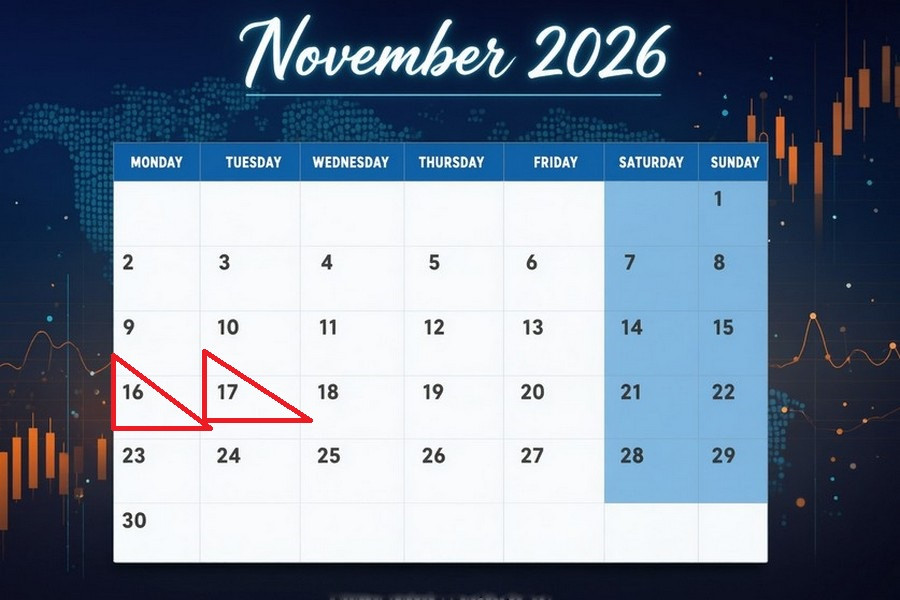
16 November, 02:50 / Japan / GDP in Q3 / prev.: 1.8% / actual: 1.4% / forecast: 0.3% / USD/JPY – up In Q3, Japan's economy grew by 1.4% (annualized), extending positive growth for a third consecutive quarter thanks to government spending and net exports. However, private consumption — which accounts for more than half of GDP — remained subdued due to high energy costs and the Middle East conflict, while business capital investment fell for a second consecutive quarter. A sharper-than-expected slowdown in economic growth will weaken the yen and push USD/JPY toward local highs.
16 November, 04:30 / China / New home prices in October / prev.: -3.0% / actual: -2.8% / forecast: -3.0% / USD/CNY – up In September, new-home prices across 70 Chinese cities fell by 2.8%, extending a 39-month decline but recording the slowest pace of decline since December 2025. Government support measures helped curb corrections in Guangzhou and Shenzhen, while Beijing's decline deepened to 2.7% and Shanghai remained the leader with a 2.8% increase. A renewed, deeper slump in the property market would put pressure on the Chinese yuan.
16 November, 05:00 / China / Industrial production in October / prev.: 5.2% / actual: 5.5% / forecast: 5.3% / USD/CNY – up In September, Chinese industrial output accelerated to 5.5%, the best result since March, driven by a recovery in the mining sector and output gains in 31 of 41 industries. Growth was led by:
16 November, 05:00 / China / Retail sales in October / prev.: 0.4% / actual: 1.1% / forecast: 0.8% / USD/CNY – up In September, China's retail sales rose by 1.1%, the strongest increase since March, supported by high demand for:
Excluding the auto segment, where sales plunged 21.2%, consumer spending expanded by 3.9%, while online goods sales for the first nine months rose 3.8%. A projected slowdown in retail growth will point to fragile domestic demand and weaken the yuan.
16 November, 07:30 / Japan / Industrial production in September / prev.: 3.7% / actual: 2.7% / forecast: 1.9% / USD/JPY – up Japan's annual industrial production growth slowed to 2.7% from 3.7% a month earlier, well below the long-run historical average of 4.37%. The current trend reflects a gradual cooling of industrial activity amid muted external demand and high energy costs. Further slowing in production will add pressure on the yen and push USD/JPY higher.
16 November, 13:00 / Eurozone / Industrial production in September / prev.: -0.3% / actual: -1.1% / forecast: -0.6% / EUR/USD – up In August, eurozone industrial output contracted by 1.1%, deepening July's decline and diverging significantly from analysts' expectations. The sector remains under pressure from high energy costs and weak order books, staying below the long-run average growth rate of 0.85%. A moderation in the pace of industrial decline would ease recession fears and support the euro.
16 November, 16:30 / Canada / Consumer Price Index (CPI) in October / prev.: 3.0% / actual: 3.1% / forecast: 3.2% / USD/CAD – down In September, Canada's annual inflation accelerated to 3.1% due to a 27.8% spike in gasoline prices amid Middle East tanker disruptions and higher home insurance costs.
A projected further pickup in inflation will reduce the likelihood of policy easing and strengthen the Canadian dollar.
16 November, 16:30 / US / Empire State Fed manufacturing index (lead) in November /prev.: 7.6 pts / actual: 25.5 pts / forecast: 17.6 pts / USDX (6-currency USD index) – down In October, the New York Fed manufacturing index jumped to 25.5 points, marking the strongest improvement in conditions since December 2021 amid a surge in new orders and shipments. At the same time, firms faced a drop in supply availability to its lowest since summer 2022 and continued strong pressure from input and selling prices. A correction in the indicator after October's spike would prompt local dollar profit-taking.
17 November, 10:00 / United Kingdom / Change in employment (September) / prev.: 67k / actual: 102k / forecast: 25k / GBP/USD – down
For the three months to August, employment in the UK rose by 102k, far exceeding market expectations thanks to growth in full-time employment. The employment rate for those aged 16–64 rose to 75.3%, and the number of people with second jobs reached 1.294 million. A sharp cooling in hiring would signal that the labor market's momentum is fading and put pressure on the pound.
17 November, 10:00 / United Kingdom / Change in unemployment benefit claims (October) / prev.: 7.0k / actual: 30.3k / forecast: 28.1k / GBP/USD – up
In September, the number of UK claimants for unemployment benefits jumped by 30.3k after a revised increase of 7.0k the previous month. Total claimants reached 1.701 million, well above analysts' estimates and signaling rising strain in the labor market. A modest slowdown in new claims would ease labor market concerns and support a corrective rise in the pound.
17 November, 13:00 / Eurozone / ZEW economic sentiment (November, lead) / prev.: 25.8 pts / actual: 18.5 pts / forecast: 18.3 pts / EUR/USD – down
In October, the ZEW economic sentiment index for the eurozone fell by 7.3 points to 18.5, a four-month low amid uncertainty from the Middle East conflict. The current conditions assessment also deteriorated to -14.8 points, while 67.1% of surveyed analysts expect stagnation in business activity in the coming months amid a sharp drop in inflation expectations. A further decline in institutional investor confidence would limit risk appetite and weigh on the euro.
17 November, 13:00 / Germany / ZEW economic sentiment (November, lead) / prev.: 34.7 pts / actual: 28.1 pts / forecast: 29.1 pts / EUR/USD – up
In October, the German ZEW sentiment index fell to 28.1 from a seven?month high of 34.7, reflecting investor concerns over high energy costs and elevated inflation. The largest deterioration in expectations was recorded in:
while metallurgy and electrical engineering showed positive dynamics. A recovery in institutional investor optimism would ease concerns about the economy's exit from stagnation and support the euro.
17 November, 13:00 / Germany / ZEW current economic conditions (November, lead) / prev.: -47.1 pts / actual: -35.9 pts / forecast: -33.2 pts / EUR/USD – up
ZEW's assessment of current economic conditions in Germany rose by 11.2 points in October to -35.9, the best result since May 2023. Despite the improvement from -47.1 in September, the indicator remains well below its long-run historical average of -15.55. A continued reduction in pessimism about the business environment would provide additional upward momentum for the euro.
17 November, 16:15 / Canada / Housing starts in October / prev.: 242.0k / actual: 250.0k / forecast: 243.0k / USD/CAD – up
In September, housing starts in Canada increased by 3% month-on-month to an annualized 248,896 units, led by a pickup in multi-family construction in Vancouver (+6%). Meanwhile, Montreal's six-month trend fell by 8%, and the cumulative starts year-to-date lag last year's pace by 4%. A cooling in development activity would weaken the Canadian dollar and trigger capital flows into the US dollar.
17 November, 16:15 / US / ADP average weekly job gains / prev.: 16.75k / actual: 19.75k / forecast: – / USDX (6-currency USD index) – volatile
ADP estimated that the four-week average weekly private-sector job gains through 24 October rose to 19,750 jobs. The faster hiring pace compared with the previous four-week period (16,750 positions) confirms sustained demand for labor from US businesses. The lack of a market consensus forecast for the new data will spur volatility and mixed dollar moves.
17 November, 16:30 / US / Retail sales in October / prev.: 5.6% / actual: 6.3% / forecast: 6.5% / USDX (6-currency USD index) – up
Annual retail sales growth in the US accelerated to 6.30% in September after 5.60% in August. Current consumer spending momentum is well above the long-run average of 4.62%, signaling robust domestic demand. A further expansion in retail sales would bolster expectations of a hawkish Fed and drive the dollar higher.
17 November, 16:30 / US / New York Fed services index (November, lead) / prev.: -20.7 pts / actual: – / forecast: -6.0 pts / USDX (6-currency USD index) – up
In October, the New York Fed's services activity index plunged to -20.7 points from -8.7 in September, marking a new low since March. Nearly 50% of firms reported worsening business conditions. Supply availability continued to decline. Employment and wage growth remained stable. Input costs rose sharply. Selling-price growth hit its highest level since 2022. Six?month business expectations turned negative for the first time since December 2025. A slowdown in the regional downturn would reduce pessimism and allow speculators to build long dollar positions.
17 November, 17:15 / US / Industrial production in October / prev.: 2.2% / actual: – / forecast: 2.4% / USDX (6-currency USD index) – up
In September, US industrial production rose 2.2% year-on-year; August was revised up to 1.6%. Utility output jumped 8.7%, mining added 2.8%, and manufacturing rose 1.1%. Further acceleration in the industrial sector would confirm the economy's resilience and lead to breakouts in the dollar.
17 November, 18:00 / US / NAHB housing market index in November (lead) / prev.: 29 pts / actual: – / forecast: 29 pts / USDX (6-currency USD index) – down
In October, the US homebuilder confidence index plunged to 29 from 32 in September, marking the lowest reading since June 2012. Current sales assessments fell to a 14?year low. Six?month sales expectations dropped to 32. Buyer traffic fell to 18. Some 43% of builders lowered prices. High mortgage rates and construction costs are severely weighing on the housing market. Prolonged stagnation of this indicator at multi-year lows will heighten recession fears and prompt investors to sell the dollar.
17 November, 18:00 / US / Business inventories (m/m) in September / prev.: 0.9% / actual: 0.4% / forecast: 0.5% / USDX (6-currency USD index) – up
In August, US business inventories rose 0.4% month-on-month after a revised 0.9% gain in July, matching market expectations. Stockpiling slowed in the wholesale channel (to 0.5% from 1.4%) and at retailers (to 0.2% from 0.9%), while manufacturing stock accumulation accelerated to 0.5%, keeping the annual expansion at 4.6%. A projected acceleration in inventory accumulation would signal businesses preparing for stronger demand and lend upward momentum to the dollar.
November 16, 4:00 AM / Japan / Speech by Naoki Tamura, Member of the Bank of Japan's Policy Board / USD/JPY
November 16, 7:00 AM / Japan / Speech by Hajime Takata, Member of the Bank of Japan's Policy Board / USD/JPY
November 16, 11:15 AM / Eurozone / Speech by Boris Vuj?i?, Member of the ECB's Governing Council / EUR/USD
November 16, 1:00 PM / United States / Speech by Michael Barr, Federal Reserve Vice Chair for Supervision / USDX
November 16, 5:05 PM / United States / Speech by John Williams, President of the Federal Reserve Bank of New York / USDX
November 16, 8:00 PM / United States / Speech by Kevin Warsh, Chair of the US Federal Reserve / USDX
November 17, 2:10 AM / United States / Speech by Thomas Barkin, President of the Federal Reserve Bank of Richmond / USDX
November 17, 3:30 AM / Australia / Minutes of the Reserve Bank of Australia's November 3 meeting / AUD/USD
November 17, 12:00 PM / Eurozone / Speech by Piero Cipollone, Member of the ECB's Executive Board / EUR/USD
November 17, 3:30 PM / United States / Speech by Alberto Musalem, President of the Federal Reserve Bank of St. Louis / USDX
November 17, 5:20 PM / United States / Speech by Christopher Waller, Member of the Federal Reserve Board of Governors / USDX
November 17, 5:30 PM / United States / Speech by Beth Hammack, President of the Federal Reserve Bank of Cleveland / USDX
November 17, 9:30 PM / Eurozone / Speech by Philip Lane, Member of the ECB's Supervisory Board / EUR/USD
November 17, 10:25 PM / United States / Speech by John Williams, President of the Federal Reserve Bank of New York / USDX
Speeches by policymakers of major central banks are also expected on these days. Their comments typically trigger volatility in the foreign exchange market, as they may provide clues about regulators' future interest rate plans.

