
আরও দেখুন


 23.02.2026 09:56 AM
Either the market knew the Supreme Court would strike down Donald Trump's tariffs, or investors are so fixated on the tech sell-off and rotation that they do not see anything else — neither the ruling that declared the import levies unlawful, nor the escalating tensions in the Middle East. That explains the muted reaction of the S&P 500 to a fresh wave of uncertainty.
Some traders were confident that Trump would not back down and that his team would find a new way to replenish US coffers via levies. In that light, the president's introduction of a new 10% global tariff — and his later threat to raise it to 15% — is evidence that the White House is not willing to relent. However, reclaiming previously paid import duties is not a quick fix: notifications take days or weeks, and returning the money would take months.
Dynamics of S&P 500 trading ranges
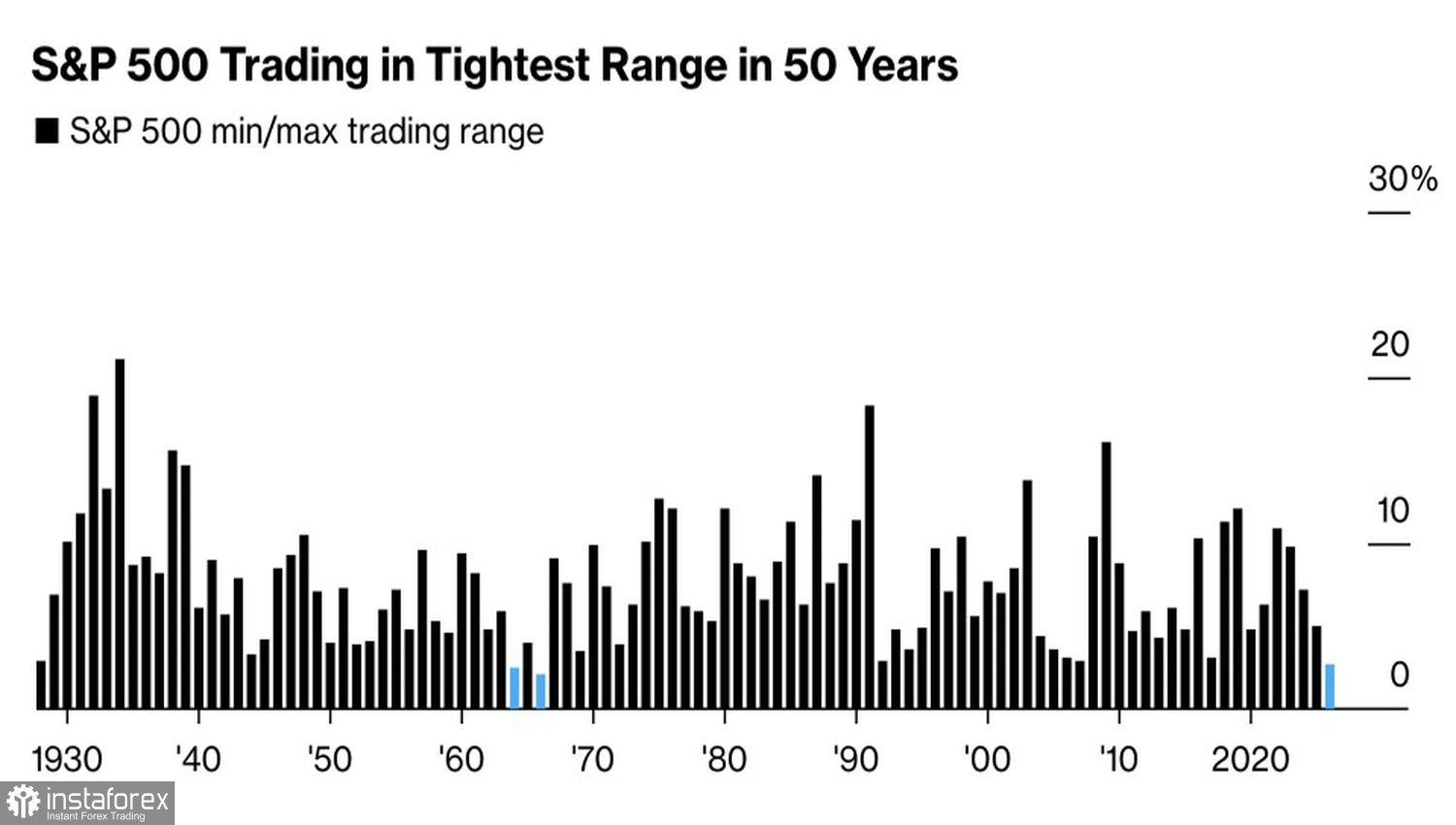
Meanwhile, the market is focused on something else — rotation. The S&P 500 is trading within one of its tightest ranges since the 1960s, yet beneath that external calm there is enormous internal tension.
Volatility in the most volatile stocks is seven times that of the S&P 500, a gap not seen in the past thirty years. Similar stretches of widened dispersion occurred during the 2008 global financial crisis and when the White House imposed its heaviest tariffs since the 1930s on Freedom Day in April.
Volatility dynamics: winners/losers and S&P 500
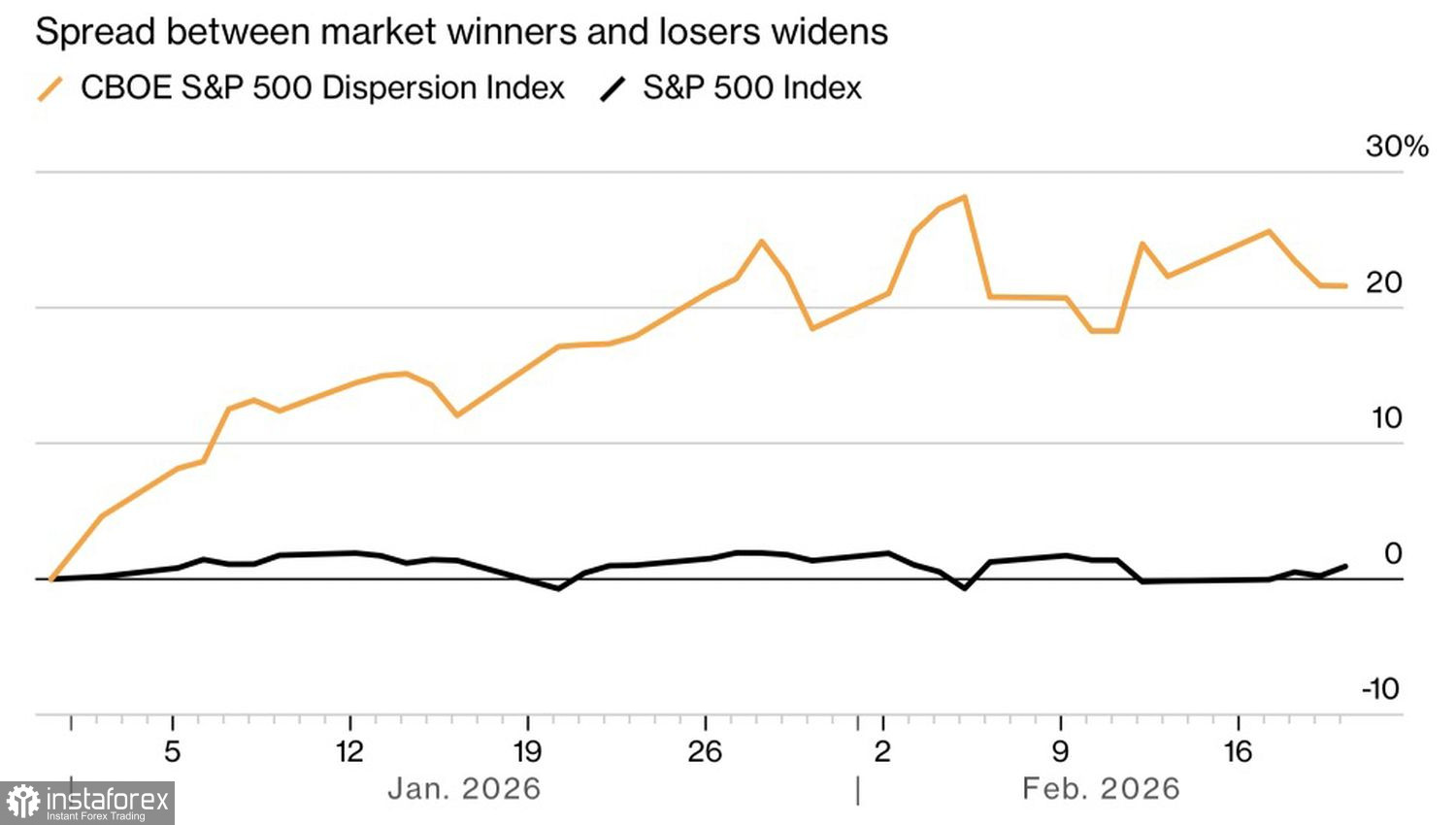
The market is flashing warning signs. A sharp slowdown in US growth — from 4.4% to 1.4% in Q4 — raises doubts about the merits of rotation. Small-cap names that are GDP-sensitive are unlikely to benefit from a cooling economy.
In this environment, it is highly likely that investors will shift attention overseas. While the S&P 500 has barely moved this year, the MSCI World ex USA index has already climbed by about 8%. Bank of America data show that US equity inflows in 2026 accounted for only $26 of every $100 invested, the weakest reading since 2020 and far below the $92 seen in 2022.
America-centric thinking may be a thing of the past, and the Supreme Court's finding that Trump's tariffs were unlawful could make the shift worse for US assets. Indeed, Asian equity indices rallied strongly on the news as the region could be a key beneficiary of any rollback in US import levies.
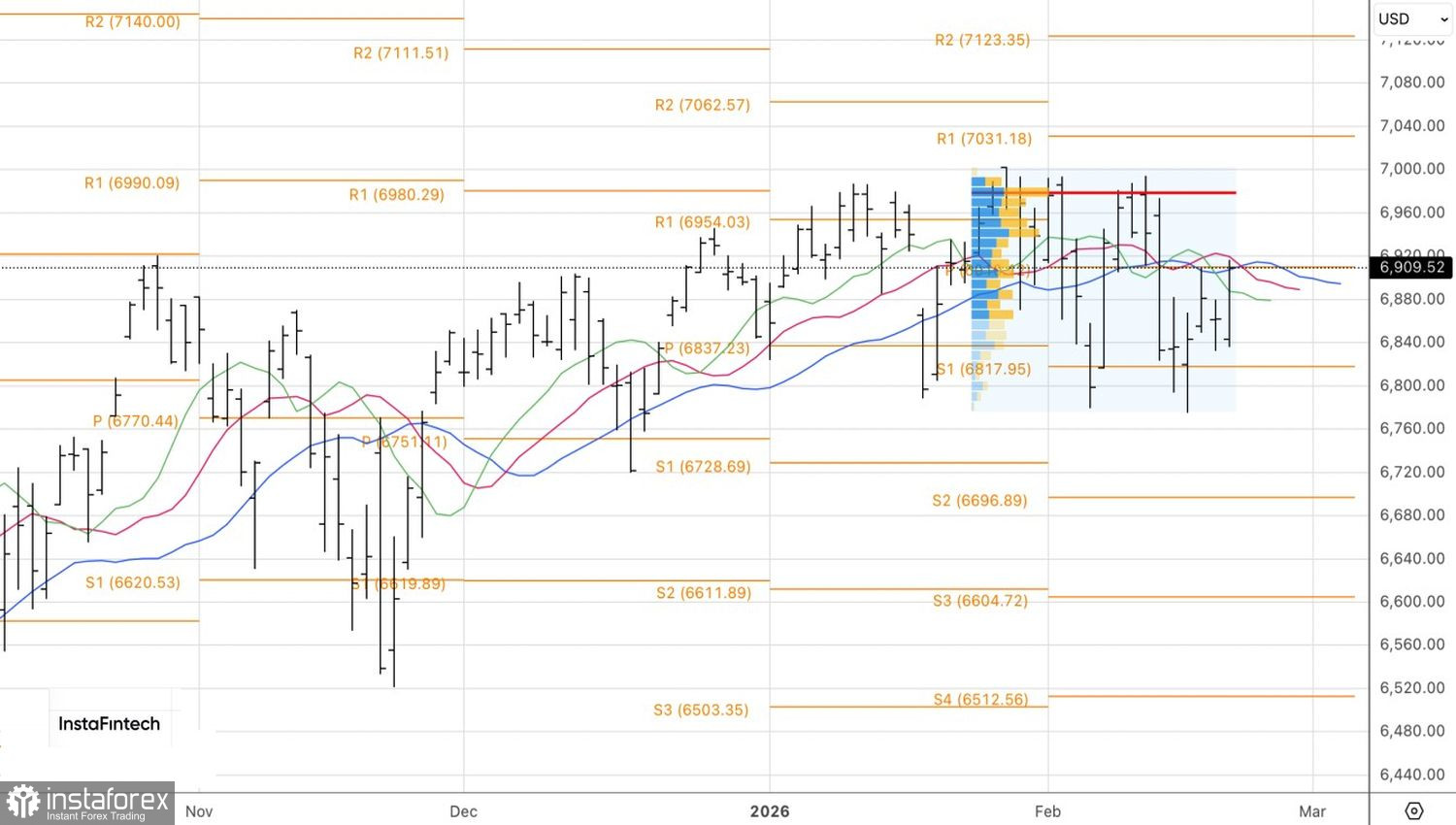
Technically, the S&P 500 remains in a medium-term consolidation on the daily chart. Without a breakout from the 6,800–7,000 range, the broad index will struggle to find a clear directional bias. Within the channel, watch a breakout of the 6,910 resistance level. A pullback from the pivot level would be a reason to sell, while a successful break argues for buying.


