
আরও দেখুন


 15.07.2026 10:39 AM
Gold recovered some ground after falling below $4,000 an ounce, but calling it a reason for optimism is difficult: the market is merely having minor upward correction, quickly regaining some losses.
The trigger was reports that Washington was ready to consider a wider range of strikes on Iran. Donald Trump reinstated a blockade of the Strait of Hormuz and demanded a 20% fee on cargoes passing through it, although he later backed away from the idea. Nevertheless, oil has risen for a third straight day, and the Islamic Revolutionary Guard Corps (IRGC) threatened to close the strait and other routes until the US stops its attacks. Once again, the market has become hostage to White House rhetoric: first threats of an all-out offensive, then partial retreats, leaving investors to guess which version will prove closer to the truth.
At first glance, escalation should have restored gold's status as a safe?haven asset. However, rising energy prices work against the precious metal. They boost inflation expectations and raise the odds of further tightening by the Fed. That logic governed XAU/USD throughout the second quarter, which was the worst quarter for gold since 2013 — losses amounted to 14%.
"Hawkish" comments by new Fed chair Kevin Warsh at the June meeting pushed up real yields and the US dollar. Investors responded by cutting positions in gold-pegged funds. Chinese funds lost $2.2 billion in June — the worst month on record — and their combined assets fell 16% to $36 billion, the lowest level since December 2025. Physical holdings dropped by 17 tonnes to 277 tonnes. It seems Asian bullion buyers have been gripped by disappointment.
Dynamics of market expectations for the Fed's interest rates
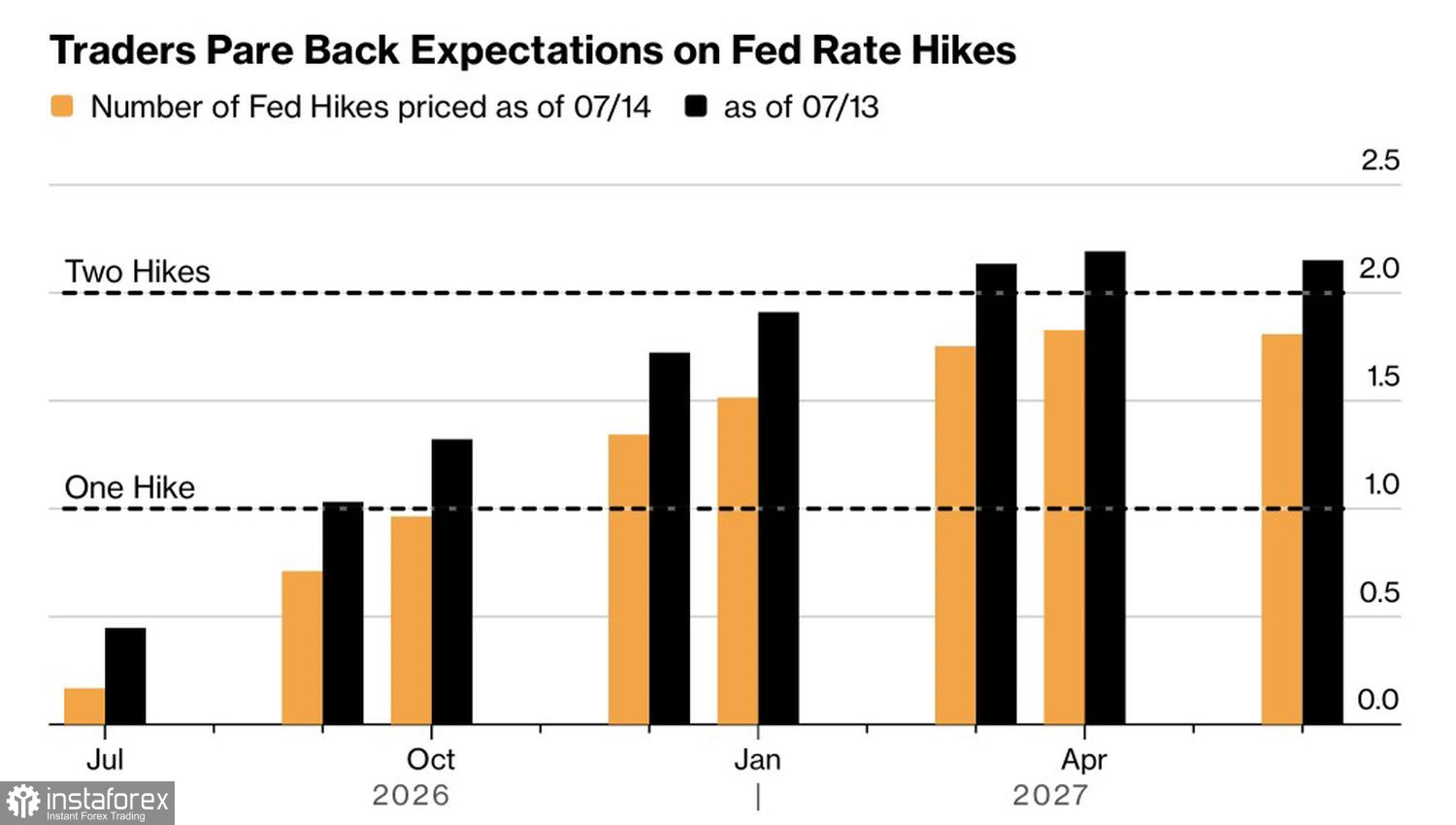
At the same time, inflation data unexpectedly showed a drop in consumer prices for the first time in six years, sparking a rally in the bond market. Traders stopped pricing in a rate hike in July. But the Fed chair made clear that monetary restraint remains one tool to bring inflation back to the 2% target.
There is also a less obvious risk. If oil keeps rising, some central banks may be forced to sell part of their reserves to support their currencies. In such a scenario, gold's habitual role as a haven would simply stop working.
So far, there are no signs of a broad buildup of short positions in gold. Does that mean the worst is over, or is the market merely taking a pause before another fall?
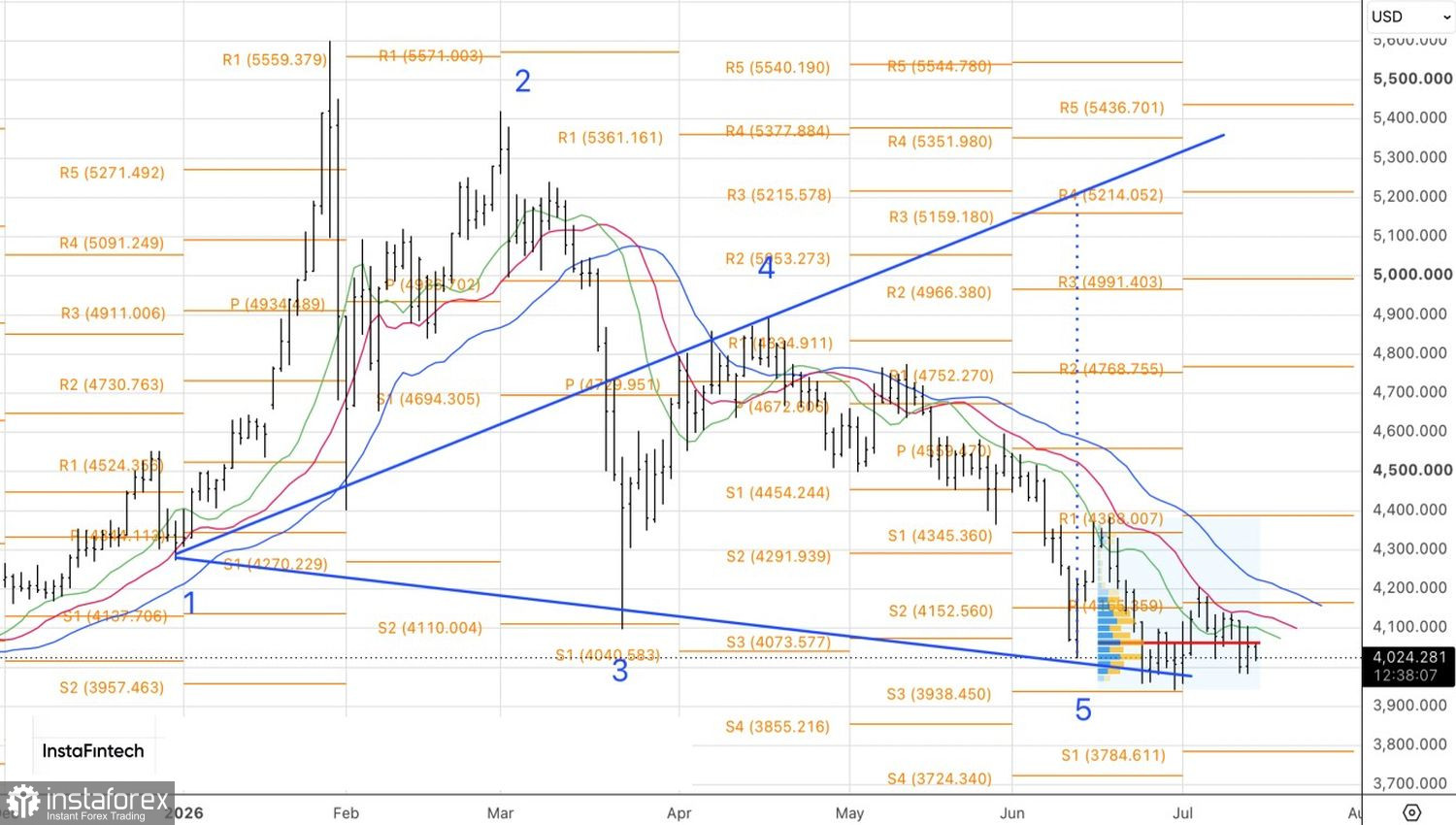
Technically, the daily gold chart shows ongoing consolidation in the $3,950–$4,150 per ounce range, with a battle over a fair value at $4,065. A return above that level would restore the prospects for activation of 1-2-3 reversal patterns and a Wolfe Wave and provide a basis for buying. Conversely, a drop below the lower band of the consolidation would increase the risks of a resumption of the downtrend.


