
See also


 11.02.2026 12:54 PM
On the hourly chart, the GBP/USD pair on Tuesday made a slight decline toward the support level of 1.3595–1.3620. There was no rebound from this zone, so no new buy signal was formed. Nevertheless, the upward movement may continue today, with or without a new rebound from the 1.3595–1.3620 level, toward the 161.8% Fibonacci retracement level at 1.3755. A consolidation below the 1.3595–1.3620 level would allow traders to expect a decline toward the 1.3526–1.3539 level.
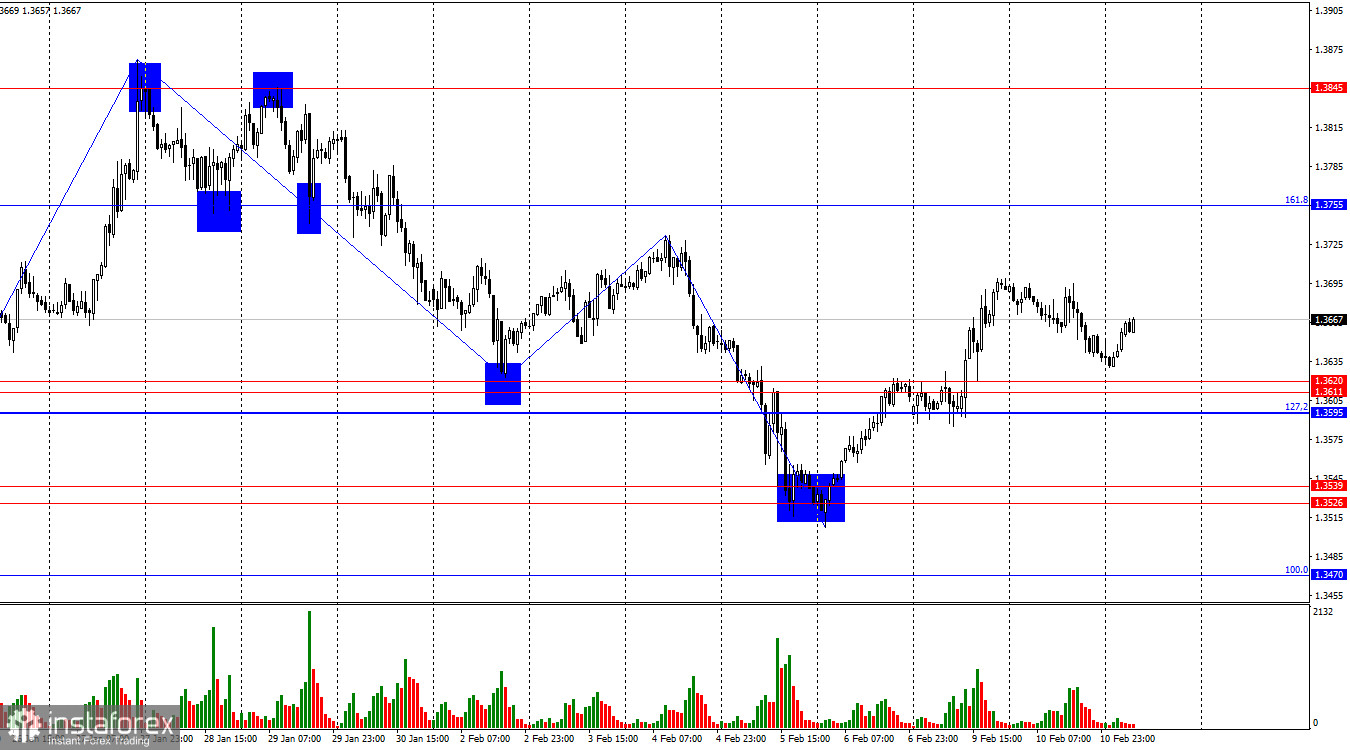
The wave structure remains "bearish." The last completed downward wave broke the previous low, and the new upward wave broke the previous high. We saw two consecutive "bearish" waves, which was enough to signal a trend reversal. To reverse the trend back to "bullish," a consolidation above the last high at 1.3730 is required. The news background for the pound has been weak in recent months, but the U.S. news background has been even worse. Bulls are regularly supported by Donald Trump and the weakness of the U.S. labor market.
Tuesday's news background did not attract traders' attention, but today is very important for both them and the dollar. The Nonfarm Payrolls report may, without exaggeration, determine traders' sentiment for the coming weeks. At present, the market expects the next easing of monetary policy by the Fed no earlier than June 17. However, over time, traders are increasingly inclined to believe that the next rate cut will occur sooner. Last week's ADP and JOLTS reports gave no reason to believe that the labor market is recovering. Yesterday's weekly ADP report also showed weak figures. Of course, these reports do not guarantee weak Nonfarm Payrolls data, but dovish sentiment in the market is increasing in direct proportion to the declining belief in a near-term recovery of the labor market. Bulls need one more push toward the 1.3755 level to break the bearish trend.
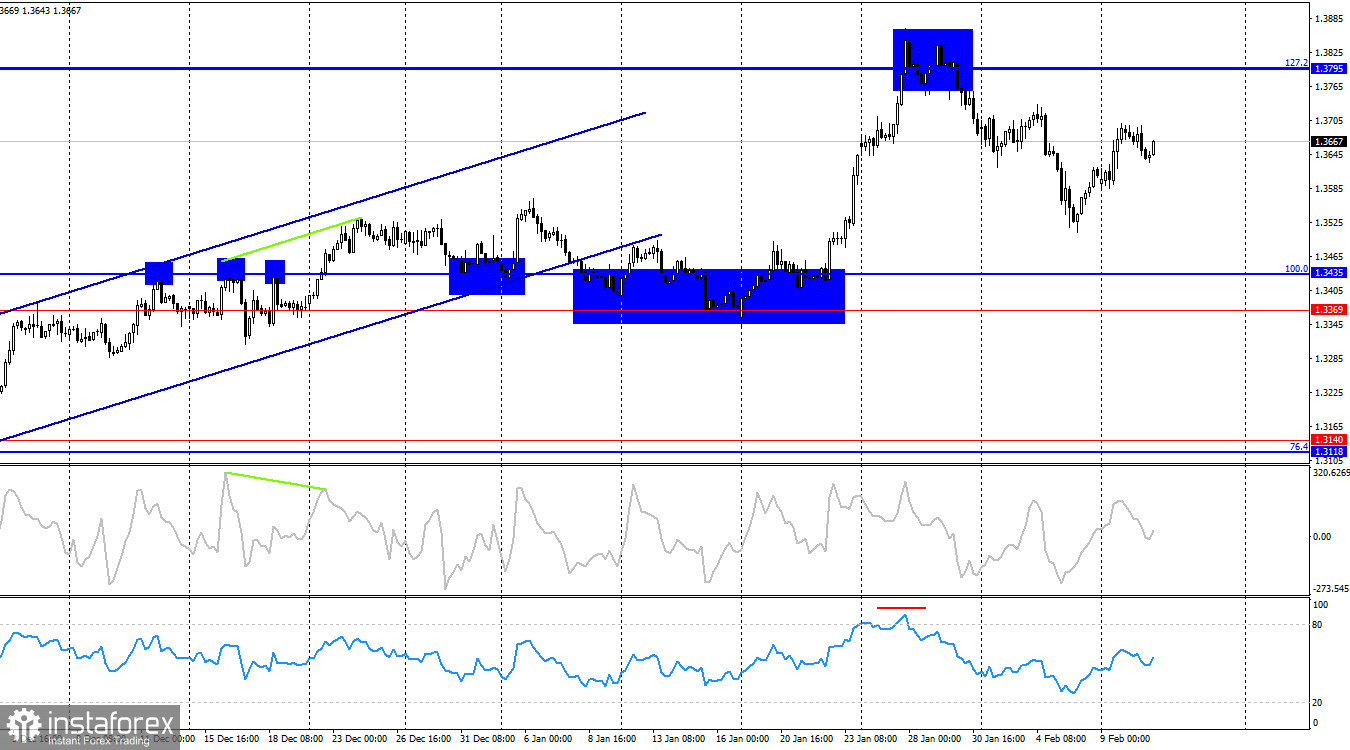
On the 4-hour chart, the pair rebounded from the 127.2% Fibonacci level at 1.3795. As a result, a reversal in favor of the U.S. dollar followed, and a decline began toward the support level of 1.3369–1.3435. The bearish trend on the hourly chart has not yet ended. A consolidation above 1.3795 would allow expectations of a continuation of the bullish trend toward 1.4020. No emerging divergences are observed today.
Commitments of Traders (COT) Report:
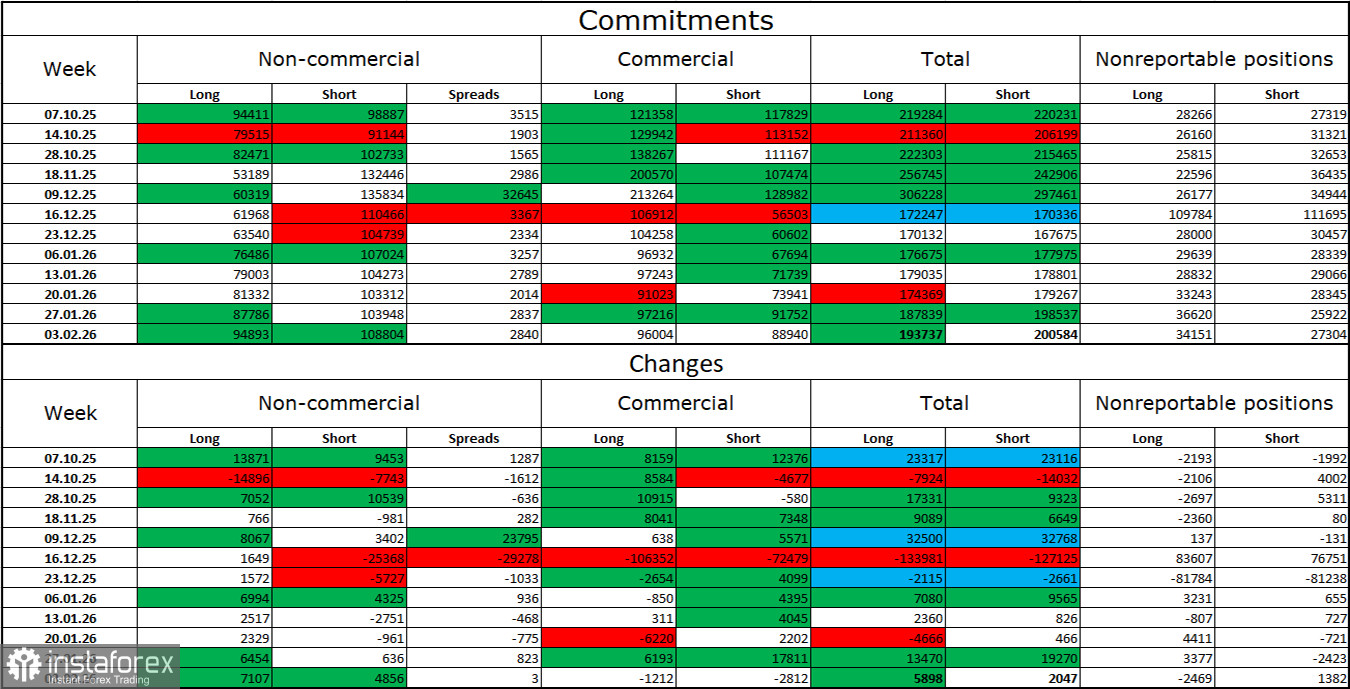
The sentiment of the "Non-commercial" category of traders became more bullish over the last reporting week. The number of long positions held by speculators increased by 7,107, while the number of short positions increased by 4,856. The gap between long and short positions now stands at approximately 95,000 versus 108,000 and continues to narrow. Bears have dominated in recent months, but they appear to have exhausted their potential. At the same time, the situation with euro contracts is directly opposite. I still do not believe in a sustained bearish trend for the pound.
In my opinion, the pound still looks less "dangerous" than the dollar. In the short term, the U.S. currency may occasionally enjoy market demand, but not in the long term. Donald Trump's policies have led to a sharp deterioration in the labor market, and the Fed is forced to ease monetary policy to curb rising unemployment and stimulate job creation. U.S. military aggression also does not add optimism for dollar bulls.
News Calendar for the U.S. and the UK:
On February 11, the economic calendar contains three entries that could cause strong market volatility. The impact of the news background on market sentiment on Wednesday could be significant.
GBP/USD Forecast and Trading Tips:
Selling the pair is possible after consolidation below the 1.3595–1.3620 level on the hourly chart, targeting 1.3526–1.3539. Buying opportunities were available after a rebound from the 1.3526–1.3539 level and after closing above the 1.3595–1.3620 level on the hourly chart, targeting 1.3755. These trades may be kept open.
Fibonacci retracement grids are drawn from 1.3470–1.3010 on the hourly chart and from 1.3431–1.2104 on the 4-hour chart.


