
See also


 26.02.2026 12:10 AM
The United States has been living in an economic paradise for an entire year. The population is getting richer not by the day but by the hour; a technological and industrial revolution is taking place in the country, which will make it a global hegemon, and prices, contrary to all economic laws, are falling. This is what Donald Trump believes and regularly announces from the podium. These statements are so absurd that my readers don't even need to examine various sociological surveys conducted with alarming regularity among Americans or delve into the analysis of U.S. economic statistics. The evidence to the contrary is evident.
Last year, protests against Donald Trump, specifically against his trade and immigration policies, occurred repeatedly across America. Can you recall any protests against Joe Biden? These events alone indicate that the American people are extremely dissatisfied with Trump's policies. Certainly, in any country, there will be people who benefit from the authorities' policies. So it is in America. Economists note that the Republican Party has historically cared less about the working class and farmers and more about the middle and upper classes. Simply put, Republicans primarily protect the interests of wealthy Americans.
According to surveys conducted in January, about 60% of Americans disapprove of Trump's trade war with the rest of the world. Tell me: if every American's income and wealth were increasing because of the new trade policy, would anyone be unhappy with it? Quite the opposite. After the U.S. Supreme Court ruled to annul Trump's global tariffs and declared them illegal, it turned out that the U.S. government owes approximately $150 billion in tariffs that were collected. Economists estimated that Trump's trade war cost each American household about $1,300.
I have repeatedly stated two things. First, all trade tariffs are paid not by the countries they target, but by Americans themselves, for whom the prices of foreign goods increase. Second, Trump's "One Big Beautiful Law," aimed at reducing taxes, is nothing more than populism. With one hand, Trump lowers taxes, and with the other, he collects the same taxes, referred to as tariffs, but in larger amounts. This is American business in all its glory.
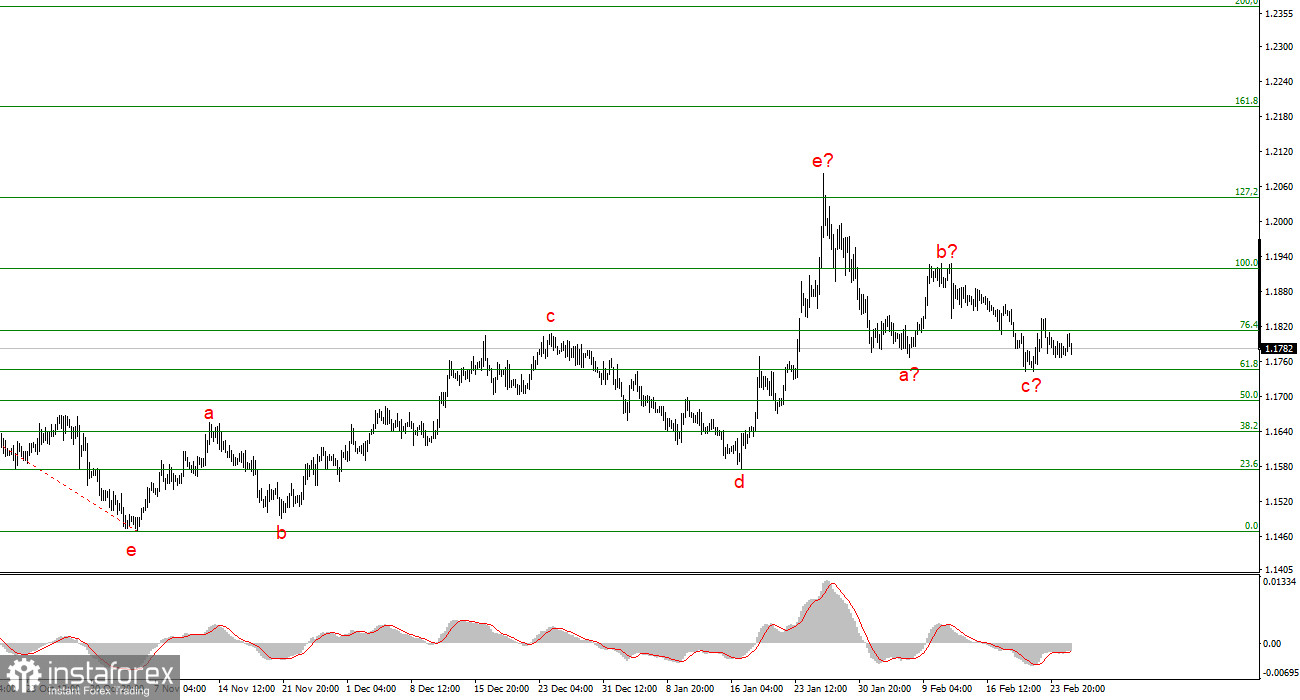
Based on my analysis of EUR/USD, I conclude that the instrument continues to build the upward segment of the trend. Donald Trump's policies and the Federal Reserve's monetary policy remain significant factors contributing to the long-term decline of the American currency. The targets for the current segment of the trend may extend to the 25th figure. At the current moment, I believe that the instrument remains within the framework of global wave 5, so I expect quotes to rise in the first half of 2026. The corrective structure a-b-c could end at any moment, as it has already taken a convincing form. I believe it is now advisable to search for areas and levels for new purchases with targets located around 1.2195 and 1.2367, corresponding to 161.8% and 200.0% on the Fibonacci.
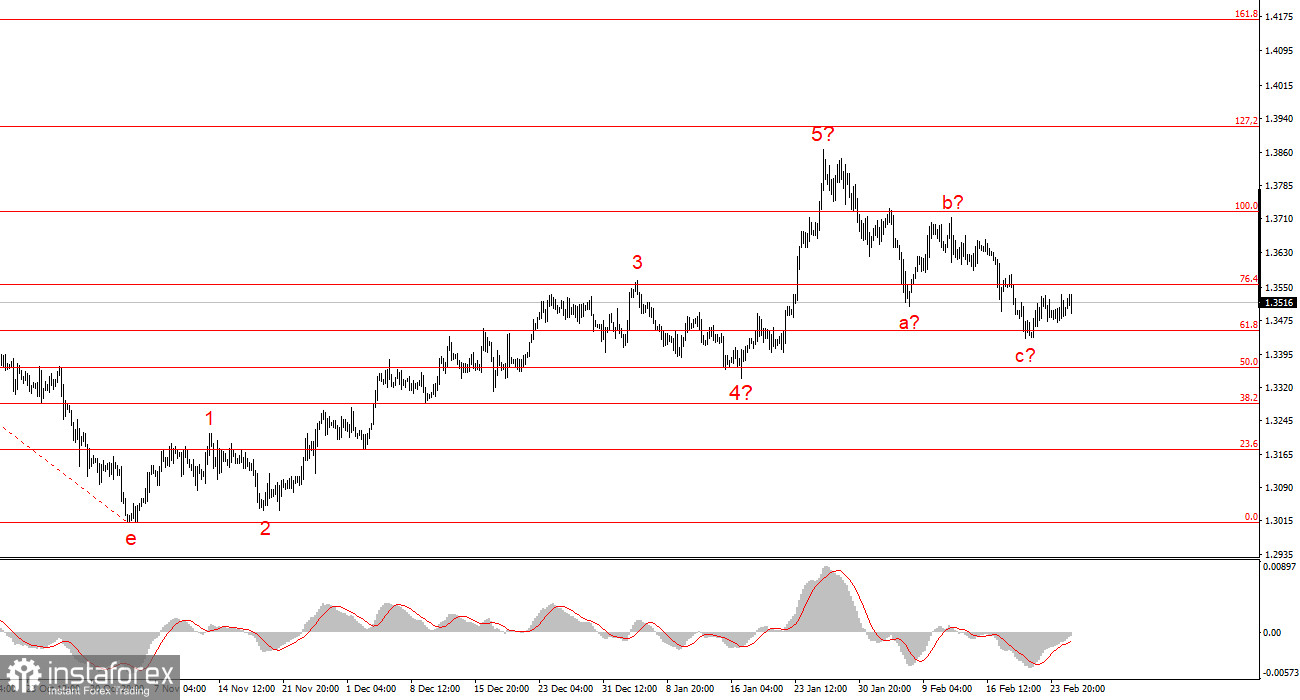
The wave analysis of the GBP/USD instrument appears quite clear. The five-wave upward structure has completed its formation, but global wave 5 may take a much more extended form. I believe that the construction of a corrective wave set may soon conclude, after which the upward trend will resume. Therefore, I can now advise seeking opportunities for new purchases with targets positioned above the 39 figure. In my opinion, under Donald Trump, the British pound has a good chance of rising to $1.45-$1.50.


