
See also


 09.03.2026 09:28 AM
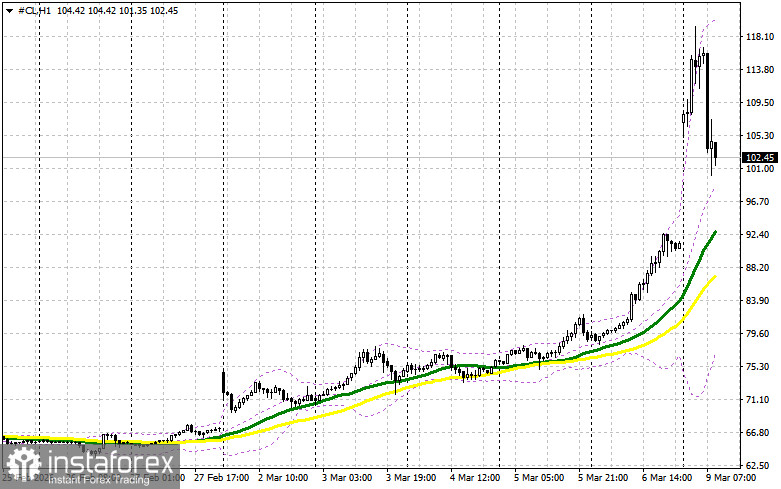
Today, at the market opening, WTI crude oil surged by 31% to $119 per barrel. The American-Israeli war against Iran is the main reason behind the sharp increase in oil prices, and so far, the conflict shows no signs of easing. Both sides appear to be intent on taking even harsher actions, so prices are likely to continue rising. The price of Brent crude oil also jumped by 29% to $119.50 per barrel, continuing the 28% spike observed last week.
The escalation of tension in the Middle East, caused by the military actions between the U.S., Israel, and Iran, is having a direct impact on global energy markets. In the face of an intensifying conflict and uncertain supply conditions, traders are shifting their assets into commodities, primarily oil, viewing them more as speculative assets rather than reliable means of capital preservation. This boosts demand and, consequently, drives prices higher.
At the same time, rising oil prices and growing geopolitical risks exert negative pressure on stock markets. Companies, especially those whose production processes or logistics depend on stable energy prices, are facing increased costs. As a result, further declines in stock indices are expected, as investors move away from riskier assets to safer ones, including commodities.
To stabilize prices, the G7 countries are attempting to negotiate the release of strategic reserves; however, whether the U.S. and other countries will agree to such measures is uncertain. The possibility of bringing additional oil volumes to the market from strategic reserves could have a significant cooling effect on price trends, reducing current pressure and alleviating concerns about further inflationary rallies. However, the decision to release such reserves is quite ambiguous and involves several strategic considerations. For the U.S. and other major economies with substantial oil reserves, such measures may be viewed as a last resort in the event of more serious crises.
A large-scale release of reserves could be perceived as a signal of vulnerability or a lack of other tools to influence the market, which, in turn, may provoke even greater uncertainty. Furthermore, there are concerns that such a one-time injection into the market will only temporarily relieve tension, failing to address the root causes of high prices related to actual supply shortages or a sustained increase in consumption.
Therefore, despite active diplomatic efforts to resolve and reach a compromise within the G7, the final decision on the release of strategic oil reserves remains very much in question.


