
See also


 14.05.2026 10:11 AM
A chip shortage is fueling a boom in semiconductor stocks. That boom has allowed markets to ignore a host of negatives — the persistent Middle East conflict and a jump in US producer prices to 6% year?on?year in April, the highest in four years. In theory, this could force the Federal Reserve to tighten monetary policy, thus creating a headwind for the S&P 500. But what difference does tomorrow make if you have today?
The broad index has already posted its 17th record close of 2026 to date; the Nasdaq Composite its 13th. The catalyst this time was the headline event of NVIDIA's market capitalization hitting $5.5 billion following President Trump's invitation to CEO Jensen Huang to attend the China summit. The main engine behind the S&P's rally, however, remains outstanding corporate earnings.
In Q1, earnings for companies that have reported rose by 27% — well above Wall Street's early?season expectation of 12%. Excluding post?recession recoveries after 2008 and 2020, this is the largest gap since 2004.
Operating margin dynamics for S&P 500 companies
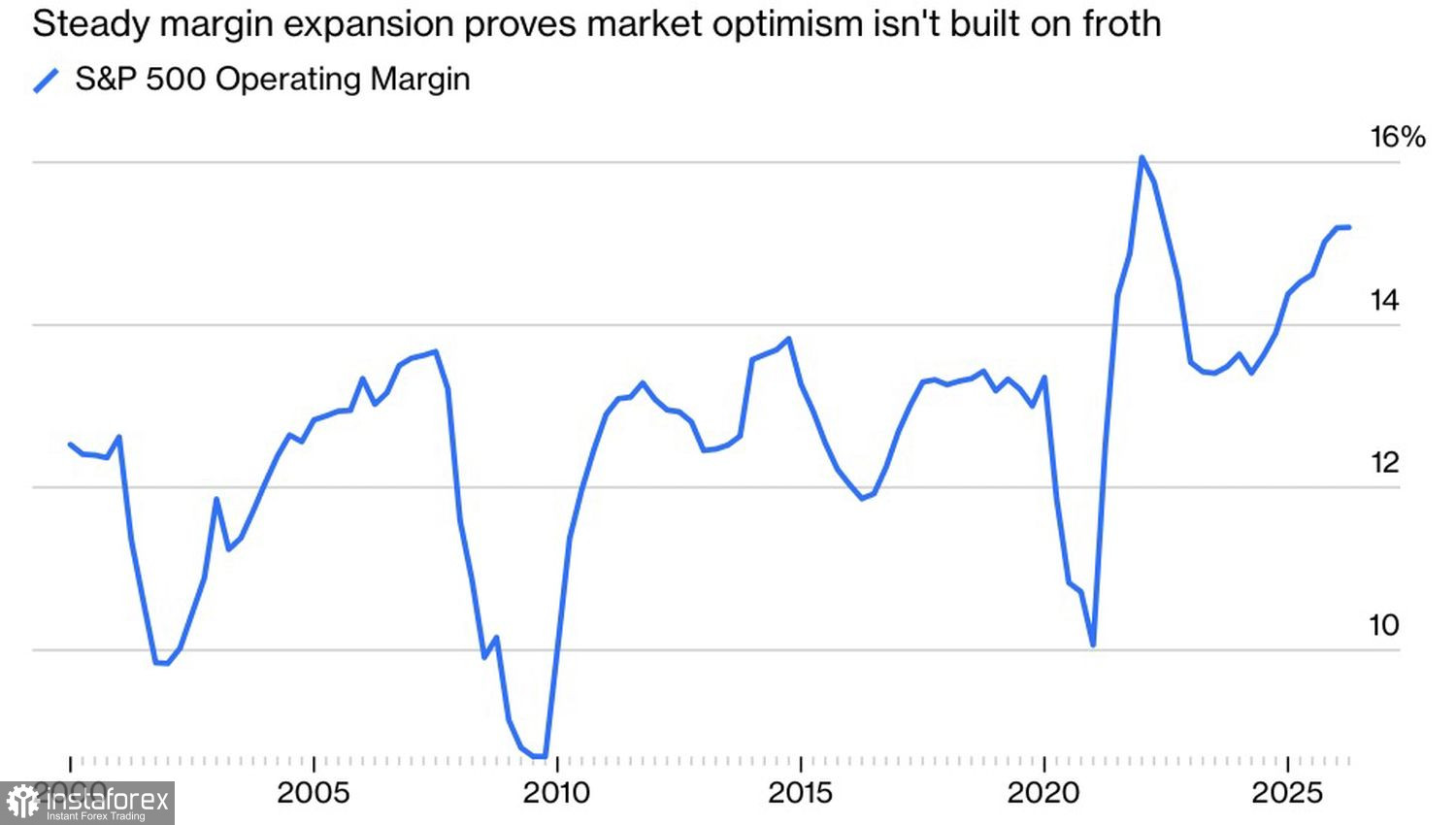
On the face of it, everything looks rational: strong profits, healthy margins. Yet prior speculative bubbles — think Polaroid, Kodak, Xerox, and others — also looked fundamentally attractive on the eve of their collapses.
In the late 1970s, the Nifty Fifty group of 50 stocks accounted for 45% of the S&P 500's market cap. Concentration is even higher today. About ten companies — all in the information?technology sector except Berkshire Hathaway — now account for roughly 40% of the broad index's capitalization. Despite the furious advance, few market participants are talking about a bubble.
S&P 500 dynamics and consensus forecasts
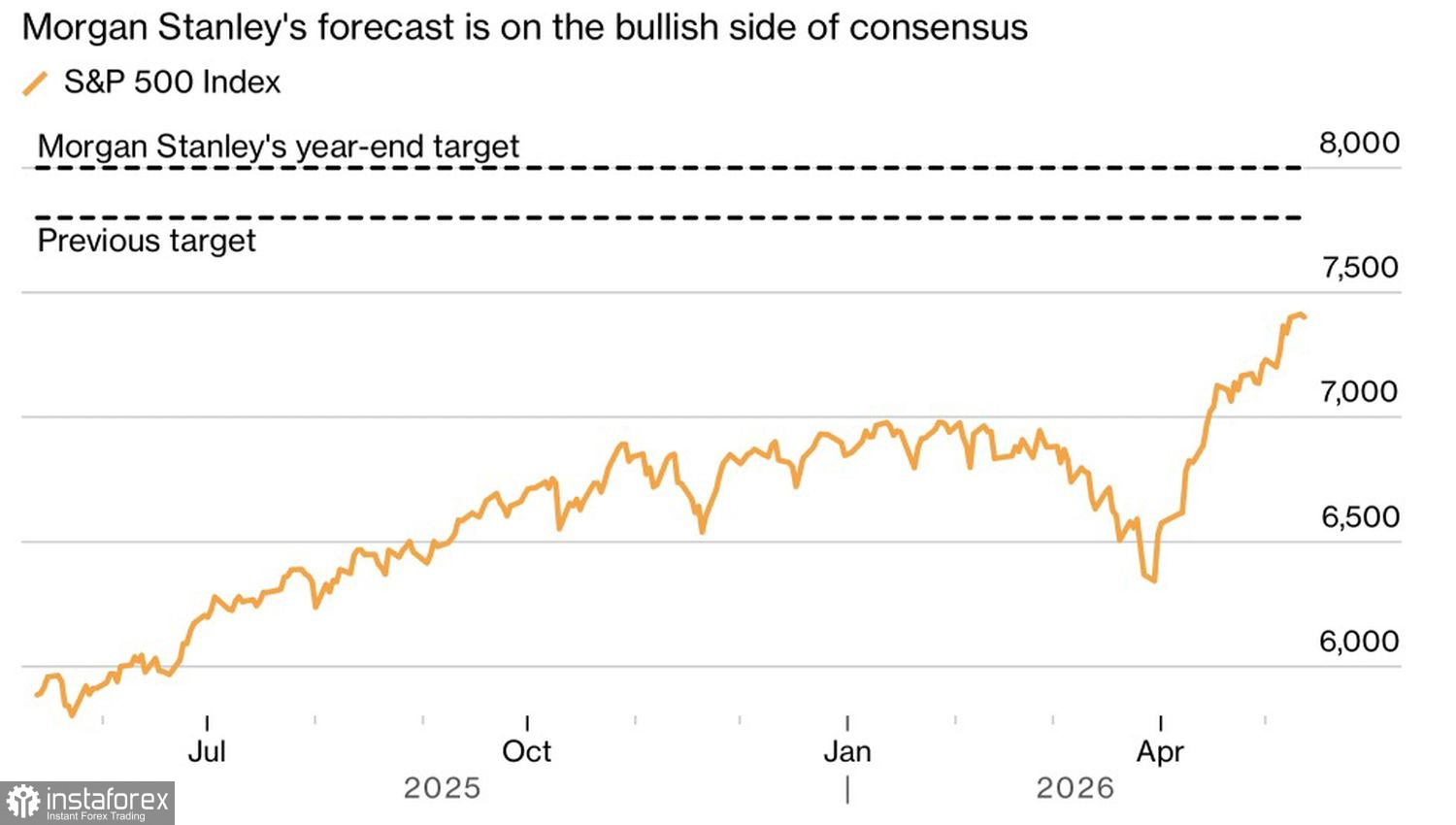
On the contrary, Morgan Stanley has raised its year?end 2026 S&P 500 target from 7,800 to 8,000 and sees upside to 8,300 in 12 months, citing resilient earnings despite geopolitical risks, private?credit strains, and concerns about inefficiencies in AI investments.
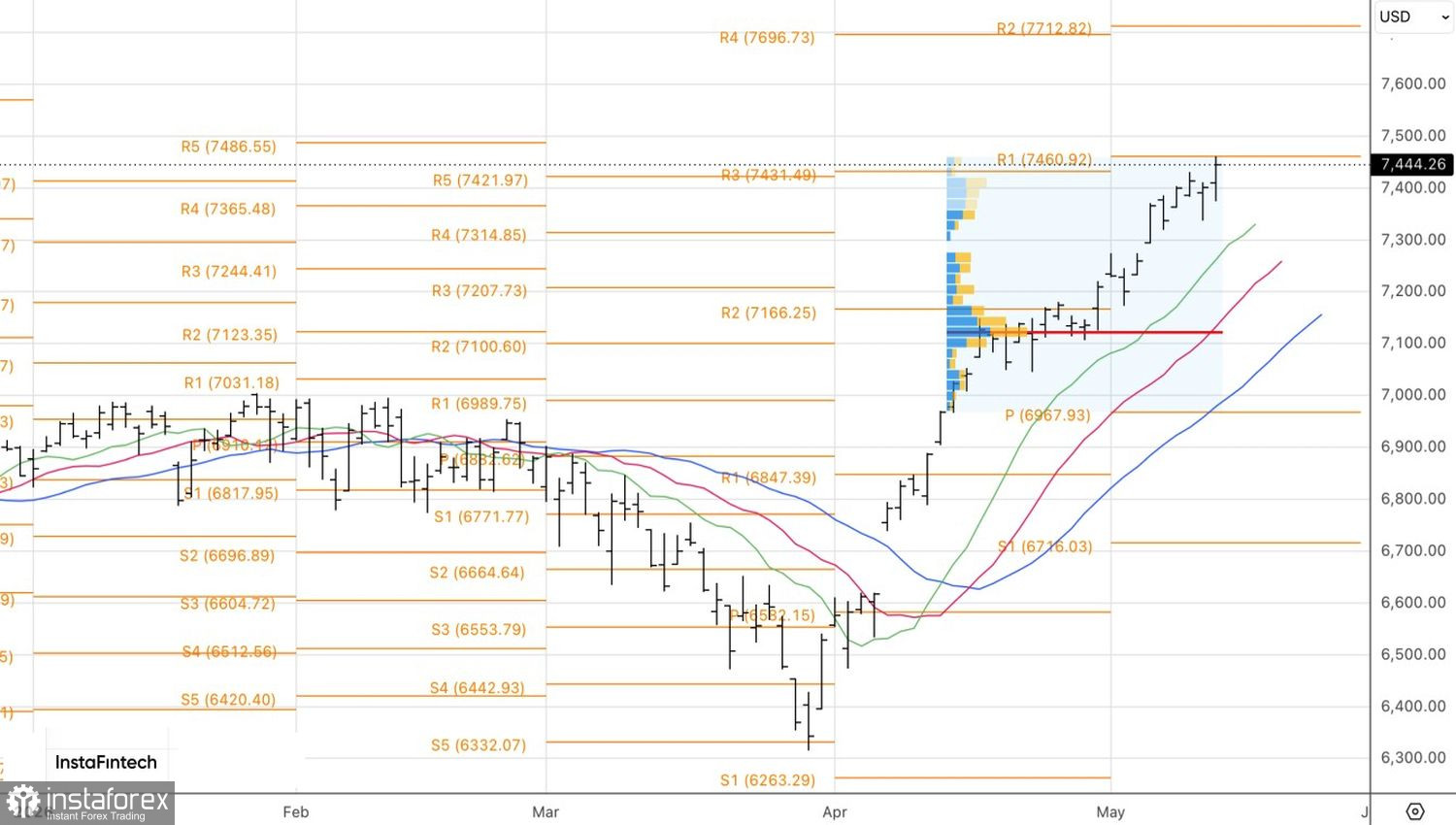
Morgan Stanley's main risk to the upgraded call is a scenario in which an overheating economy accelerates price pressures and forces the Fed to tighten. There are worries that massive AI investments could lead to liquidity narrowing — less money circulating through the financial system.
Technically, bulls remain in control on the daily chart. The S&P 500 is confidently heading toward the previously stated target of $7,700. Given the setup, the tactical approach remains buying pullbacks. Key support is at $7,315.
You have already liked this post today
*The market analysis posted here is meant to increase your awareness, but not to give instructions to make a trade.


