
See also


 13.08.2026 08:20 AM
The euro and the pound tried to show growth against the U.S. dollar yesterday, but mixed U.S. data limited the upside potential for risk assets.
Yes, the dollar initially declined on news that U.S. inflation slowed to 3.4% year-on-year in July, down from 3.5% in June, while core inflation fell to 2.5% from 2.6%. However, energy prices continue to pressure consumers, and this is unlikely to change soon, which was the main reason for the dollar's limited decline. The Consumer Price Index reflects the rate of price growth. It directly affects expectations regarding the Federal Reserve's rate, so the initial reaction was a weakening of the American currency, since slowing inflation reduces the central bank's reasons to tighten. However, a more significant sell-off of the dollar did not occur. The overall Consumer Price Index added 0.1% after a drop of 0.4% in June, while the core index rose by 0.2%, and both figures were exactly in line with expectations. For the euro and the pound, the dollar's short-term weakening provided moderate support. Both European currencies regained some ground, but the alignment of the data with forecasts limited the magnitude of the move.
Today, in the first half of the day, attention to the euro will focus on Eurozone industrial production data. This indicator reflects the volume of output at the region's enterprises. It serves as an important indicator of the state of the real sector and, through that, the overall health of the economy. A strong result indicates the resilience of business activity. It indirectly supports expectations of a more stringent European Central Bank policy, which plays in favor of the euro, while weak figures will only increase pressure on the currency. If production exceeds forecasts, the EUR/USD pair may halt its decline and recoup some losses.
The British pound is looking ahead to a busy block of British data today, with the main event being the GDP report for the United Kingdom, supplemented by data on industrial production, manufacturing output, and the trade balance of goods. GDP reflects the pace of economic growth and serves as a foundation for assessing its health, so this indicator will have the most significant impact on the British currency. Industrial production and manufacturing output will complement the picture of the real economy's state, while the trade balance will show the ratio of exports to imports of goods. From all this data, the market will assess the economy's resilience and the likely trajectory of the Bank of England's interest rate. Strong GDP growth combined with a revival in industry will bolster arguments for a tough stance from the central bank and support the pound. At the same time, weak figures will increase pressure on the currency and confirm concerns about a slowdown.
Given the prevailing sentiment, only very strong indicators can restore faith in the British pound. If the data aligns with economists' expectations, it is better to act based on the Mean Reversion strategy. If the data turns out to be significantly higher or lower than economists' expectations, the Momentum strategy will be most effective.
Buying on a breakout of the level 1.1539 may lead to an increase in the euro to the area of 1.1560 and 1.1579;
Selling on a breakout of the level 1.1517 may lead to a decline in the euro to the area of 1.1502 and 1.1482;
Buying on a breakout of the level 1.3507 may lead to an increase in the pound to the area of 1.3541 and 1.3581;
Selling on a breakout of the level 1.3467 may lead to a decline in the pound to the area of 1.3435 and 1.3401;
Buying on a breakout of the level 159.60 may lead to an increase in the dollar to the area of 159.83 and 160.02;
Selling on a breakout of the level 159.39 may lead to a sell-off of the dollar to the area of 159.13 and 158.83;
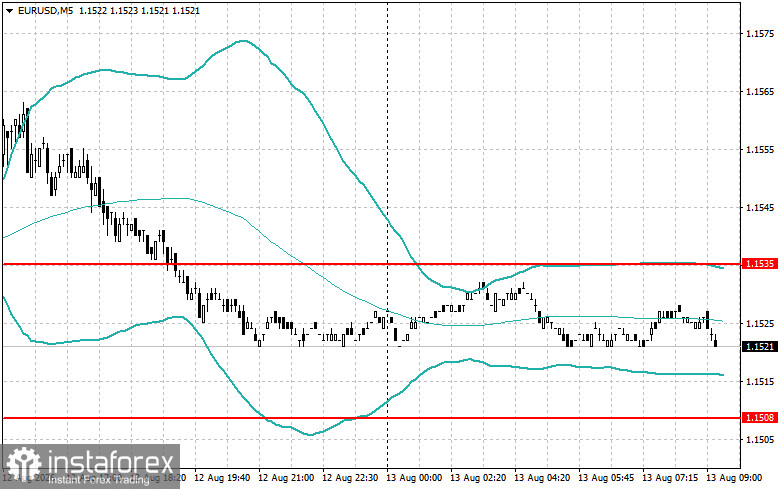
I will look for short positions after a failed breakout beyond 1.1535 on a return below this level;
I will look for long positions after a failed breakout beyond 1.1508 on a return to this level;
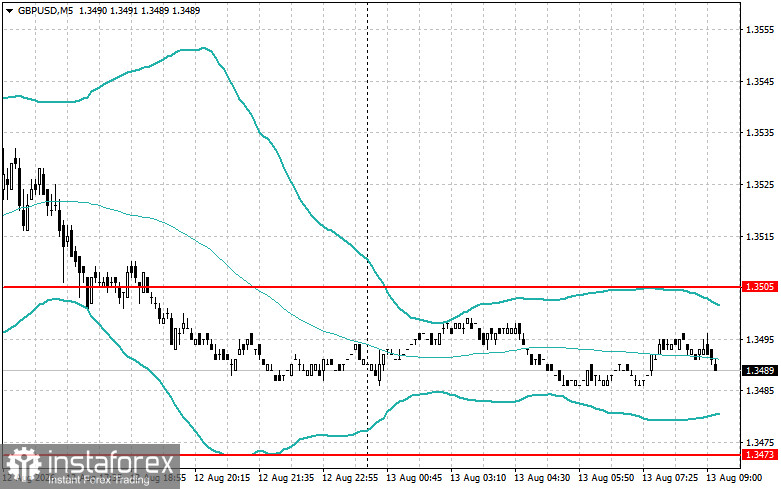
I will look for shorts after a failed breakout beyond 1.3505 on a return below this level;
I will look for longs after a failed breakout beyond 1.3473 on a return to this level;
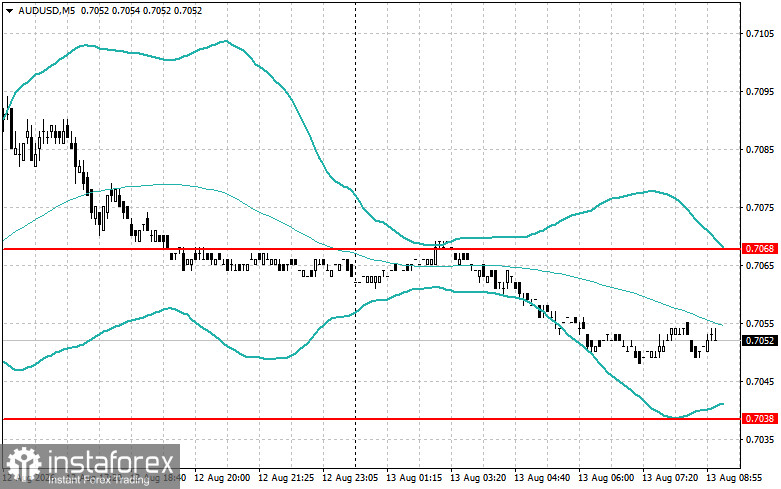
I will look for shorts after a failed breakout beyond 0.7068 on a return below this level;
I will look for longs after a failed breakout beyond 0.7038 on a return to this level;
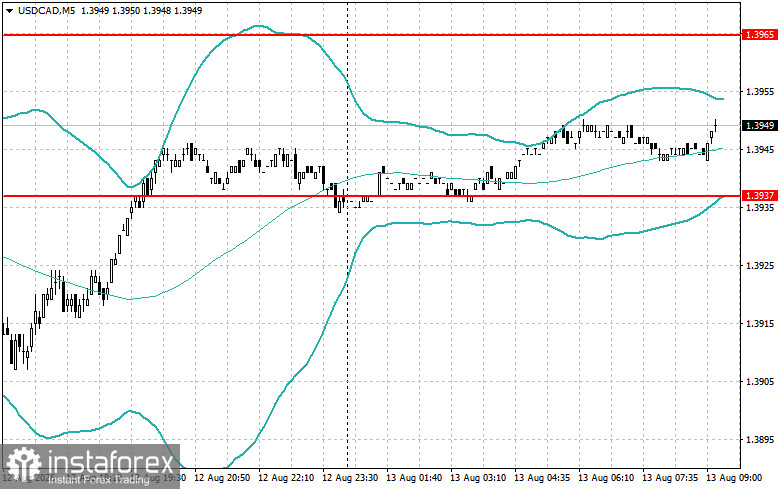
I will look for shorts after a failed breakout beyond 1.3965 on a return below this level;
I will look for longs after a failed breakout beyond 1.3937 on a return to this level;


