
See also


 18.08.2026 10:37 AM
The pound weakened today after data showed that employers continued to cut staff in July and that job vacancies hit a five-year low. The report comes amid weak labor demand and heightened uncertainty. The number of claims for unemployment benefits fell by 13,000 after a similar drop a month earlier; economists had expected no change.
Vacancies fell to 707,000 for the May-to-July period, the lowest level since 2021. The ONS said that some softening in the labor market remains evident. The report said that the fall in vacancies had been driven primarily by small firms, which cited labor and operating costs as reasons for not hiring new staff or replacing leavers.
Most important for monetary policy was the sharp slowdown in pay growth. Private sector pay, excluding bonuses, a series the Bank of England watches closely, slowed to 2.8% in the second quarter—the weakest reading in almost six years. Overall pay growth ticked up slightly to 3.5%, but that largely reflects a 6.1% jump in public sector pay driven by base effects.
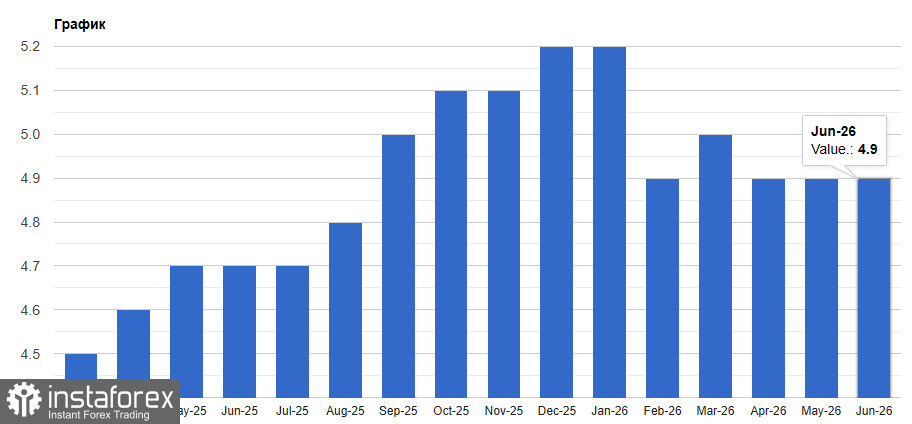
The unemployment rate remained steady at 4.9% for the three months to June, although the statistics office warned that data quality remains impaired due to a collection error.
For the Bank of England, these figures form a fairly clear argument against further tightening. Many now expect the regulator to refrain from raising the policy rate above 3.75%, because the data paint an even weaker labor market picture. The slowdown in private sector pay to 2.8% is especially significant. At the July Bank of England meeting, three members of the committee—Huw Pill, Megan Greene, and Catherine Mann—voted for an immediate 25-basis-point increase, citing risks that energy price shocks could feed through into wages and prices. Today's statistics has shown that such pass-through is not occurring, which materially weakens the hawks' case ahead of the September meeting.
According to the technical picture for GBP/USD, buyers of the pound sterling need to take the nearest resistance at 1.3550. Only that will allow a target of 1.3580, above which further progress will be difficult. The farther target is the 1.3615 area. On a decline, bears will attempt to seize control of 1.3520. If they succeed, a break of the range will inflict a serious blow to bulls and push GBP/USD toward a low of 1.3500 with the prospect of extending to 1.3470.
You have already liked this post today
*The market analysis posted here is meant to increase your awareness, but not to give instructions to make a trade.


