
See also


 08.10.2026 08:44 AM
The test of 1.3222 occurred when the MACD indicator moved well down from the zero line, limiting the pair's downside potential.
The pound found itself in a mixed position yesterday evening. On one hand, recent UK data provided the currency modest support — the services PMI printed 52.1 and price components rose at the fastest pace since June. On the other hand, the Federal Reserve minutes refocused the market on the dollar, which remains the pair's main driver. All participants supported the Fed rate rise to 3.75–4.00%, and that unanimous stance increases confidence that another hike is likely before year-end.
This morning will test how the Bank of England views its dilemma. Speeches by Huw Pill and Andrew Bailey, along with the Credit Conditions report, will form the first half of the day, with almost no economic data to distract markets. Traders will listen to policymakers and try to gauge which force — price pressures or cooling employment — will prevail.
Compare this with last night: the Fed minutes showed unanimity and an upside tilt to inflation risks, while the BoE remains split. In September, Mann, Pill and Green voted for immediate tightening, and Pill's words today will show whether he keeps that stance after weak construction prints and a sluggish housing market. If Pill and Bailey confirm readiness to fight inflation, the pound could get a small lift.
For intraday strategy, I will rely mainly on Scenario 1 and Scenario 2.
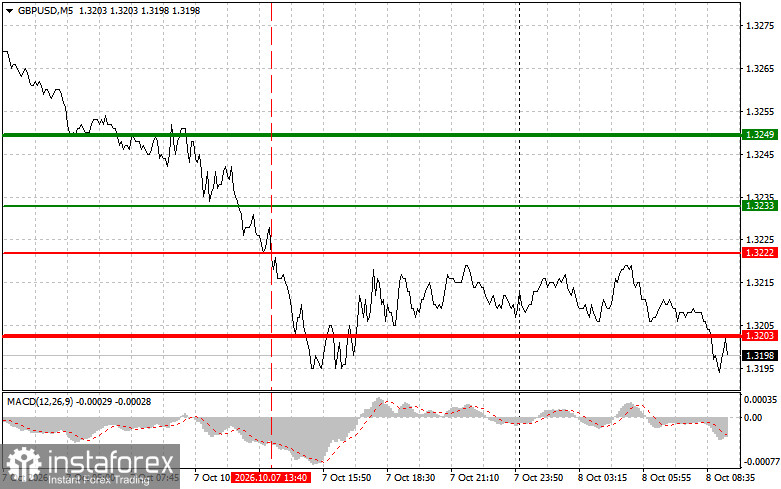
Scenario 1: Buy the pound today if the price reaches the entry area around 1.3210 (green line) with a target of 1.3239 (thicker green line). Around 1.3239, plan to exit long positions and open short positions for a counter-move (expecting 30–35 pips). Expect GBP strength only after good data. Important: before buying, ensure MACD is above zero and only beginning its rise.
Scenario 2: Also buy if there are two consecutive tests of 1.3193 while MACD is in the oversold area. This would limit downside potential and trigger an upward reversal. Expect moves toward 1.3210 and 1.3239.
Scenario 1: Sell the pound after the 1.3193 level is breached (red line); this should lead to a rapid decline. Sellers' key target is 1.3166, where I plan to exit shorts and immediately open longs for a counter-move (expecting 20–25 pips). Bad news will put pressure back on the pound. Important: before selling, ensure MACD is below zero and only beginning its decline.
Scenario 2: Also sell if there are two consecutive tests of 1.3210 while MACD is in the overbought area. This would cap upside and trigger a downward reversal. Expect declines to 1.3193 and 1.3166.
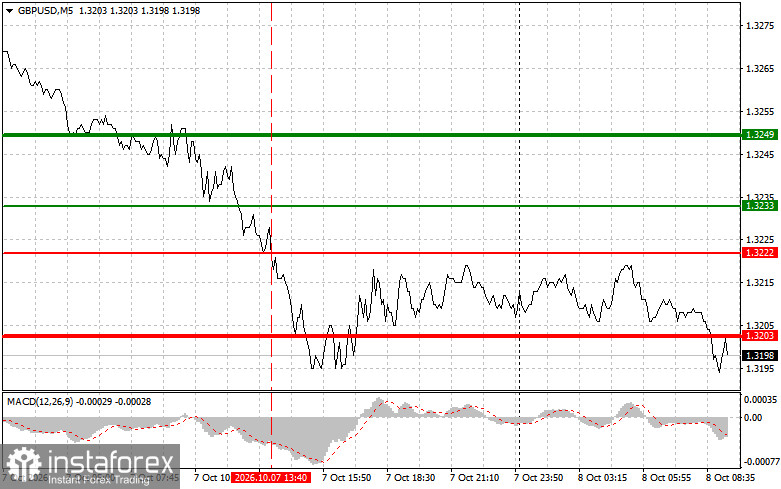
Thin green line – entry price at which you can buy the trading instrument.
Thick green line – approximate price where you can place Take Profit or manually lock in profits, since further upside above this level is unlikely.
Thin red line – entry price at which you can sell the trading instrument.
Thick red line – approximate price where you can place Take Profit or manually lock in profits, since further downside below this level is unlikely.
MACD indicator. When entering the market, it is important to follow the overbought and oversold zones.
Important. Beginner traders in the Forex market must be very cautious when making entry decisions. It is best to stay out of the market before the release of important fundamental reports to avoid getting caught in sharp price swings. If you decide to trade during news releases, always place stop orders to minimize losses. Without stop orders,, you can quickly lose your entire deposit, especially if you don't use money management and trade large volumes.
Remember that successful trading requires a clear trading plan, like the example above. Spontaneous trading decisions based on the current market situation are inherently a losing strategy for an intraday trader.


