
See also


 29.10.2026 07:32 AM

The EUR/USD pair is retreating after a modest gain the previous day, with prices holding near the 1.1140 level. Pressure on the currency pair is intensifying as the US dollar recovers, offsetting the previous session's losses following the Federal Reserve's (Fed) decision to leave interest rates unchanged.
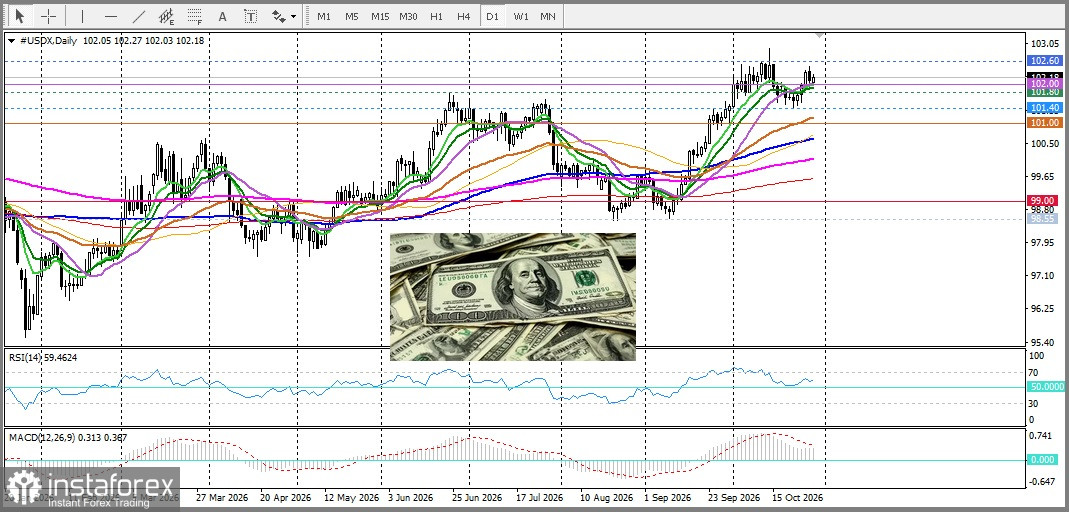
Regarding inflation, the Fed acknowledged that elevated price pressures persist. However, the central bank opted to hold rates steady for the time being to gather more information and determine the future direction of monetary policy. The decision was divided, with Fed Governor Lisa Cook and Cleveland Fed President Beth Hammack favoring an immediate rate hike.
Fed Chair Kevin Warsh reaffirmed the Federal Open Market Committee's (FOMC) commitment to achieving price stability and bringing inflation back to its 2% target, while noting the economy's continued resilience. He also provided an indicative schedule for monetary policy meetings: the Fed plans to hold eight meetings next year, one of which will take place without a formal vote. In 2028, six policy decision meetings are expected.
The euro, meanwhile, remains under pressure as markets expect the European Central Bank (ECB) to leave its interest rate unchanged at 2.50% at Thursday's meeting. Earlier this year, the central bank raised the rate by a total of 50 basis points.
At the same time, persistent inflation, supported by rising energy prices, continues to fuel discussions about a possible additional rate hike in December. Investors should therefore closely monitor the ECB's assessment of inflation risks and economic growth prospects, as well as any signals regarding future interest rate decisions.
Credit conditions in the euro area continue to tighten at a moderate pace, while the transmission mechanism of ECB policy remains effective.
According to Danske Bank analysts, the results of the third-quarter Bank Lending Survey indicate that recent monetary policy measures have had a limited impact on financing conditions. The analysts noted that "banks tightened credit standards more than expected, although the share of institutions reporting tighter standards remains low by historical standards; most of this change was attributable to French banks." Danske Bank believes that this trend "indicates that the ECB's policy tightening has had a moderate impact on lending standards. This, in itself, should not prevent further tightening, as the transmission of ECB policy decisions to the real economy continues to function relatively smoothly."
From a technical perspective, the pair remains under pressure, trading below key moving averages on the daily chart. The nearest resistance is at the 9-day exponential moving average (EMA), followed slightly higher by the 20-day simple moving average (SMA), which lies near the round 1.1200 level. Support is provided by the yearly low around 1.1130. The oscillators are in negative territory, confirming the bears' advantage. Overall, these factors indicate that the path of least resistance remains to the downside.


