
See also


 23.11.2026 04:58 AM
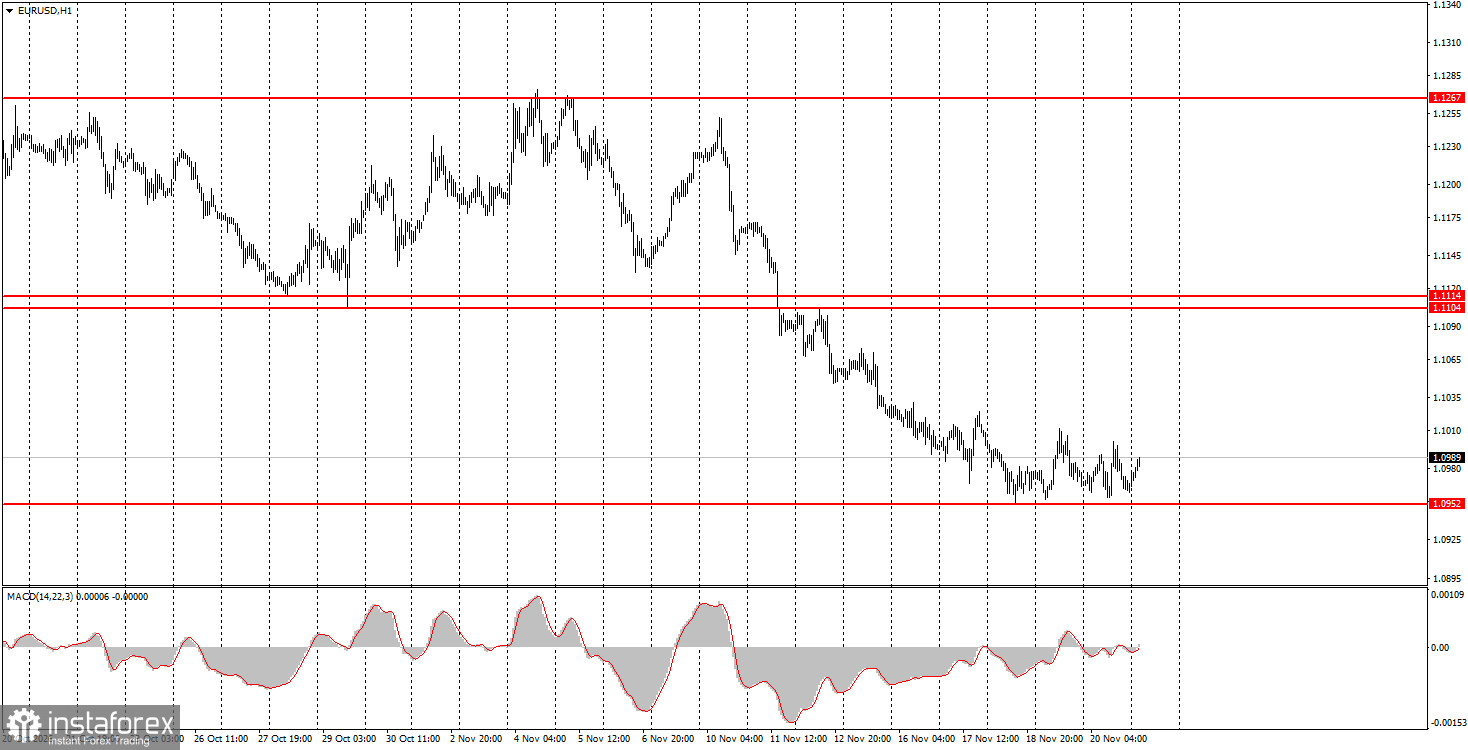
On Friday, EUR/USD neither rallied nor resumed its slide. Recall that two weeks ago the euro was also rangebound after a month-long flat. In short: the euro fell for two months, then traded sideways for a month, and later resumed its decline without a meaningful correction. We're seeing a similar situation now. Price has moved mostly sideways for three days, but a renewed drop could resume at any moment—because the market doesn't currently need strong fundamental or macro reasons to sell the euro and buy the dollar. The prevailing narrative — stronger "hawkish" Federal Reserve expectations — is enough for daily dollar buying. With the Fed likely to keep tightening into next spring, the dollar could keep gaining for months on that single theme. It's hard to accept given three months of unrelenting dollar strength, but who three months ago would have forecast the euro's roughly 700-pip collapse, given that the European Central Bank has been tightening too?
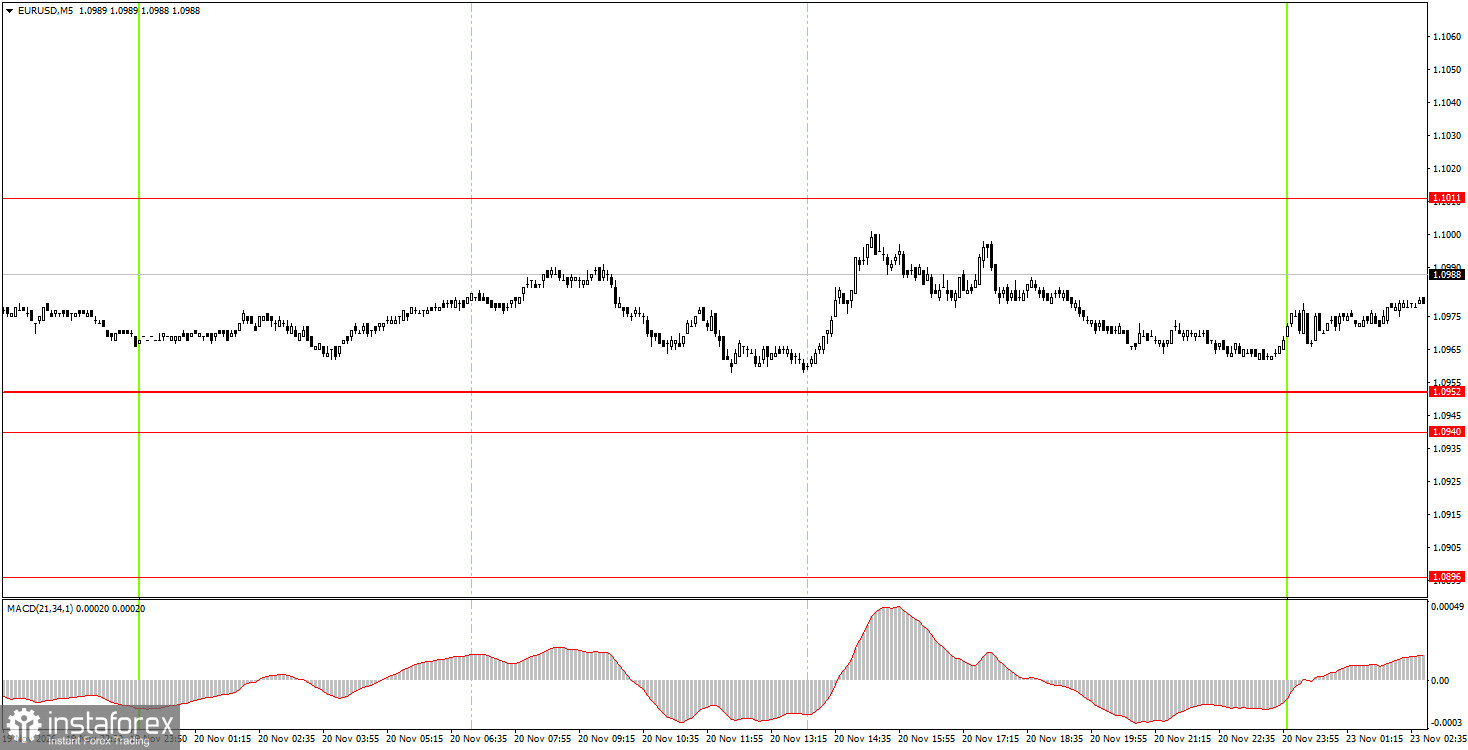
No trading signals formed on the 5-minute TF on Friday, so novice traders had no clear reasons to enter positions. Price approached 1.0952 twice but failed to trade the level meaningfully.
On the hourly timeframe, EUR/USD remains in a three-month downtrend and has not managed a proper correction. Considering recent months' events, we do not believe the euro had grounds for such a sustained drop with virtually no retracement. At present, the dollar looks heavily overbought, and many factors supportive of the euro are being ignored.
On Monday, novice traders may consider new short positions on a rejection from 1.1011, targeting 1.0940–1.0952. Consider long positions after a confirmed close above 1.1011, targeting 1.1104–1.1114.
On the 5-minute TF consider these levels: 1.0888–1.0896, 1.0940–1.0952, 1.1011, 1.1104–1.1114, 1.1198–1.1218, 1.1267–1.1275, 1.1366–1.1377, 1.1461–1.1474. On Monday, S&P business-activity (PMI) indices for November will be released for Germany, the eurozone and the US. These are unlikely to be market-moving on their own (especially the US PMI), and the dollar's three-month buying streak hasn't been driven primarily by macro releases.
Price levels (areas) of support and resistance — levels that serve as targets when opening longs or shorts or as sources of signals.
Red lines — channels or trendlines that display the current trend and indicate the preferred trading direction.
MACD indicator (14,22,3) — histogram and signal line — an auxiliary indicator that can also be used as a source of signals.
Important speeches and reports (listed in the news calendar) can strongly affect a currency pair's movement. Therefore, when they are released, one should trade as cautiously as possible or step aside to avoid a sudden price reversal against the prior direction.
Beginner forex traders should remember that not every trade can be profitable. Developing a clear strategy and money-management rules is the key to long-term success in trading.


