
See also


 23.11.2026 08:59 AM
Oil is showing heightened volatility as traders weigh robust crude export flows against the prospect of renewed fighting in the Middle East. Brent trades below $93/bbl after a 0.6% rise on Friday, while WTI sits near $84. For context: on November 20, Brent was above $92 and WTI around $83; on November 17, Brent was $91.70; and on October 30, Brent hit a six-month high of $116.06. Since early November, Brent has fallen roughly one-fifth, and implied volatility for oil has gradually eased.
The dominant reason prices eased is that Donald Trump refrained from ordering new strikes on Iran after the midterms. Note that on November 4 he said there were no immediate plans to strike, on November 12 he said the U.S. did not need a deal with Tehran, and on November 20 he told Axios he was in no rush to decide. Over the weekend, his tone hardened: he told Fox News he leans toward resuming strikes after the New Year if no deal is reached, giving the negotiations a tentative timeline.
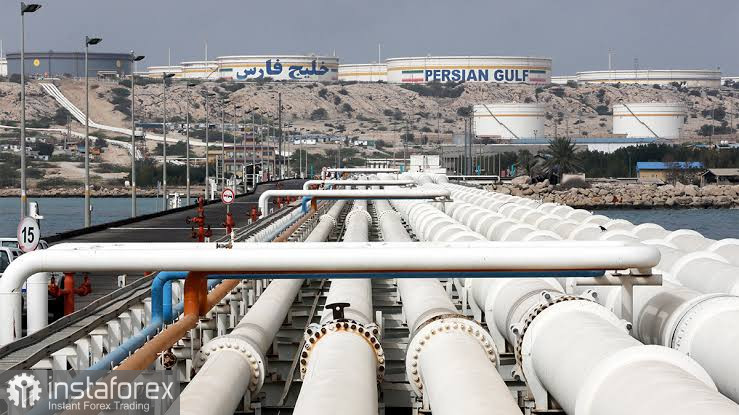
The regional backdrop remains tense. Over the weekend Iran again struck Bahrain — where U.S. forces are based — and Houthi forces backed by Tehran continued attacks on Saudi Arabia, including hits near Riyadh. Trump wrote that Iran launched more missiles and drones last week than in any other week in over a year. Tanker attacks in the Strait of Hormuz are becoming more frequent, yet Gulf oil flows continue; on November 20, Energy Secretary Chris Wright said throughput through the strait is at record levels.
Supply factors continue to weigh on prices. The IEA forecasts a surplus of about 2 million b/d this quarter — the first such signal since the conflict began — and a major investment bank warned of a risk of oversupply next year. U.S. crude inventories rose by 3.4 million barrels for the week to November 18 (EIA data), versus a 0.4 million expected build.
Risks remain, however. A $25–30/bbl risk premium roughly matches the $20–30 estimate Waller cited on November 10 for expensive insurance and transshipments through Hormuz, so if a deal is reached or activity slows, prices could plunge. Conversely, a breakdown of talks and a resumption of U.S. strikes would quickly push oil back toward $100 and above; the market therefore remains headline-sensitive.
All told, oil is trapped between an oversupplied market and a geopolitical risk premium. I expect Brent to trade in an $88–95 range with a downside bias until new strikes (which Trump deferred until January). A move above $100 would require a real disruption to Gulf flows.
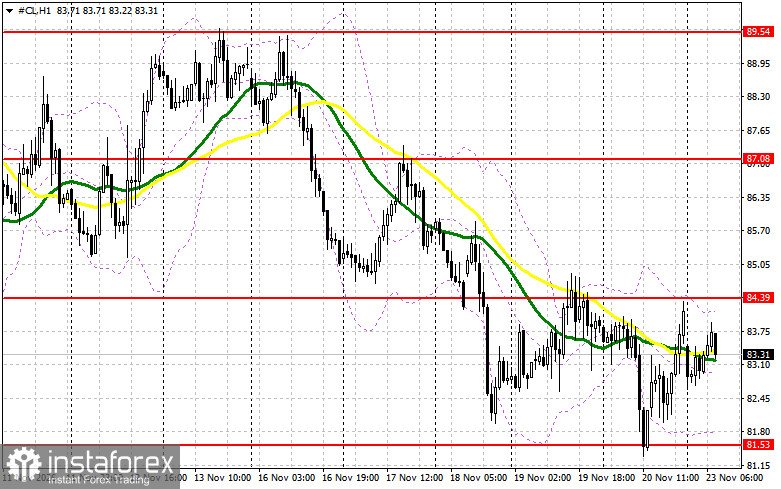
Technical picture: buyers need to take near resistance at $85 to target $87, above which a breakout will be difficult. A further target is around $89. On a decline, bears will try to seize control below $81. If they do, a range breakout would hit bulls hard and push oil toward $78 with scope to reach $74.


